

Tooth pain can be an excruciating experience that disrupts daily life. Whether it’s caused by tooth decay, gum disease, or just a temporary sensitivity, the discomfort is never pleasant. While professional dental care is essential, many people seek home remedies to alleviate tooth pain. One such remedy is a saltwater rinse, which has been used for centuries for its healing properties. But what makes saltwater so effective? In this article, we’ll explore the best saltwater rinse for tooth pain, how it works, and how to use it safely.
What is a Saltwater Rinse?
A saltwater rinse is a simple mixture of salt and warm water, used as a mouthwash. Salt is known for its antibacterial properties, making it an effective tool for combating the bacteria that contribute to tooth pain. It can help reduce inflammation, soothe irritated gums, and promote healing in the mouth. But does it actually work for tooth pain?
The answer is yes. A saltwater rinse can provide temporary relief for tooth pain by reducing inflammation and neutralizing harmful bacteria in the mouth. It’s particularly effective for addressing issues like:
- Tooth abscesses
- Gum infections
- Tooth sensitivity
- Post-dental procedure discomfort
Why Choose Saltwater for Tooth Pain?
Saltwater rinses are not only effective but also incredibly easy to prepare. The ingredients are common and affordable, making it an accessible option for those looking for a natural remedy. Saltwater works in several ways to relieve tooth pain:
- Reduces Swelling: Saltwater helps to draw out excess fluid from swollen tissues, which can reduce inflammation and ease the discomfort.
- Promotes Healing: Salt accelerates the healing process of minor wounds or cuts in the mouth, which can help with irritation from cuts or ulcers.
- Kills Bacteria: Salt has natural antibacterial properties, which help in reducing bacteria levels that can contribute to tooth infections.
- Cleanses the Mouth: Saltwater helps in rinsing away food particles and debris, which may be exacerbating the pain.
The Best Saltwater Rinse Recipe for Tooth Pain
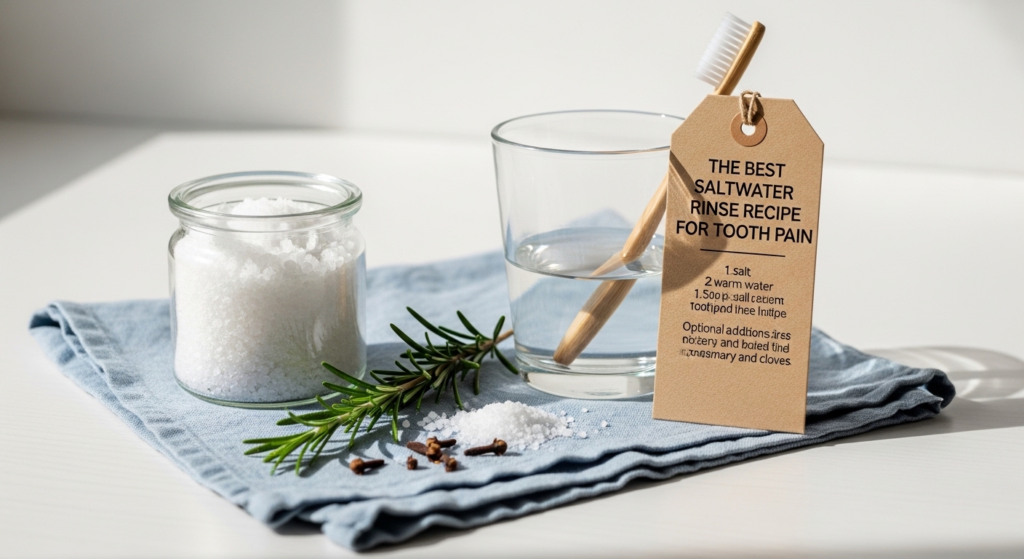
To make the most of your saltwater rinse, you need the right proportions. Here’s the best recipe for a saltwater rinse:
Ingredients:
- 1 teaspoon of salt (preferably non-iodized)
- 1 cup of warm water
Instructions:
- Dissolve the Salt: Add 1 teaspoon of non-iodized salt to a cup of warm water. Stir well until the salt is fully dissolved.
- Rinse: Swish the solution in your mouth for about 30 seconds, making sure it reaches the affected area. Avoid swallowing the mixture.
- Spit and Repeat: Spit the solution out and repeat the process up to three times per day, especially after meals, until the pain subsides.
Tips for the Best Results:
- Use warm water: The warm temperature helps to soothe the pain and aids in dissolving the salt properly.
- Avoid using too much salt: Too much salt can irritate your mouth and worsen the pain. Stick to the recommended 1 teaspoon per cup of water.
- Don’t swallow the mixture: Saltwater is not meant to be ingested. Spit it out after rinsing.
How Often Should You Use a Saltwater Rinse?
While a saltwater rinse can be highly effective in providing relief, it’s important to know how often to use it. Overuse of saltwater can lead to dryness in the mouth, which may cause further irritation. Generally, 2.3 rinses per day are sufficient for most people.
If your pain persists for more than a few days or worsens, it’s important to consult a dentist. A saltwater rinse is great for temporary relief, but it’s not a substitute for professional dental care.
Additional Benefits of Saltwater Rinses
Saltwater rinses are not only beneficial for tooth pain, but they can also help maintain oral hygiene. Here are some additional benefits:
1. Preventing Gum Disease
By killing bacteria and reducing plaque buildup, saltwater rinses can help prevent the onset of gum disease. Gum disease, if left untreated, can lead to severe tooth pain and tooth loss. Regular saltwater rinses can be part of a good oral hygiene routine.
2. Relieving Sore Throats
If you have a sore throat due to a cold or infection, saltwater rinses can also help alleviate discomfort by reducing swelling and killing bacteria. This is particularly helpful if the pain is caused by an infection that has spread to the gums or teeth.
3. After-Dental Procedure Care
Dentists often recommend saltwater rinses following dental procedures like tooth extractions, fillings, or root canals. The rinse helps cleanse the mouth and promotes faster healing by reducing the risk of infection.
4. Freshens Breath
By reducing bacteria in the mouth, saltwater rinses can help keep your breath fresh. It’s a simple and natural way to improve your overall oral hygiene and prevent bad breath.
When Should You Avoid a Saltwater Rinse?
While saltwater rinses are generally safe for most people, there are certain situations where you should avoid them:
- Open Wounds or Severe Infections: If you have a large abscess or a serious infection, a saltwater rinse may not be enough. You may need professional care, such as antibiotics or drainage, to treat the infection.
- Sensitivity to Salt: If you have a sensitivity to salt or have conditions like high blood pressure, you should consult your dentist or healthcare provider before using a saltwater rinse regularly.
Saltwater Rinse vs. Commercial Mouthwashes: Which is Better?
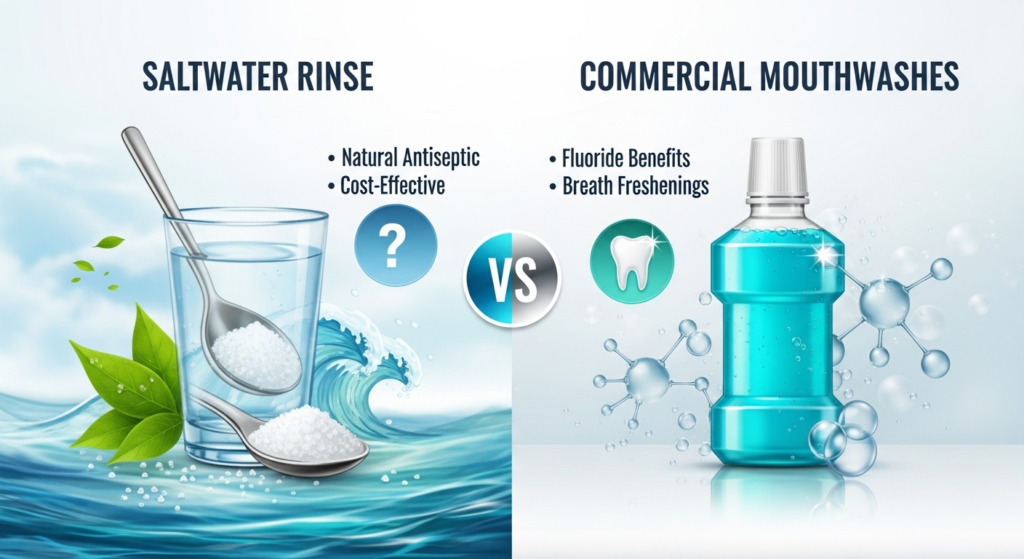
Saltwater rinses are a natural and effective remedy for tooth pain, but how do they compare to commercial mouthwashes? While both have their benefits, they serve different purposes.
Saltwater Rinse:
- Natural and chemical-free
- Reduces inflammation and bacteria naturally
- Soothes pain and promotes healing
- Cost-effective and easy to prepare
Commercial Mouthwashes:
- Contains fluoride for additional tooth protection
- Can have antiseptic properties for bacterial control
- Often includes alcohol, which can dry out the mouth
While commercial mouthwashes may offer additional benefits, especially for cavity prevention, saltwater rinses are a more natural option that works well for tooth pain relief. For ongoing oral health, it’s often recommended to combine both saltwater rinses for short-term relief and commercial mouthwashes for daily use.
Conclusion
A saltwater rinse is a simple, effective, and natural remedy for tooth pain. It can help reduce inflammation, kill bacteria, and promote healing, all of which contribute to pain relief. Whether you’re dealing with a tooth abscess, gum irritation, or post-dental procedure discomfort, saltwater can be a helpful temporary solution. However, if your tooth pain persists or worsens, it’s essential to seek professional dental care.
By incorporating saltwater rinses into your oral hygiene routine, you can help prevent gum disease, freshen your breath, and soothe any discomfort caused by minor dental issues. Remember to use the rinse as directed, and consult your dentist for any ongoing issues that require professional care.

Raheel Bhatti is the founder of WisdomToothpain.info, a specialized platform dedicated to demystifying dental health. As a dedicated digital researcher, Raheel focuses on providing clear, accurate, and evidence-based information to help individuals navigate the complexities of wisdom tooth pain with confidence.