
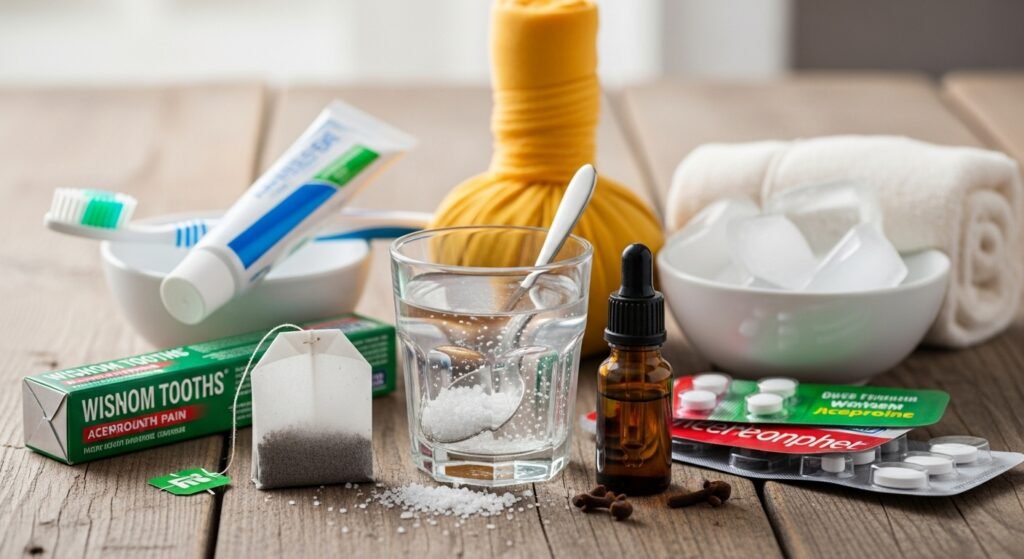
Wisdom tooth pain has a knack for showing up at the worst possible time often at night, on weekends, or right before an important event. While home remedies cannot fix the underlying cause, they can help reduce pain and inflammation temporarily until you’re able to see a dentist.
Below is a dentist approved evidence based guide on how to help wisdom tooth pain at home safely and effectively, without myths, risky hacks, or unnecessary fluff.
First, an Important Reality Check
Home remedies are best for:
- Mild to moderate pain
- Temporary flare-ups
- Short-term relief
They are not a substitute for dental treatment, especially if infection or impaction is involved.
The American Dental Association (ADA) stresses that persistent wisdom tooth pain should always be evaluated by a dental professional.
1. Warm Salt Water Rinses (Simple but Powerful)
This is one of the most effective and safest home remedies.
Why It Works
- Reduces bacteria
- Soothes inflamed gum tissue
- Helps flush out trapped food debris
How to Do It
- Mix ½ teaspoon of salt in a cup of warm (not hot) water
- Swish gently for 30 seconds
- Spit out and repeat 2.3 times daily
The NHS recommends salt water rinses for managing gum inflammation around wisdom teeth.
2. Cold Compress for Swelling and Throbbing
How It Helps
- Narrows blood vessels
- Reduces swelling
- Dulls nerve pain
How to Use It Safely
- Wrap an ice pack or frozen vegetables in a towel
- Apply to the outside of the cheek for 15.20 minutes
- Take a 20-minute break before reapplying
Avoid applying ice directly to the skin.
3. Over the Counter Pain Relievers (Use Responsibly)
Non prescription medications can be effective when used correctly.
Common Options
- Ibuprofen: reduces pain and inflammation
- Acetaminophen: helps pain but not inflammation
The Mayo Clinic confirms that NSAIDs like ibuprofen are effective for dental pain when used as directed.
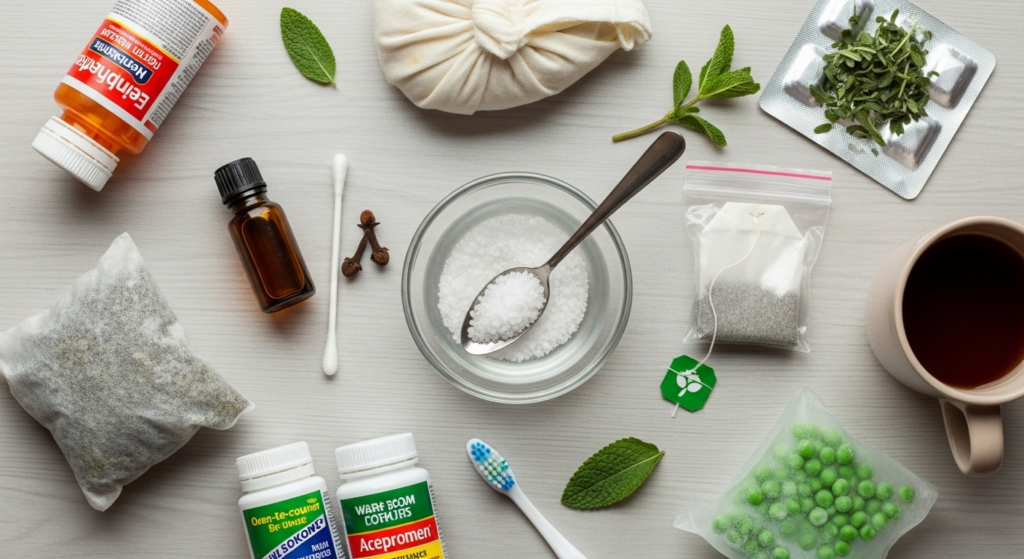
⚠️ Always follow dosage instructions and avoid mixing medications without medical advice.
4. Keep the Area as Clean as Possible
Wisdom teeth sit far back in the mouth, making them magnets for food particles and bacteria.
What Helps
- Gently brush the area with a soft-bristled toothbrush
- Angle the brush carefully to avoid irritating the gums
- Use a non-alcohol antibacterial mouthwash if recommended
Even slight improvements in oral hygiene can significantly reduce pain caused by irritation or early infection.
5. Avoid Trigger Foods (This Matters More Than You Think)
Certain foods can worsen wisdom tooth pain almost instantly.
Foods to Avoid
- Hard foods (nuts, chips, ice)
- Sticky foods (caramel, gum)
- Very hot or spicy foods
- Sugary snacks that fuel bacteria
Better Choices
- Yogurt
- Scrambled eggs
- Smooth soups
- Mashed vegetables
Reducing mechanical irritation often reduces pain within hours.
6. Elevate Your Head When Lying Down
Pain often feels worse at night and there’s a reason for that.
When you lie flat:
- Blood flow to the head increases
- Swelling and pressure worsen
- Pain signals intensify
Simple Fix
- Use an extra pillow
- Keep your head slightly elevated while sleeping
This small adjustment can noticeably reduce nighttime throbbing.
7. Clove Oil (With Caution)
Clove oil contains eugenol, a natural compound with mild anesthetic and antibacterial properties.
The National Center for Biotechnology Information (NCBI) recognizes eugenol’s temporary pain-relieving effects in dental use.
How to Use It Safely
- Dilute one drop of clove oil with a carrier oil (like olive oil)
- Apply gently with a cotton swab to the sore area
- Do not swallow or overuse
Never apply undiluted clove oil directly to gums it can cause irritation.
8. Avoid Smoking and Alcohol
Smoking and alcohol slow healing and worsen inflammation.
According to the Centers for Disease Control and Prevention (CDC), tobacco use impairs oral healing and increases infection risk.
If wisdom tooth pain is already present, smoking often makes it worse and longer-lasting.
9. Manage Jaw Stress and Clenching
Stress related clenching or grinding can aggravate wisdom tooth pain.
Helpful Strategies
- Apply warm compresses to jaw muscles (not swollen areas)
- Practice jaw relaxation exercises
- Avoid chewing gum
Reducing muscle tension lowers pressure around the wisdom teeth.

What Not to Do at Home
❌ Do not apply aspirin directly to gums
❌ Do not use sharp objects to clean under gum flaps
❌ Do not ignore recurring pain
❌ Do not rely on home remedies for swelling with fever
When Home Care Is Not Enough
Home remedies are temporary. You should see a dentist as soon as possible if you experience:
- Swelling spreading to the face or jaw
- Difficulty opening your mouth
- Fever or general illness
- Pus or persistent bad taste
- Pain that keeps returning
The ADA warns that untreated wisdom tooth problems can lead to infection, cysts, or damage to nearby teeth.
Final Thoughts
Helping wisdom tooth pain at home is about controlling inflammation reducing bacteria and minimizing irritation not curing the problem. These methods can buy you comfort and time, but they shouldn’t replace professional care.

Raheel Bhatti is the founder of WisdomToothpain.info, a specialized platform dedicated to demystifying dental health. As a dedicated digital researcher, Raheel focuses on providing clear, accurate, and evidence-based information to help individuals navigate the complexities of wisdom tooth pain with confidence.