
Wisdom tooth pain has a special talent for ruining your day. It can start as a dull ache, turn into a throbbing distraction, and then disappear just long enough to make you think the problem solved itself until it comes back. If you’re searching for how to soothe wisdom tooth pain, you’re likely looking for relief that is fast, safe, and effective, not internet folklore.
This guide explains what truly works, why it works, and when soothing pain at home is enough or not. It’s written from a dental health perspective, grounded in real evidence, and designed to help you make smart decisions without panic or guesswork.
Why Wisdom Tooth Pain Happens in the First Place
Wisdom teeth, also called third molars, usually erupt between ages 17 and 25. By then, many jaws simply don’t have enough room.
According to the American Dental Association (ADA), wisdom teeth often erupt at awkward angles or remain partially trapped beneath the gums, making them prone to irritation, infection, and inflammation.
Pain typically comes from:
- Pressure as the tooth erupts
- Inflamed gum tissue
- Food and bacteria trapped under gum flaps
- Early infection (pericoronitis)
- Impacted teeth pressing on surrounding structures
Soothing the pain means reducing inflammation, bacteria, and pressure, even if the underlying cause remains.
First Things First: When Soothing Is Appropriate
Home soothing methods are most effective when pain is:
- Mild to moderate
- Intermittent
- Not accompanied by fever or spreading swelling
If pain is severe, constant, or worsening, skip straight to a dentist. Soothing measures help with symptoms not structural problems.
The Most Effective Ways to Soothe Wisdom Tooth Pain
1. Warm Salt Water Rinses (Simple, Reliable, Underrated)
This is often the first thing dentists recommend and for good reason.
Why it works
- Reduces harmful bacteria
- Calms inflamed gums
- Helps flush trapped food debris
How to use it
- Mix ½ teaspoon of salt into a cup of warm water
- Gently swish for 30 seconds
- Repeat 2–3 times daily
The UK National Health Service (NHS) recommends saltwater rinses to relieve gum inflammation around wisdom teeth.
2. Cold Compress for Swelling and Throbbing
If pain comes with swelling or a pulsing sensation, cold therapy can help quickly.
Benefits
- Reduces inflammation
- Numbs nerve endings
- Slows blood flow to the area
How to apply
- Wrap an ice pack in a towel
- Apply to the outside of the cheek for 15–20 minutes
- Take a break before reapplying
Never apply ice directly to skin.
3. Over the Counter Pain Relievers (Used Correctly)
Pain medication doesn’t cure wisdom tooth problems, but it can help you function.
Common options
- Ibuprofen: reduces pain and inflammation
- Acetaminophen: relieves pain without affecting swelling
The Mayo Clinic confirms that NSAIDs like ibuprofen are effective for dental pain when taken as directed.
Always follow dosage instructions and avoid combining medications without medical advice.
Keep the Area Clean (Even When It’s Tender)
Wisdom teeth are notoriously hard to clean, which makes hygiene even more important when pain appears.
What helps
- Use a soft-bristled toothbrush
- Brush gently around the back of the mouth
- Angle the brush to clean under the gumline
- Use an alcohol-free antibacterial mouthwash if advised
Cleanliness alone can significantly reduce inflammation and discomfort.
Food Choices Matter More Than You Think
What you eat can either soothe or aggravate wisdom tooth pain.
Foods to avoid
- Hard foods like nuts or chips
- Sticky foods that cling to teeth
- Very hot, spicy, or crunchy meals
Better options
- Yogurt
- Mashed vegetables
- Scrambled eggs
- Smooth soups
Soft foods reduce mechanical irritation and pressure on sensitive gums.
Clove Oil: Short-Term Relief With Care
Clove oil contains eugenol, a compound with mild anesthetic and antibacterial properties.
The National Center for Biotechnology Information (NCBI) recognizes eugenol’s temporary pain-relieving effects in dentistry.
Safe use
- Dilute one drop of clove oil with a carrier oil
- Apply gently using a cotton swab
- Avoid swallowing and overuse
Clove oil soothes pain briefly but does not treat infection.
Sleep Position Can Reduce Nighttime Pain
Many people notice wisdom tooth pain worsens at night.
Why it happens
Lying flat increases blood flow to the head, which can intensify pressure and throbbing.
What helps
- Sleep with your head elevated
- Use an extra pillow
- Avoid sleeping on the painful side
This simple change often makes a noticeable difference.
Reduce Jaw Tension and Stress
Clenching or grinding your teeth can worsen wisdom tooth discomfort.
Helpful strategies
- Avoid chewing gum
- Apply a warm compress to jaw muscles (not swollen areas)
- Practice gentle jaw stretches
- Be mindful of stress-related clenching
Less tension means less pressure around the affected tooth.
What Not to Do When Soothing Wisdom Tooth Pain
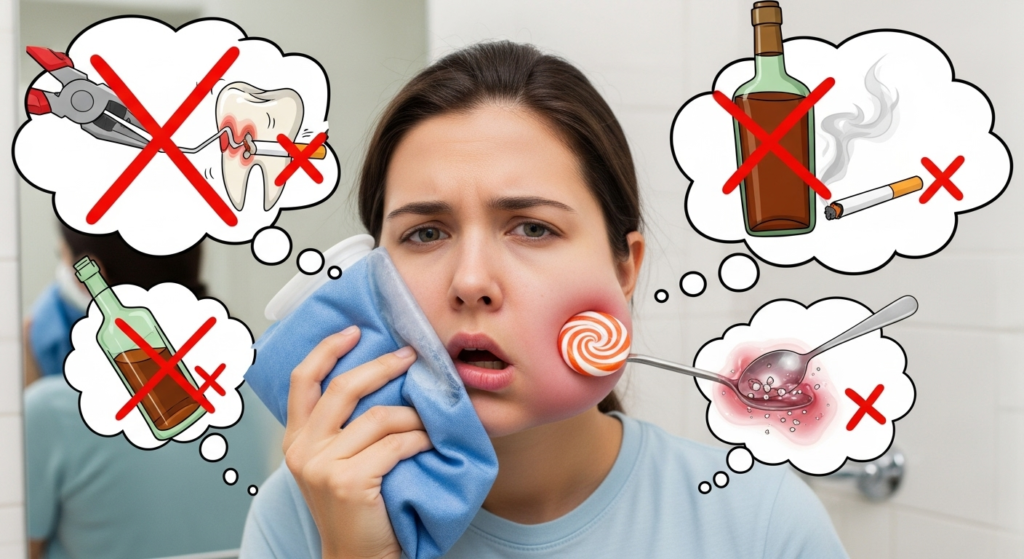
Some “popular” remedies cause more harm than relief.
❌ Do not place aspirin directly on gums
❌ Do not poke the area with sharp objects
❌ Do not ignore recurring pain
❌ Do not rely on home remedies if swelling spreads
These actions can damage tissue or delay proper treatment.
When Soothing Isn’t Enough
Home care has limits. See a dentist if you experience:
- Pain that keeps returning
- Swelling spreading to the jaw or face
- Difficulty opening your mouth
- Fever or general illness
- Persistent bad taste or pus
The ADA warns that untreated wisdom tooth problems can lead to infection, cysts, and damage to nearby teeth.
Should You Consider Wisdom Tooth Removal?
Not every painful wisdom tooth needs removal, but many eventually do.
Dentists evaluate:
- Tooth position
- Degree of impaction
- Frequency of symptoms
- Ability to keep the area clean
- Risk of future infection
Younger patients often heal faster and experience fewer complications if removal is recommended early.
Can Wisdom Tooth Pain Calm Down on Its Own?
Yes temporarily.
Pain may ease when:
- Inflammation settles
- Food debris is removed
- Pressure decreases
However, pain that keeps returning usually means the underlying problem remains. Ignoring it often leads to more severe issues later.
Long Term Habits That Help
If your dentist recommends monitoring rather than immediate treatment:
- Maintain excellent oral hygiene
- Schedule regular dental checkups
- Address mild pain early
- Avoid smoking, which delays healing
The Centers for Disease Control and Prevention (CDC) confirms tobacco use increases oral infection risk and slows recovery.
Final Thoughts
Knowing how to soothe wisdom tooth pain can bring real relief but it’s important to be honest about what soothing can and cannot do. These methods reduce inflammation, calm irritated tissue, and make pain manageable. They do not correct impacted teeth or chronic infection.