
Introduction:
Wisdom teeth, or third molars, are the last set of teeth at the back of your mouth. They usually appear in your late teens or early twenties and can sometimes cause a variety of problems, including pain, swelling, and infection. Though they can sometimes grow in without any issues, wisdom teeth are notorious for causing discomfort and requiring care.
Whether you’re dealing with mild irritation or more severe discomfort, learning how to care for your wisdom teeth at home can help alleviate pain, prevent complications, and promote healing. In this guide, we’ll cover effective methods for home care, signs that you need professional attention, and local options if you’re ready to seek further treatment.
1. Home Care for Wisdom Teeth: Simple Solutions to Relieve Pain
Managing wisdom tooth pain at home often begins with simple remedies that help reduce inflammation, ease discomfort, and prevent infection. Here are a few practical solutions you can try:
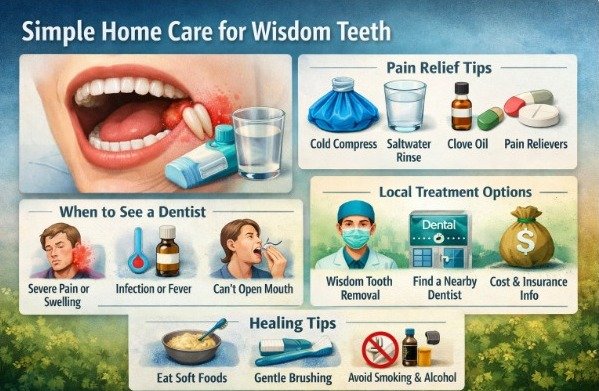
Cold Compress
Apply a cold compress or ice pack to the outside of your cheek near the affected area. This can help numb the pain and reduce swelling. Apply the compress for 15-20 minutes at a time, especially during the first 48 hours after pain starts.
Saltwater Rinse
Mix 1/2 teaspoon of salt in a glass of warm water and gently swish it around your mouth, focusing on the area around the wisdom tooth. This helps disinfect the area, reduce swelling, and promote healing.
Over-the-Counter Pain Relievers
For mild to moderate pain, over-the-counter medications such as ibuprofen or acetaminophen can provide temporary relief. Be sure to follow the dosage instructions on the label.
Herbal Remedies
Clove oil, which contains eugenol, is a natural anesthetic that can help numb the area. Dab a small amount on the affected area for quick relief. Similarly, peppermint tea bags can be used as a warm compress to reduce swelling and provide comfort.
Best Practices for Hygiene and Healing
Gentle Brushing
When caring for wisdom teeth, it’s crucial to maintain proper oral hygiene. Use a soft-bristled toothbrush and brush gently around the area to avoid irritating the gums. Make sure to floss daily but be cautious around the impacted area to prevent injury.
Avoid Smoking and Alcohol
Both smoking and drinking alcohol can delay healing and increase the risk of infections. It’s best to avoid both while you’re dealing with wisdom teeth issues.
Stay Hydrated and Eat Soft Foods
Drinking plenty of water is essential to healing. Additionally, try sticking to soft foods like mashed potatoes, yogurt, and soup to minimize irritation to your wisdom tooth area.
Elevate Your Head While Sleeping
Keep your head elevated with pillows when sleeping to help reduce swelling and alleviate throbbing in the affected area.
2. When to Seek Professional Care for Wisdom Teeth
While home care can help relieve discomfort, some situations require professional care. Here are a few signs that you should visit a dentist or oral surgeon:
Persistent or Severe Pain
If the pain persists beyond a few days or becomes unbearable, it might be a sign of an infection or other issue that requires medical attention.
Swelling or Infection
If you notice swelling that doesn’t subside or signs of infection, such as pus or a fever, it’s important to consult a dentist immediately. An untreated infection can lead to serious complications.
Difficulty Opening Your Mouth or Swallowing
Severe pain or swelling that restricts your ability to open your mouth or swallow could indicate an issue with the wisdom tooth or the surrounding tissues that requires a professional intervention.
Abscess Formation
If you notice a pocket of pus near your wisdom tooth, this could be an abscess, which requires immediate medical attention and may require an antibiotic treatment or surgical drainage.
3. Recommended Products for Wisdom Teeth Care
If you’re looking to supplement your home care routine with over-the-counter products, consider the following:
| Product Type | Purpose | Example | Where to Buy |
| Pain Relief Gel | Numbs pain and reduces swelling | Orajel, Anbesol | Drugstores, Online |
| Mouthwash & Rinses | Keeps the area clean and prevents infection | Listerine Antiseptic, Chlorhexidine | Drugstores, Online |
| Cold Compress Packs | Reduces swelling and discomfort | TheraPearl, Ice packs | Drugstores, Online |
4. Local Wisdom Teeth Care Services
If home remedies aren’t sufficient or if you need professional help, it’s time to consider seeking local dental care. Depending on where you live, prices for wisdom tooth extraction and consultations can vary. Here are some things to consider when looking for local providers:
- Look for Specialists: Many dentists or oral surgeons specialize in wisdom tooth extractions. Use search terms like “Best wisdom tooth extraction in [Your City]” to find specialists in your area.
- Cost Considerations: The cost of wisdom tooth extraction varies, with prices typically ranging from $150 to $500 per tooth, depending on factors like the complexity of the extraction and geographic location. Always check with local providers for accurate pricing.
- Insurance Coverage: Many dental insurance plans cover the cost of wisdom tooth extractions, especially if the procedure is medically necessary. Contact your insurance provider to verify your coverage.
5. Conclusion: Take Action for Better Wisdom Tooth Care
Proper care of your wisdom teeth is essential to avoid discomfort and prevent further complications. Start with simple home remedies like cold compresses and saltwater rinses to manage pain and swelling. However, if you experience severe pain, swelling, or signs of infection, it’s important to seek professional dental care as soon as possible.
By staying on top of your oral hygiene and knowing when to consult a dentist, you can ensure a smoother recovery process and keep your wisdom teeth from causing long-term issues.
FAQs
1. How can I relieve wisdom tooth pain naturally at home?
Apply a cold compress, rinse with saltwater, and use over-the-counter pain relievers like ibuprofen for pain relief. You can also use clove oil for numbing.
2. What should I do if my wisdom tooth is infected?
If you suspect an infection, visit a dentist right away. In the meantime, rinse with saltwater to keep the area clean and use pain relievers to manage discomfort.
3. How do I know when I need to visit a dentist for wisdom tooth pain?
Visit a dentist if the pain becomes severe, swelling doesn’t go down, or you have difficulty swallowing or opening your mouth.
4. Can saltwater rinses help with wisdom tooth pain?
Yes, saltwater rinses are effective for reducing inflammation, killing bacteria, and promoting healing around the wisdom tooth area.
5. Is it safe to eat hard foods with wisdom teeth?
Avoid hard or crunchy foods as they can irritate the gums and worsen pain. Stick to soft foods like mashed potatoes or yogurt.
6. How long does it take for wisdom teeth to heal?
Healing can take anywhere from a few days to a couple of weeks, depending on whether you have impacted or erupting wisdom teeth.
7. How much does wisdom tooth extraction cost?
The cost of wisdom tooth extraction ranges from $150 to $500 per tooth, depending on location, complexity, and whether it’s done by a specialist.
By following these home care tips and seeking professional advice when necessary, you can effectively manage wisdom tooth pain and promote faster healing. Whether you’re simply looking for at-home relief or need professional care, there are many ways to get the help you need for a smoother recovery.

Raheel Bhatti is the founder of WisdomToothpain.info, a specialized platform dedicated to demystifying dental health. As a dedicated digital researcher, Raheel focuses on providing clear, accurate, and evidence-based information to help individuals navigate the complexities of wisdom tooth pain with confidence.