
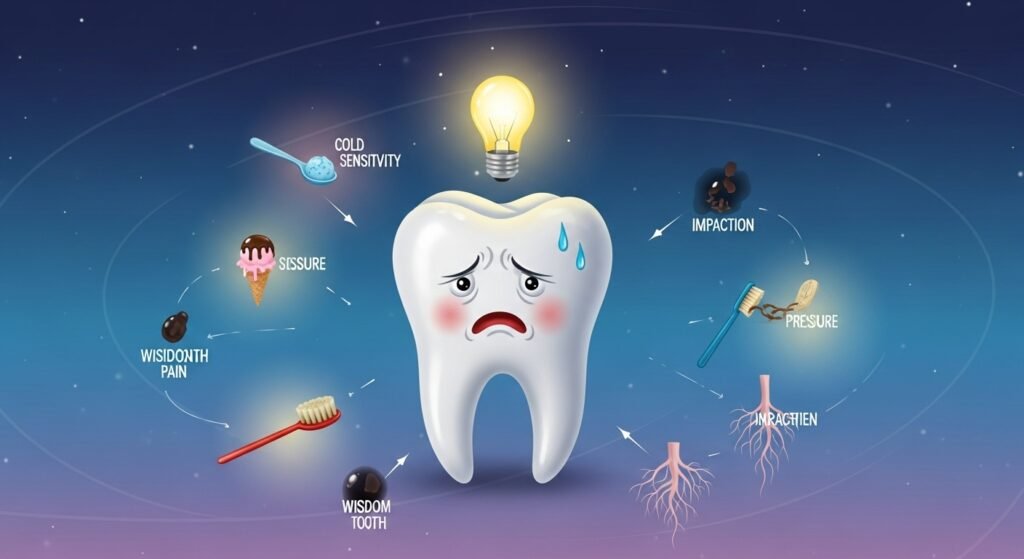
If your wisdom tooth pain seems to follow a confusing pattern aching one day, gone the next you’re not imagining things. This stop and start discomfort is very common, and it usually has clear biological reasons behind it. Understanding why wisdom tooth pain comes and goes can help you decide whether you can manage it at home or if it’s time to see a dentist.
As a dental health topic, this one sits at the intersection of anatomy, inflammation, and timing. Let’s break it down in a clear, practical, and trustworthy way.
What Are Wisdom Teeth, and Why Do They Cause Problems?
Wisdom teeth also called third molars are the last teeth to erupt, usually between ages 17 and 25. By the time they try to come in, most people’s jaws no longer have enough space to accommodate them comfortably.
This lack of space often leads to:
- Partial eruption
- Teeth growing at an angle
- Teeth trapped under the gum or bone (impaction)
These conditions set the stage for intermittent pain, rather than constant discomfort.
According to the American Dental Association (ADA), wisdom teeth are more likely than other teeth to cause complications because of their position and late eruption timing.
The Main Reason Wisdom Tooth Pain Comes and Goes
The short answer: inflammation fluctuates.
Pain is not constant because the underlying triggers pressure, infection, and gum irritation often change from day to day. Here’s how that happens.
1. Partial Eruption and Gum Flaps
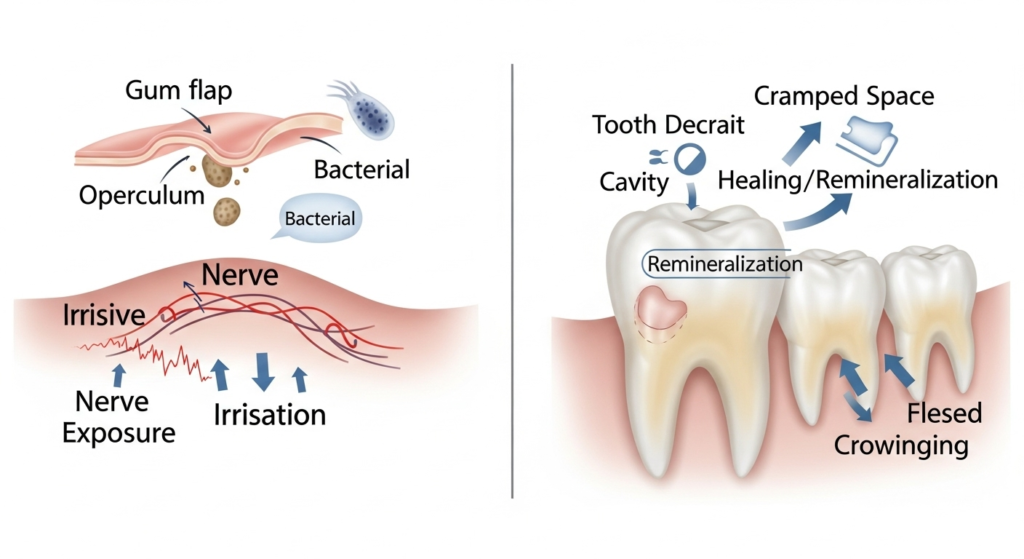
One of the most common causes of on and off wisdom tooth pain is partial eruption.
When a wisdom tooth only breaks through the gum slightly:
- A small flap of gum tissue remains over part of the tooth
- Food particles and bacteria get trapped underneath
- The area becomes inflamed and sore
This condition is called pericoronitis.
Why the Pain Isn’t Constant
- When bacteria build up, inflammation increases and pain flares
- After rinsing, brushing, or natural drainage, swelling can reduce
- Pain temporarily subsides until bacteria build up again
The National Health Service (NHS) confirms that pericoronitis often causes symptoms that “come and go” depending on infection and irritation levels.
2. Pressure From Tooth Movement
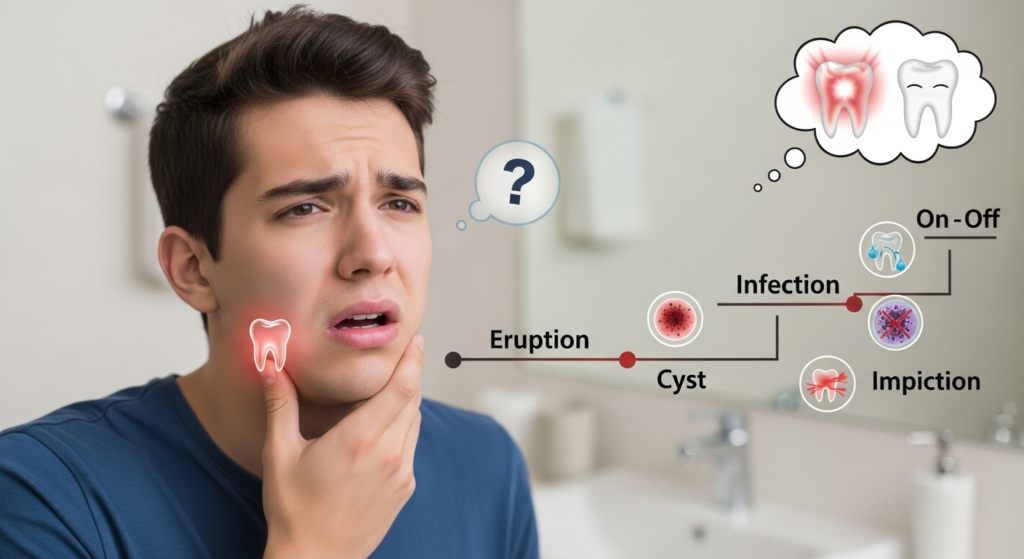
Even if a wisdom tooth hasn’t broken through the gums yet, it can still cause discomfort.
As the tooth shifts:
- It presses against nearby teeth
- It irritates surrounding bone and soft tissue
- Pressure changes trigger soreness or dull aching
Why It Feels Unpredictable
Tooth movement isn’t constant. Growth happens in phases, which explains why pain may:
- Appear for a few days
- Disappear for weeks
- Return without warning
This pressure-related pain often feels deep, throbbing, or like a headache in the jaw.
3. Swelling That Changes Throughout the Day
Inflammation is dynamic. It responds to:
- Chewing
- Talking
- Clenching or grinding
- Sleeping position
If you notice wisdom tooth pain worsening at night or after meals, swelling is likely the culprit.
Factors That Reduce Pain Temporarily
- Anti-inflammatory pain relievers
- Cold compresses
- Reduced jaw activity
- Improved oral hygiene
Once swelling decreases, pain fades until the tissue becomes irritated again.
4. Infection That Hasn’t Fully Developed (Yet)
Early-stage infections don’t always cause constant pain.
In the beginning:
- Bacteria irritate the gum tissue
- The immune system fights back
- Symptoms fluctuate as inflammation rises and falls
Warning Signs to Watch For
Even if pain disappears, infection may still be present if you notice:
- Red or swollen gums near the wisdom tooth
- A bad taste in your mouth
- Occasional jaw stiffness
- Mild fever or fatigue
According to Mayo Clinic, dental infections can cause intermittent pain before becoming severe and should not be ignored.
5. Food Trapping and Hygiene Issues
Wisdom teeth sit far back in the mouth, making them harder to clean properly.
When food debris gets trapped:
- Bacteria multiply
- Gums become irritated
- Pain flares temporarily
After flossing or rinsing, the irritation may calm down, creating the illusion that the problem is gone.
Unfortunately, it often returns once debris builds up again.
6. Sinus Pressure Can Mimic Wisdom Tooth Pain
Upper wisdom teeth sit close to the maxillary sinuses. Sinus congestion or infection can:
- Increase pressure near tooth roots
- Cause aching that feels dental in origin
- Come and go with sinus symptoms
This explains why wisdom tooth pain sometimes appears during colds, allergies, or seasonal sinus issues.
The Cleveland Clinic notes that sinus pressure can cause referred pain to upper teeth.
7. Hormones and Stress Play a Role
This one surprises many people.
Stress
Stress often leads to:
- Jaw clenching
- Teeth grinding (bruxism)
- Increased muscle tension
These habits can aggravate an already sensitive wisdom tooth area, causing pain to flare and fade depending on stress levels.
Hormones
Hormonal changes can influence inflammation and pain perception, particularly in younger adults and during certain life stages.
When On and Off Pain Is a Red Flag
Intermittent pain doesn’t always mean minor trouble.
You should see a dentist promptly if pain is accompanied by:
- Swelling that spreads to the cheek or jaw
- Difficulty opening your mouth
- Persistent bad breath or pus
- Fever
- Pain that keeps returning more frequently
According to the ADA, untreated wisdom tooth problems can lead to infection, cysts, or damage to nearby teeth.
Should You Remove a Wisdom Tooth That Only Hurts Sometimes?
This depends on several factors:
- Position of the tooth (impacted vs. erupted)
- Frequency and severity of pain
- Signs of infection or damage
- Your age and overall oral health
Dentists often recommend removal when:
- Pain keeps returning
- Infection has occurred more than once
- The tooth is unlikely to fully erupt
- Cleaning the area is consistently difficult
Early removal generally leads to faster healing and fewer complications, according to both the NHS and ADA.
How to Manage Wisdom Tooth Pain at Home (Short Term)
If your dentist has advised monitoring rather than immediate removal, these steps may help reduce flare-ups:
- Rinse with warm salt water
- Brush gently but thoroughly around the area
- Use an antibacterial mouthwash if recommended
- Apply cold compresses to the jaw
- Take over-the-counter anti-inflammatory medication as directed
These methods do not fix the underlying issue, but they can reduce discomfort temporarily.
The Bottom Line
Wisdom tooth pain comes and goes because the underlying causes pressure, inflammation, bacteria, and irritation are not constant. While temporary relief may feel reassuring, recurring pain is your body’s way of signaling that something isn’t quite right.
Ignoring intermittent wisdom tooth pain often leads to bigger problems later. A dental evaluation is the safest way to determine whether monitoring, treatment, or removal is the best course of action.

Raheel Bhatti is the founder of WisdomToothpain.info, a specialized platform dedicated to demystifying dental health. As a dedicated digital researcher, Raheel focuses on providing clear, accurate, and evidence-based information to help individuals navigate the complexities of wisdom tooth pain with confidence.