
Wisdom Teeth Pain Relief
Wisdom teeth pain can start as a dull ache and quickly turn into throbbing discomfort that disrupts eating, sleeping, and even speaking. Whether your third molars are erupting normally or you’re dealing with impacted wisdom teeth pain, finding fast and effective relief becomes the top priority.
This guide covers everything you need to know about wisdom teeth pain relief from home remedies that work to professional dental treatments and when extraction becomes necessary.
What Causes Wisdom Teeth Pain?
Wisdom teeth, also called third molars, usually emerge between ages 17 and 25. For some people, they erupt without issues. For many others, they cause inflammation, infection, or crowding.
Common causes of wisdom teeth pain include:
- Impaction (tooth trapped under gum or bone)
- Partial eruption (gum flap trapping bacteria)
- Gum infection (pericoronitis)
- Cavities in hard-to-clean areas
- Pressure on neighboring teeth
- Jaw stiffness or swelling
When bacteria collect under the gum tissue around a partially erupted tooth, it often leads to swelling, tenderness, and sometimes pus formation.
Signs You Need Immediate Wisdom Teeth Pain Relief
You may experience:
- Throbbing pain in the back of the mouth
- Swollen or red gums
- Jaw stiffness
- Bad breath or unpleasant taste
- Headaches or ear pain
- Difficulty opening your mouth
- Fever (in severe infection cases)
If swelling spreads to the cheek or neck, seek urgent dental care.
Wisdom Teeth Pain Relief at Home
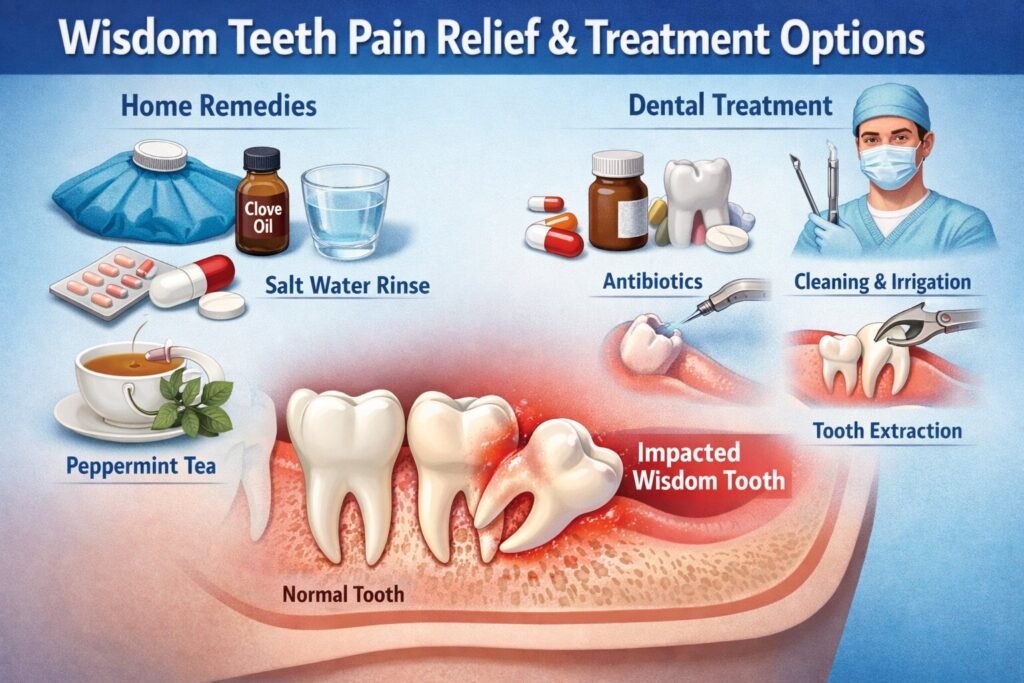
Home remedies can reduce inflammation and discomfort, especially if you’re waiting for a dental appointment. These are not permanent solutions for impacted wisdom teeth but can provide temporary relief.
1. Salt Water Rinse
One of the simplest and most effective remedies.
How it works:
Salt water helps reduce bacteria, soothe inflamed gums, and flush debris.
How to use:
- Mix ½ teaspoon salt in warm water
- Swish for 30 seconds
- Repeat 2–3 times daily
Best for: Mild gum irritation and early pericoronitis.
2. Cold Compress
Ideal for swelling and throbbing pain.
How it works:
Cold reduces inflammation and numbs nerve endings.
How to use:
- Apply ice pack wrapped in cloth
- Hold against cheek for 15–20 minutes
- Repeat every few hours
Best for: Swelling from impacted wisdom teeth.
3. Clove Oil
A traditional natural analgesic used in dental care.
Why it works:
Clove oil contains eugenol, a natural anesthetic and antibacterial compound.
How to use:
- Apply diluted clove oil to cotton swab
- Place gently on painful area
- Do not swallow
Provides short-term numbing relief.
4. Over-the-Counter Pain Relievers
Medications such as:
- Ibuprofen
- Acetaminophen
These reduce inflammation and manage pain.
Important:
- Follow dosage instructions carefully
- Avoid combining medications without medical guidance
Ibuprofen is particularly effective because it reduces inflammation around impacted teeth.
5. Hydrogen Peroxide Rinse (Diluted)
Useful if infection is suspected.
How to use:
- Mix equal parts 3% hydrogen peroxide and water
- Swish gently
- Spit out completely
Helps reduce bacteria and swelling.
Do not swallow.
6. Peppermint Tea Bags
Peppermint has mild numbing and soothing effects.
- Chill a used tea bag
- Apply to sore gum
- Leave for 10–15 minutes
Gentle relief for irritated gum tissue.
Impacted Wisdom Teeth Pain Relief
Impacted wisdom teeth occur when there isn’t enough space for proper eruption. They may grow sideways, remain trapped under gum tissue, or press against adjacent molars.
Types of Impaction
| Type | Description |
|---|---|
| Vertical | Tooth is upright but trapped |
| Horizontal | Tooth grows sideways |
| Mesial | Angled toward front of mouth |
| Distal | Angled toward back |
Horizontal impactions often cause the most pain.
Why Impacted Wisdom Teeth Hurt More
- Pressure against neighboring molars
- Trapped food and bacteria
- Gum infection (pericoronitis)
- Jawbone inflammation
- Cyst formation in severe cases
Home remedies may reduce symptoms, but impacted wisdom teeth typically require professional evaluation.
Professional Wisdom Teeth Pain Relief Options
When home remedies are not enough, a dentist may recommend one of the following treatments.
1. Prescription Medication
If infection is present:
- Antibiotics
- Prescription-strength anti-inflammatory drugs
- Antibacterial mouthwash
These reduce swelling and infection before further treatment.
2. Dental Cleaning Around the Tooth
If partially erupted, a dentist may clean the area thoroughly to remove trapped debris and bacteria.
Sometimes trimming excess gum tissue helps prevent recurring infections.
3. Wisdom Tooth Extraction
The most definitive solution.
When Is Removal Recommended?
- Repeated infection
- Severe impaction
- Damage to adjacent teeth
- Cysts or bone damage
- Persistent pain
Extraction is a common oral surgery performed under local anesthesia, sedation, or general anesthesia depending on complexity.
Recovery usually takes:
- 3–7 days for initial healing
- 2 weeks for full gum healing
What to Expect After Wisdom Tooth Removal
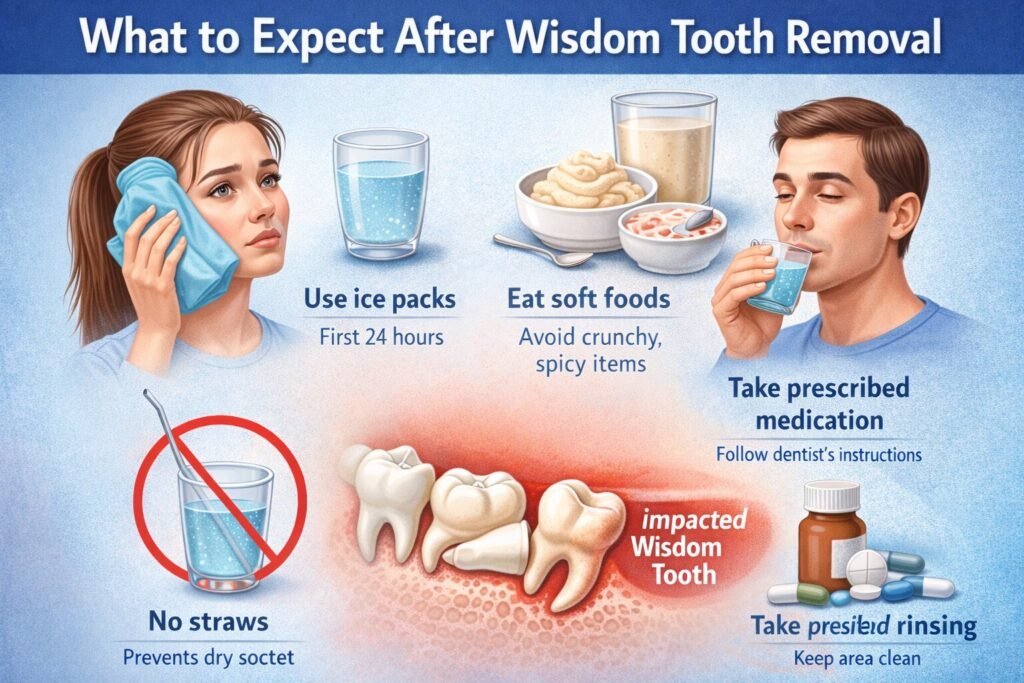
Post-extraction discomfort is normal but manageable.
Tips for Smooth Recovery
- Use ice packs during first 24 hours
- Eat soft foods (yogurt, mashed potatoes, smoothies)
- Avoid straws (prevents dry socket)
- Keep area clean with gentle rinsing
- Follow dentist’s medication instructions
Dry socket is the most common complication and causes severe pain. It happens when the blood clot dislodges from the extraction site.
Who Is Most Likely to Experience Wisdom Teeth Pain?
- Teenagers and young adults (17–25)
- People with smaller jaws
- Individuals with crowded teeth
- Those who delay dental checkups
- Patients with poor oral hygiene
Regular dental X-rays help detect impaction early.
How Long Does Wisdom Teeth Pain Last?
It depends on the cause:
| Cause | Duration |
|---|---|
| Normal eruption | A few days at a time |
| Mild gum irritation | 3–5 days |
| Infection | Until treated |
| Impaction | Ongoing until removal |
Persistent pain beyond 5 days should be evaluated by a dentist.
Can Wisdom Teeth Pain Go Away on Its Own?
Sometimes mild discomfort during eruption resolves naturally.
However, impacted wisdom teeth rarely fix themselves. Pain may temporarily subside, but the underlying problem often remains.
If pain keeps returning, professional treatment is usually necessary.
Preventing Wisdom Teeth Pain
While you cannot control jaw size or tooth position, you can reduce complications.
Prevention Tips
- Maintain excellent oral hygiene
- Use antibacterial mouthwash
- Schedule regular dental exams
- Get panoramic X-rays when advised
- Address early symptoms immediately
Early detection prevents severe infection and complex surgery.
When to See a Dentist Immediately
Seek urgent care if you experience:
- Fever
- Facial swelling
- Difficulty swallowing
- Severe jaw stiffness
- Pus discharge
- Persistent bad taste
- Uncontrolled pain
These may indicate spreading infection.
Natural Remedies vs. Dental Treatment: Pros & Cons
| Option | Pros | Cons |
|---|---|---|
| Home Remedies | Affordable, immediate relief | Temporary solution |
| OTC Medications | Reduces pain fast | Does not fix root cause |
| Antibiotics | Controls infection | Pain may return |
| Extraction | Permanent solution | Surgery required |
Home remedies are helpful short term, but recurring impacted wisdom teeth pain often needs removal.
FAQs:
1. What is the fastest way to relieve wisdom teeth pain?
Ibuprofen combined with a cold compress usually provides the quickest relief. Salt water rinses also help reduce inflammation.
2. How do I know if my wisdom tooth is impacted?
Symptoms include jaw pain, swelling, difficulty opening your mouth, and pain radiating to nearby teeth. An X-ray confirms impaction.
3. Can I treat impacted wisdom teeth pain at home?
You can reduce discomfort temporarily with salt water rinses, ice packs, and pain relievers, but impacted teeth often require professional treatment.
4. Why does wisdom teeth pain hurt at night?
Inflammation feels worse when lying down because increased blood flow to the head amplifies pressure in the gums.
5. Is wisdom teeth removal painful?
The procedure itself is not painful due to anesthesia. Mild to moderate discomfort is common during recovery.
6. How long does swelling last after wisdom tooth removal?
Swelling typically peaks at 48–72 hours and gradually reduces over 3–5 days.
7. Can wisdom teeth cause headaches and ear pain?
Yes. Pressure and inflammation in the jaw can radiate pain to the ears and temples.
8. What foods should I avoid with wisdom teeth pain?
Avoid hard, crunchy, spicy, or sticky foods. Choose soft foods that do not irritate the gums.
Conclusion
Wisdom teeth pain relief depends on the underlying cause. Mild irritation during eruption may improve with salt water rinses, cold compresses, and over, the, counter pain relievers. However, impacted wisdom teeth often require professional evaluation and possibly extraction to permanently eliminate discomfort.
If pain persists, worsens, or comes with swelling or fever, do not delay treatment. Early intervention prevents infection, protects neighboring teeth, and ensures faster recovery.

Raheel Bhatti is the founder of WisdomToothpain.info, a specialized platform dedicated to demystifying dental health. As a dedicated digital researcher, Raheel focuses on providing clear, accurate, and evidence-based information to help individuals navigate the complexities of wisdom tooth pain with confidence.