
Understanding Wisdom Tooth Pain Without Swelling
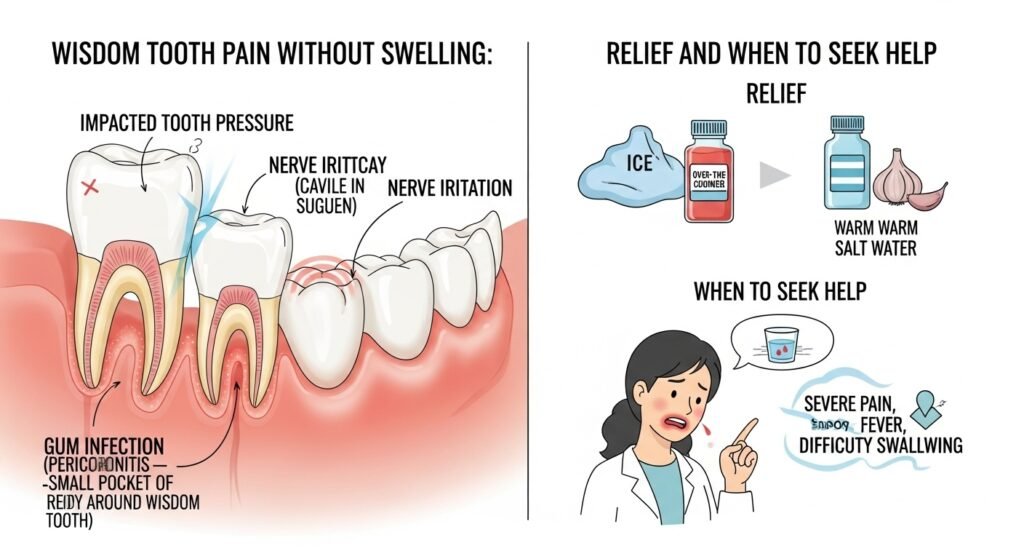
Experiencing pain in your wisdom teeth without any visible swelling can be alarming and confusing. Unlike typical tooth infections, early-stage discomfort often appears before inflammation or puffiness is noticeable. This type of pain is commonly caused by impaction, gum irritation, nerve pressure, or early infection.
Recognizing the underlying cause early can help you prevent complications like abscesses, jaw stiffness, or infection spread. Understanding the type of pain, its triggers, and potential treatments is crucial for both short-term relief and long-term oral health.
Common Causes of Pain Without Swelling
Impacted Wisdom Teeth
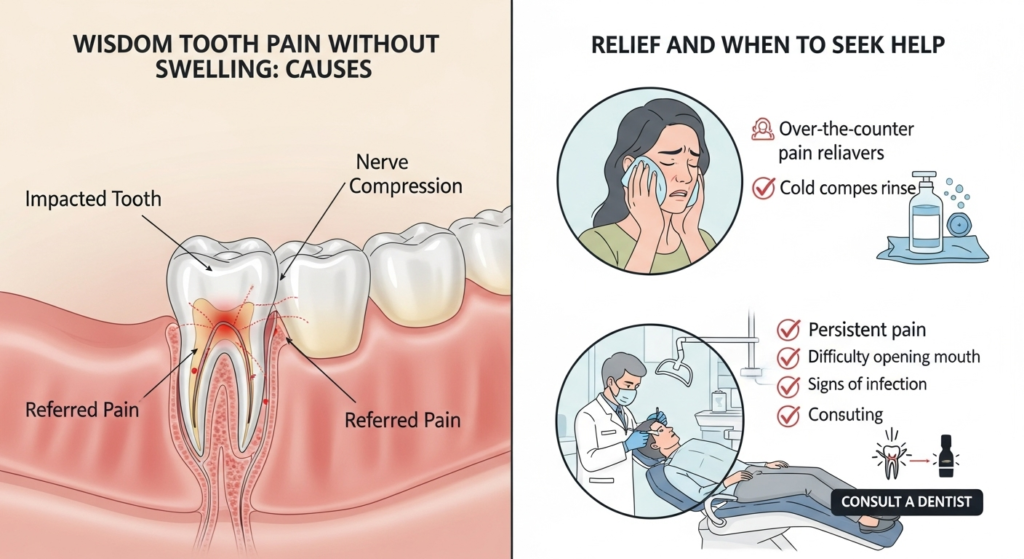
An impacted tooth occurs when the wisdom tooth is trapped under the gum or bone, pressing against adjacent teeth. Pain is often dull and persistent, and sometimes radiates to the ear or jaw.
Pericoronitis (Early Stage)
Pericoronitis is an infection of the gum flap covering a partially erupted wisdom tooth. Early-stage infections may cause localized discomfort without redness or visible swelling.
Nerve Pressure
The inferior alveolar nerve in the lower jaw or nearby nerves in the upper jaw can become irritated by a wisdom tooth pressing against surrounding structures. This often leads to radiating pain in the ear, temple, or jaw.
Tooth Decay and Gum Irritation

Hard-to-clean areas around wisdom teeth are prone to bacterial accumulation, causing early pain. This may appear before any swelling, especially when consuming hot or cold foods.
Sinus-Related Discomfort
Upper wisdom teeth lie close to the maxillary sinus, so sinus pressure or congestion can mimic tooth pain even without gum inflammation.
Symptoms That May Appear Before Swelling
| Symptom | What It Suggests |
| Dull jaw ache | Possible impaction |
| Sharp pain when chewing | Gum flap irritation |
| Ear or temple pain | Nerve involvement |
| Bad taste in mouth | Early infection |
| Difficulty opening mouth | Initial inflammation |
Pain location, intensity, and triggers can guide self-monitoring while awaiting professional evaluation.
How Dentists Evaluate Pain Without Swelling
Dentists use several methods to identify the cause of pain:
- Panoramic X-rays (OPG): Show tooth position, impaction, or bone abnormalities.
- CBCT Scans: 3D imaging to assess nerve proximity and complex impactions.
- Gum Probing & Visual Inspection: Detect early infection under the gum flap.
- Bite Assessment: Determines pressure points and jaw alignment issues.
A proper diagnosis helps avoid unnecessary extraction and ensures timely treatment.
Home Relief and Management
While professional evaluation is essential, certain measures can provide temporary relief:
Helpful Options:
- Warm saltwater rinses to reduce bacteria and soothe gum tissue.
- Over-the-counter painkillers like ibuprofen or acetaminophen (as directed).
- Cold compress on the jaw to ease discomfort.
- Soft foods to minimize chewing stress.
Ineffective or Risky Practices:
- Self-prescribing antibiotics without evaluation.
- Ignoring persistent pain.
- Applying clove oil directly to gums excessively.
Painkillers and home remedies only mask symptoms they do not treat the underlying cause.
When to Seek Urgent Dental Care
Certain signs indicate serious complications that require immediate attention:
- Fever or chills
- Difficulty opening the mouth fully
- Pain radiating to the neck, ear, or temple
- Swelling that develops rapidly
- Persistent or worsening discomfort over several days
Early intervention reduces the risk of abscess formation or surgical complications.
Treatment Options and Decision Framework
| Situation | Recommended Action |
| Mild pain, no infection | Monitor, maintain hygiene, home relief |
| Recurrent or persistent pain | Dental X-ray and evaluation |
| Early signs of infection | Professional cleaning, possible antibiotics |
| Impacted or problematic tooth | Surgical extraction |
Choosing the correct path depends on pain severity, infection signs, and tooth position.
Cost Considerations and Global Access
Wisdom tooth removal costs vary worldwide:
| Region | Simple Extraction | Surgical Extraction |
| USA | $150–$300 | $500–$1,200 |
| UK | £50–£150 | £200–£600 |
| Australia | AUD 100–200 | AUD 400–900 |
| Dubai | AED 300–600 | AED 1,000–2,500 |
Finding a Dentist Globally:
- Search terms: “wisdom tooth dentist near me,” “oral surgeon [city/country]”
- Provider types: General dentists, oral and maxillofacial surgeons, teaching hospitals
- Important qualifications: Dental degree, surgical certification, licensed practice
Common Mistakes to Avoid
- Waiting for swelling to appear before consulting a dentist
- Taking antibiotics without medical guidance
- Assuming pain will naturally resolve
- Ignoring radiating pain to ear or jaw
Alternatives to Extraction
Not all cases require removal. Options include:
- Operculectomy: Removing gum flap to reduce irritation
- Monitoring: Regular check-ups if teeth are partially erupted but asymptomatic
- Orthodontic considerations: If tooth alignment may change naturally
Prevention and Long-Term Care
- Schedule regular dental X-rays in late teens and early twenties
- Brush and floss behind the molars to reduce bacterial buildup
- Avoid tobacco, which delays healing and increases infection risk
- Maintain routine dental check-ups to monitor eruption and impaction
People Also Ask (FAQs)
- Can wisdom tooth pain occur without swelling?
Yes. Early impaction, nerve irritation, or minor infection can cause discomfort before visible swelling appears. - How long does pain last before swelling develops?
Duration varies; some experience pain for days to weeks without swelling, while others may notice swelling within a few days. - Should I remove a wisdom tooth if there’s no swelling?
Not always. X-rays and dental evaluation determine necessity based on tooth position and infection risk. - Can wisdom tooth pain radiate to other areas?
Yes, especially to the ear, jaw, temple, or even the throat due to nerve pathways. - What are early signs of infected wisdom teeth?
Bad taste, jaw stiffness, tenderness, mild pain while chewing, and gum irritation. - Are there home remedies for wisdom tooth pain without swelling?
Warm saltwater rinses, soft foods, painkillers, and cold compresses can temporarily relieve discomfort. - How much does wisdom tooth extraction cost globally?
Costs vary by region; simple extraction ranges from $50–$300, while surgical procedures can exceed $1,000 in certain countries. - Can impacted wisdom teeth cause earaches?
Yes. Pressure from impacted lower or upper molars can irritate the inferior alveolar or adjacent nerves.
Conclusion
Wisdom tooth pain without swelling is a common but often overlooked warning sign. It can indicate impaction, nerve pressure, or early infection. Recognizing symptoms early, using temporary relief measures safely, and seeking timely dental evaluation can prevent serious complications and simplify treatment.

Raheel Bhatti is the founder of WisdomToothpain.info, a specialized platform dedicated to demystifying dental health. As a dedicated digital researcher, Raheel focuses on providing clear, accurate, and evidence-based information to help individuals navigate the complexities of wisdom tooth pain with confidence.