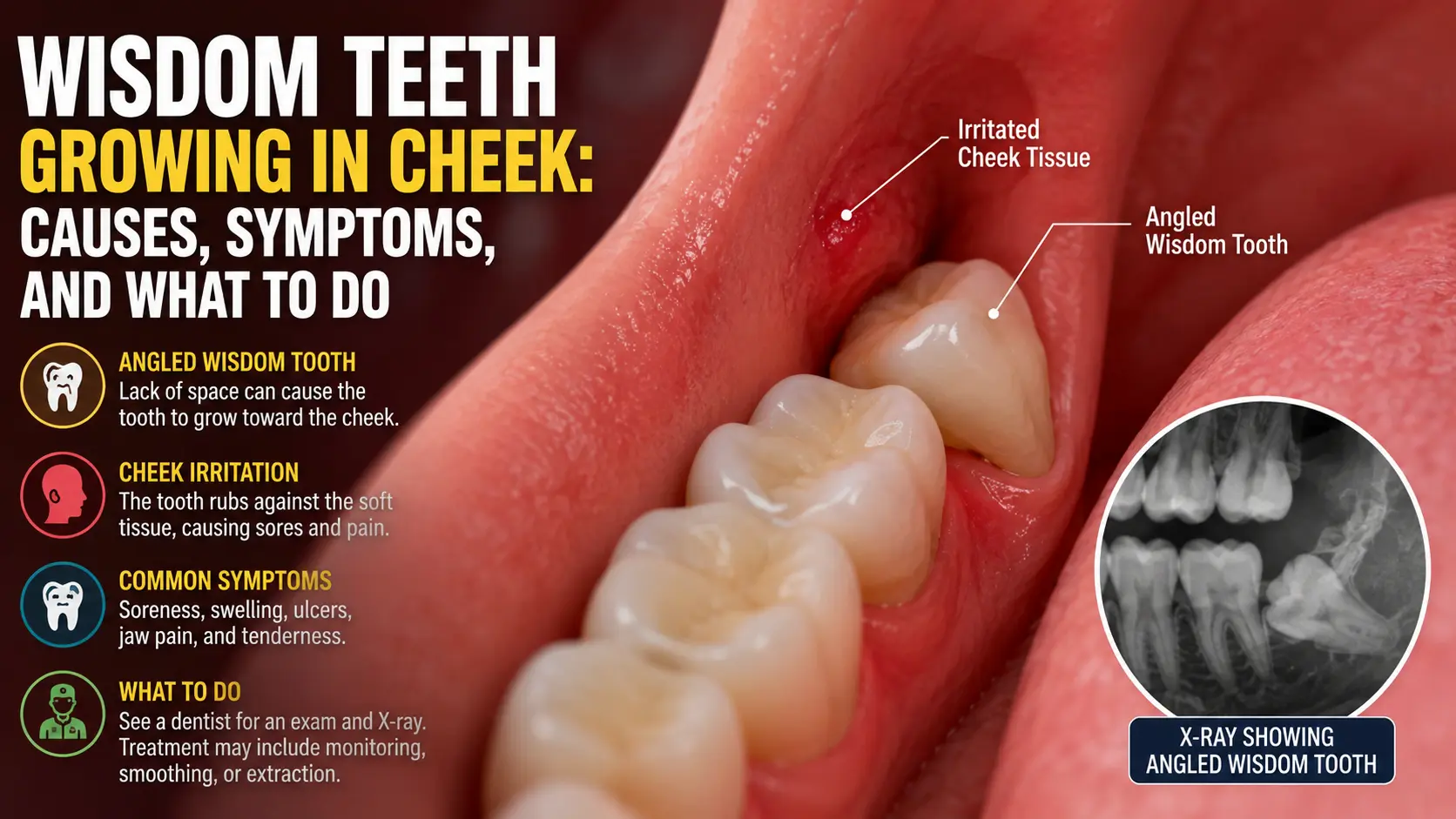
That raw, irritated patch on the inside of your cheek near your back molars might not be from accidentally biting yourself. If a wisdom tooth is erupting at an angle instead of straight up, it can push toward the cheek tissue and that’s a problem worth understanding before it gets worse.
Why Wisdom Teeth Sometimes Angle Toward the Cheek
Wisdom teeth, or third molars, are usually the last teeth to come in, often between the late teens and mid-20s. Some jaws may not have enough room for wisdom teeth to erupt normally, so instead of coming in straight, a wisdom tooth can tilt sideways, angle forward, or remain trapped beneath the gum or bone. Cleveland Clinic: Wisdom Teeth
When a wisdom tooth becomes trapped or erupts in an abnormal position, it may be described as impacted. If it angles toward the cheek, it can repeatedly irritate the surrounding tissue every time you chew or talk.
Signs a Wisdom Tooth Is Growing Into Your Cheek
The most common clue is a sore or irritated spot on the inside of the cheek that doesn’t heal the way a normal bite wound would, because it keeps getting re-irritated. Other signs can include:
- Swelling near the back of the jaw
- Tenderness or a dull ache when chewing
- A visible bulge or partially erupted tooth pressing outward
- Small cuts or ulcers on the cheek lining from a sharp tooth edge
Symptoms associated with impacted wisdom teeth can also include jaw or facial pain, swelling, bad breath or taste, and difficulty opening the mouth. Cleveland Clinic: Impacted Wisdom Teeth
These symptoms may come and go, but they can return if the underlying tooth position continues to cause irritation.
When It’s More Than Irritation
Occasionally, irritation around a wisdom tooth can occur alongside infection or inflammation. Seek prompt dental care if you notice fever, worsening swelling, severe pain, difficulty opening your mouth, or a bad taste accompanied by feeling unwell. These symptoms can require professional treatment rather than home care alone. NHS: Wisdom Tooth Removal
Difficulty breathing or swallowing, or rapidly worsening swelling, requires urgent medical attention. Cleveland Clinic: Wisdom Teeth Removal
What to Do About It
A dentist or oral surgeon can assess what’s happening with an examination and, when needed, a dental X-ray to determine the tooth’s position and whether it is impacted. Cleveland Clinic: Impacted Wisdom Teeth
Depending on the situation, treatment may include:
- Monitoring the tooth if it is not causing significant problems
- Addressing a sharp or irritating area when appropriate
- Extraction when an impacted wisdom tooth causes recurring pain infection, or other dental problems
Not every impacted wisdom tooth needs to be removed. Treatment depends on the tooth’s position symptoms and overall oral health. NHS: Wisdom Tooth Removal
In the meantime, gently rinsing with warm salt water may help soothe the area. NHS guidance recommends dissolving salt in warm water and rinsing gently. NHS: Toothache and Salt Water Rinse However, this will not change the position of the tooth.
If the tooth continues to irritate your cheek, arrange a dental evaluation rather than repeatedly treating the irritation at home.

Hi, I’m Jack! I am a health writer at Wisdom Tooth Pain, dedicated to sharing practical tips, remedies, and evidence-based guidance to help you manage wisdom tooth discomfort and maintain better oral health. This content is for informational purposes only and isn’t a substitute for professional dental advice. Always consult a licensed dentist for diagnosis and treatment.