
Wisdom Tooth Pain Symptoms
Wisdom tooth pain symptoms usually begin as a dull ache or pressure at the very back of the jaw, often with red, swollen, or tender gums. Other common signs include jaw stiffness, discomfort when chewing, bad breath, and an unpleasant taste. Some people also feel pain in the ear, temple, or neck, or develop a sore throat. Mild soreness while a tooth is coming in can be normal. Pain that is constant, severe, or paired with facial swelling or fever is not, and it needs a dentist.
This guide explains how to recognize the early signs, what causes the pain, how to relieve it at home, how dentists diagnose and treat it, and which symptoms should not wait.
What Is Wisdom Tooth Pain?
Wisdom teeth are your third molars, the last teeth to develop, at the back of the upper and lower jaws. Most adults have four, though some have fewer and a few have none.
Wisdom tooth pain is any discomfort that comes from these teeth or from the gum and bone around them. It can be a mild pressure or a throbbing ache that keeps you awake. Because the causes vary, the same ache can be harmless in one person and a sign of infection in another.
When Do You Get Wisdom Teeth?
Wisdom teeth usually begin to break through the gums between the late teens and mid-twenties, which is why they are often linked to early adulthood. Timing varies widely. Some people feel them at 16 or 17, some not until their thirties, and some never see them because the teeth stay buried in the jaw.
By this age the jaw has usually stopped growing. If there is not enough room, a wisdom tooth may come in at an angle, emerge only partly, or stay trapped. Most wisdom tooth problems trace back to this lack of space.
First Signs of Wisdom Teeth Coming In
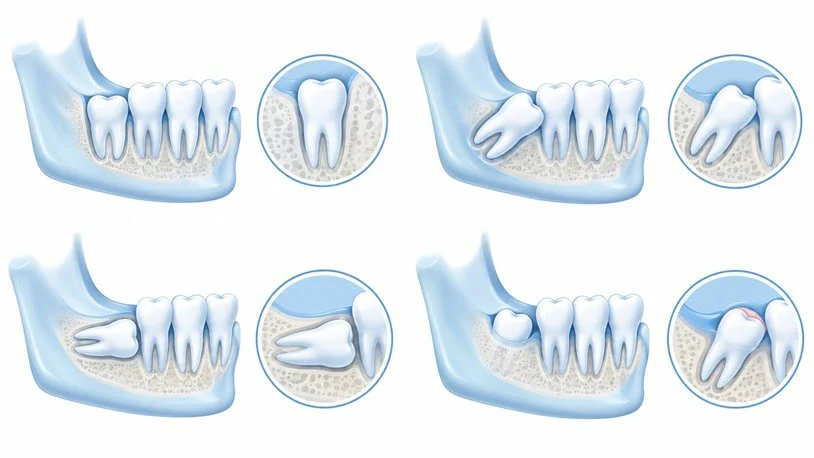
The first signs of wisdom teeth coming in are often subtle and easy to mistake for something else. If you are trying to work out how to tell when your wisdom teeth are coming in, watch for these:
- A dull ache or pressure at the back of the jaw. It may come and go for weeks or months.
- Tender, puffy gums behind your last molars. The area may look red, and you may feel a firm bump under the surface.
- A pale edge or tip of a tooth showing through the gum. This means the tooth has started to break through.
- A flap of gum over part of a tooth. This happens when a tooth is only partly through.
- A tired or tight jaw. It is most noticeable after chewing.
- Slight bleeding when you brush or floss at the back. Irritated gum tissue bleeds easily.
- A change in how your bite feels. Some people notice a sense of crowding, though this is not always caused by wisdom teeth.
Symptoms alone can’t confirm what is happening. A dental X-ray shows whether the teeth are present, how they are angled, and whether they have room to emerge.
Wisdom Tooth Pain Symptoms: A Complete Checklist
The table groups common symptoms by how urgently they may need attention.
| Symptom | What it may suggest | How soon to act |
| Dull ache or pressure at the back of the jaw | Tooth erupting or shifting | Monitor; mention at your next dental visit |
| Red, swollen, or tender gums | Irritation or early gum infection | Book an appointment soon |
| Bleeding near the back molars | Trapped food or gum inflammation | Book an appointment soon |
| Jaw stiffness or trouble opening wide | Inflammation around the tooth | See a dentist promptly |
| Bad breath or bad taste | Trapped bacteria or infection | See a dentist promptly |
| Headache, earache, or sore throat | Referred pain or spreading inflammation | See a dentist if it persists |
| Swelling in the cheek or jaw | Spreading infection | Same-day dental care |
| Fever, swollen glands, or pus | Infection | Same-day dental care |
| Difficulty swallowing or breathing | Serious spreading infection | Emergency care immediately |
Gum symptoms
Gums around a wisdom tooth may look red, swollen, or shiny. They can feel sore and bleed when brushed. When a tooth is only partly through, the gum can form a flap that traps food and bacteria, a common trigger for infection.
Pain and pressure
The ache is felt at the far back of the mouth, on one side or both. It may throb and often builds after meals, especially if food lodges around the tooth. Some people feel pressure against the neighboring molar, which can make that tooth sore too.
Jaw and chewing problems
Swelling and inflammation can make it hard to open your mouth fully. Chewing may become uncomfortable, and you may find yourself favoring the other side. Stiffness that keeps getting worse is a reason to be seen.
Referred pain: headaches, earaches, and sore throat
Nerves in the face and jaw overlap, so pain does not always stay where the problem is. Wisdom tooth pain can spread to the ear, temple, or neck and can feel like a headache. Inflammation at the back of the mouth can also cause a sore throat or discomfort when swallowing. People sometimes suspect an ear infection or a cold when the real source is a tooth.
Signs of infection
An infected wisdom tooth can cause a foul taste, bad breath, pus at the gum line, cheek or jaw swelling, fever, and tender lymph nodes under the jaw. These signs mean bacteria have taken hold, and the problem is unlikely to clear up on its own.
Normal Eruption or a Real Problem?
This is the question most readers are really asking, and the pattern of symptoms usually gives a clue.
More likely normal eruption:
- The ache is mild and comes and goes
- Gums are slightly tender but not badly swollen
- There is no fever, pus, or bad taste
- Discomfort eases within a few days
More likely a problem:
- Pain is constant, worsening, or throbbing
- Swelling spreads beyond the gum to the cheek or jaw
- There is a bad taste, foul breath, or discharge
- You have trouble opening your mouth
- The same spot flares up repeatedly
If your symptoms fit the second list, don’t wait to see whether they pass. Keep in mind that impacted wisdom teeth do not always cause symptoms, so a lack of pain does not guarantee a tooth is healthy.
Why Wisdom Teeth Cause Pain
Normal eruption
A tooth moving through gum and bone can cause temporary soreness, much like teething in babies. If the tooth has room and comes in straight, the discomfort is usually mild and fades.
Impacted wisdom teeth
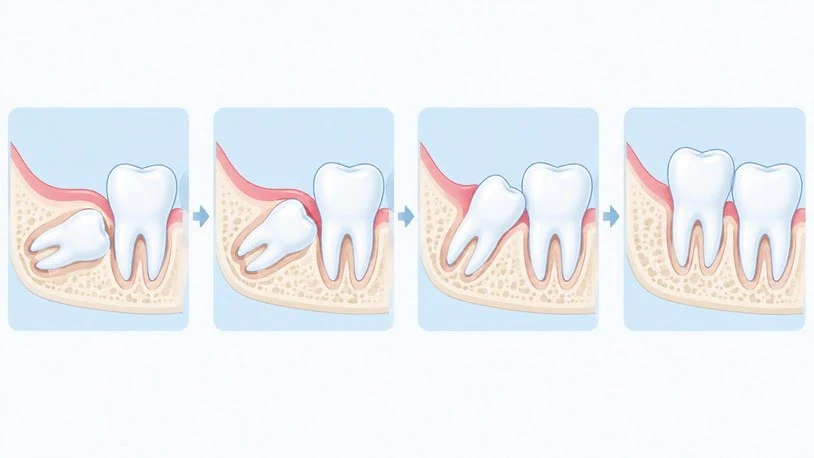
A wisdom tooth is impacted when it cannot fully emerge. It may lean toward the next molar, tilt backward, lie sideways, or stay under the gum or inside the bone. Impacted teeth can cause pain, gum problems, and damage to nearby structures, although some cause no symptoms at all.
Pericoronitis
Pericoronitis is inflammation or infection of the gum tissue around a partly erupted tooth. Food and bacteria collect under the gum flap and are hard to clean out. The result is swelling, pain, a bad taste, and sometimes difficulty opening the mouth. It is one of the most common reasons people seek care for wisdom tooth pain.
Decay and gum disease
Wisdom teeth are hard to reach with a toothbrush and floss. Decay can develop on the wisdom tooth or on the back surface of the second molar in front of it, and gum disease can take hold in the tight space between them.
Pressure on neighboring teeth
An erupting or tilted wisdom tooth can push against the second molar and the bone around it. This can cause soreness, and dentists monitor it because it can contribute to damage over time.
Cysts
Occasionally, a fluid-filled sac forms around an impacted tooth. This is uncommon, but it is one reason dentists follow impacted teeth with X-rays instead of ignoring them.
Could It Be Something Else?
Not every ache at the back of the jaw comes from a wisdom tooth. Other possible causes include:
- A cavity or cracked tooth in a nearby molar
- Gum disease affecting neighboring teeth
- Sinus pressure, especially with upper teeth and congestion
- Jaw joint (TMJ) problems, which can cause jaw pain and ear discomfort
- Teeth grinding (bruxism), which strains the jaw muscles and teeth
- An ear infection or throat infection
If it isn’t clear where the pain is coming from, a dental exam and X-ray can sort it out quickly. Guessing risks treating the wrong problem.
How to Cure Wisdom Tooth Pain: What Works and What Doesn’t

Home care can ease wisdom tooth pain, but it cannot fix the cause. If the pain comes from an impacted tooth, infection, or decay, the real solution is dental treatment. Think of home measures as a bridge until you can be seen.
Home relief options
Warm salt water rinses. Dissolve about half a teaspoon of salt in a glass of warm water, swish gently, and spit. This can soothe irritated gums and help clear loose debris. Repeat several times a day, especially after meals.
Over-the-counter pain relief. Ibuprofen and acetaminophen (paracetamol) are common choices. Follow the label or your pharmacist’s or doctor’s advice, and check that they suit you, especially if you have stomach, kidney, or liver conditions, are pregnant, or take other medications. Never place aspirin directly on the gum, as it can burn the tissue.
Cold compress. Hold a cold pack wrapped in a cloth against your cheek for short periods. This can reduce swelling and dull the ache.
Gentle, thorough cleaning. Keep brushing, but be careful around the tender spot. A soft brush and gentle flossing remove the plaque and food that feed irritation.
Soft foods. Avoid crunchy, sticky, or very hot foods that irritate the area or lodge under the gum, and chew on the other side.
Diluted clove oil. Some people use it for temporary numbing. It can irritate gums if used undiluted or too often, so use it sparingly and stop if it stings.
Night-time comfort. Pain often feels worse when you lie down, partly because there are fewer distractions and partly because blood flow to the head increases. Propping your head on an extra pillow, rinsing before bed, and taking pain relief as directed can help you get through the night.
What to avoid
- Don’t poke at the area with sharp objects.
- Don’t skip care because the pain briefly eased. Pain can lessen when an infection drains while the infection remains.
- Don’t take leftover antibiotics. They should be prescribed for the current problem.
- Don’t apply heat to a swollen face, as it can worsen swelling.
How Dentists Diagnose and Treat Wisdom Tooth Pain
A dentist will examine the gums, check how far the teeth have come through, and ask about your symptoms and how long they have lasted. An X-ray, often a panoramic image, shows the position of the teeth, their roots, and their relationship to nearby teeth and nerves.
Treatment depends on the cause:
- Cleaning and irrigation of the area under a gum flap
- Antibiotics when there is infection with swelling or fever
- Treating decay in the wisdom tooth or the neighboring molar
- Removing the gum flap in select cases
- Extraction, the definitive solution when a tooth is impacted, repeatedly infected, badly decayed, or damaging nearby teeth
Extraction is sometimes done by a general dentist and sometimes by an oral and maxillofacial surgeon, depending on how complex the tooth position is.
When to See a Dentist
Book an appointment if you have:
- Pain lasting more than a few days
- Gums that stay red, swollen, or bleeding
- A persistent bad taste or bad breath
- Jaw stiffness that is getting worse
- Repeated flare-ups in the same spot
Seek same-day dental or urgent medical care if you have:
- Swelling in the face or jaw
- Fever or a general sense of being unwell
- Pus or discharge from the gum
- Pain severe enough to prevent sleep or eating
Go to an emergency department right away if you have difficulty swallowing or breathing, or swelling that spreads toward the eye or neck. These can signal a serious spreading infection.
What Happens If You Ignore Wisdom Tooth Pain?
Mild eruption discomfort may settle on its own. Ongoing pain from an impacted or infected tooth tends to return and can lead to:
- Recurring infections and abscesses
- Decay in the wisdom tooth or the tooth in front of it
- Gum disease around the back teeth
- Damage to nearby teeth or bone
- Cysts, in rare cases
- Infection spreading into deeper tissues of the face and neck
Impacted teeth that cause no symptoms and show no sign of disease may simply be monitored. That decision is best made with your dentist after reviewing X-rays.
Wisdom Tooth Removal: What to Expect
Before. Your dentist takes X-rays, reviews your medical history, and explains anesthesia options, from local anesthetic to sedation.
During. The area is numbered. If the tooth is impacted, the surgeon may open the gum or divide the tooth to remove it in pieces.
Afterward. Expect swelling, mild bleeding, and soreness for the first few days. To help recovery:
- Use cold compresses on the first day
- Stick to soft foods
- Avoid straws, smoking, and vigorous rinsing early on, since they can disturb the blood clot
- Follow your surgeon’s instructions on medication and cleaning
Dry socket. This occurs when the blood clot is lost or fails to form, exposing bone. It typically causes severe pain a few days after removal, sometimes with a bad taste. Contact your dentist if pain gets worse instead of better.
Many people feel much better within several days, though full healing of gum and bone takes longer. Complex extractions can take more time.
How to Reduce Wisdom Tooth Problems
You can’t always prevent impaction, but you can lower the risk of infection and decay:
- Brush twice daily and clean the very back of your mouth carefully
- Floss daily, including around the back molars
- Rinse after eating if food tends to get trapped
- Keep regular check-ups so X-rays can track your wisdom teeth early
- Avoid smoking, which slows healing and worsens gum problems
Frequently Asked Questions
How do I know if it’s wisdom tooth pain?
It usually feels like a dull ache or pressure at the very back of the upper or lower jaw, often with sore or swollen gums nearby. It may spread to the ear, temple, or neck. Because other problems feel similar, a dental exam with an X-ray is the reliable way to confirm it.
How long does wisdom tooth pain last?
It varies. Mild eruption discomfort can come and go for days or weeks. Pain from an infection typically continues or returns until it is treated. Pain lasting more than a few days deserves a dental check.
Can wisdom tooth pain go away on its own?
Mild pain can settle as the tooth moves into position or gum irritation calms. Pain from impaction, infection, or decay often returns, so relief does not always mean the problem is gone.
Can wisdom teeth cause headaches, earaches, or a sore throat?
Yes. Pain and inflammation at the back of the jaw can spread through shared nerve pathways to the head, ear, and throat. If these symptoms appear alongside gum swelling, a bad taste, or jaw stiffness, a wisdom tooth may be the source.
How can I relieve wisdom tooth pain at night?
Rinse gently with warm salt water before bed, take an appropriate over-the-counter pain reliever as directed, and use a cold compress if there is swelling. Sleeping with your head slightly raised may help. If pain keeps you awake, book a dental visit soon.
What can be mistaken for wisdom tooth pain?
Cavities in nearby molars, gum disease, sinus problems, jaw joint disorders, teeth grinding, and ear infections can all feel similar. A dentist can tell them apart.
Is it safe to leave wisdom teeth in?
Sometimes. If they have fully erupted, are healthy, and can be cleaned well, they may not need removal. Teeth that keep causing pain, infection, or damage are usually better removed.
Can I live with impacted wisdom teeth?
Some people do, especially if the teeth cause no symptoms and show no signs of disease. They still need regular monitoring, because problems can develop without obvious warning.
Can wisdom tooth pain start later in life?
Yes. Symptoms are most common while the teeth are erupting, but problems can appear later, particularly if a partly erupted tooth develops decay or gum disease.
How painful is wisdom tooth removal recovery?
Most people have soreness and swelling for a few days, manageable with the pain relief and aftercare your dentist recommends. Severe or worsening pain after the first few days should be checked, as it can signal dry socket or infection.

Raheel is the founder of WisdomToothPain. info, a specialized platform dedicated to demystifying dental health. As a dedicated digital researcher, Raheel focuses on providing clear, accurate, and evidence-based information to help individuals navigate the complexities of wisdom tooth pain with confidence. This content is for informational purposes only and isn’t a substitute for professional dental advice. Always consult a licensed dentist for diagnosis and treatment.


Pingback: Wisdom Tooth Pain: Causes, Signs & Fast Relief Tips - wisdomtoothpain.info
Pingback: How to Help Wisdom Tooth Pain: Fast, Safe Relief Steps - wisdomtoothpain.info