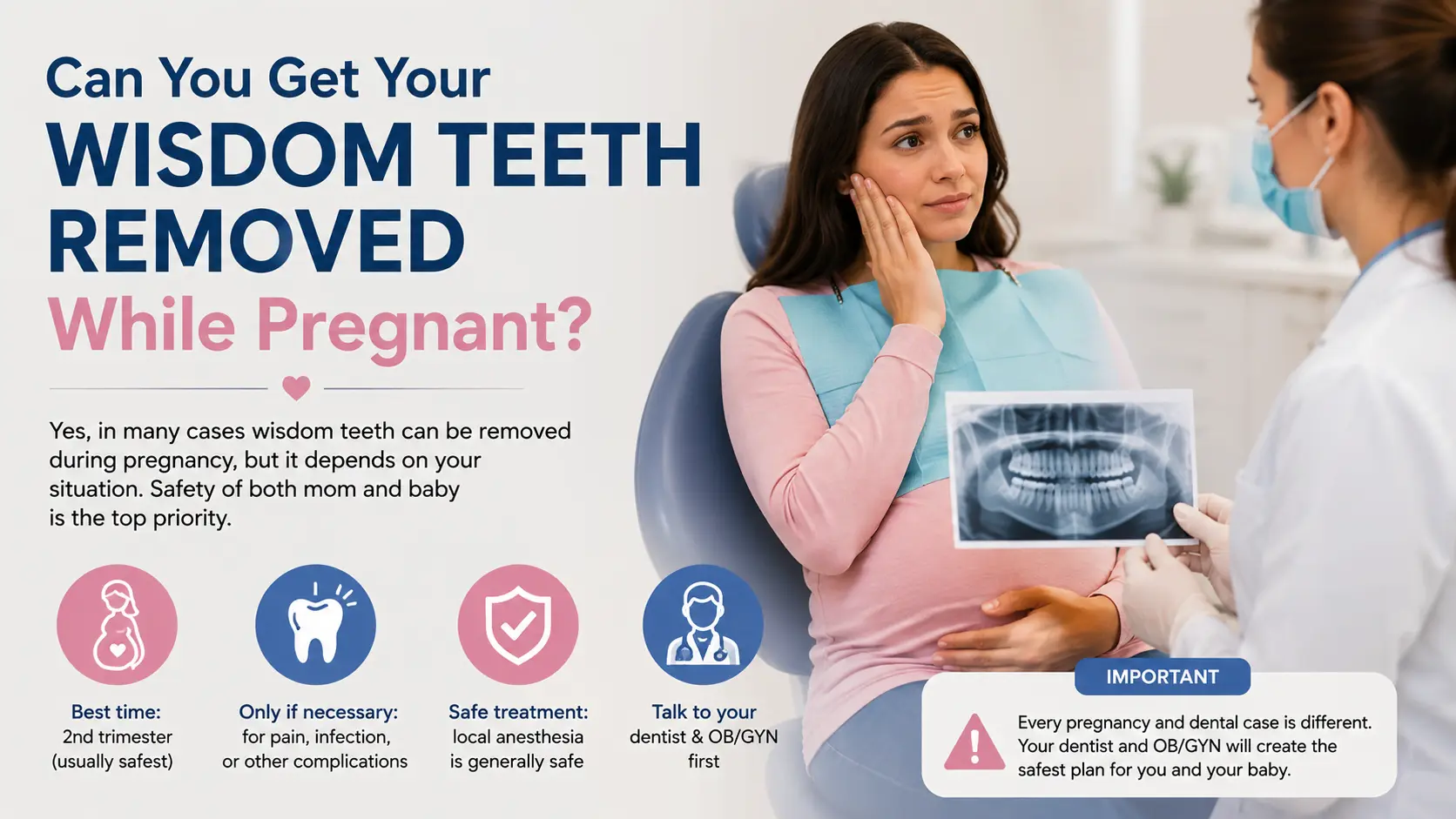
Yes, you can get your wisdom teeth removed while pregnant, but timing matters more than almost anything else in the decision. Dentists and oral surgeons don’t treat every trimester the same way. If your wisdom tooth pain is mild and manageable, most providers will recommend waiting until after delivery. But if you’re dealing with an infection, an abscess, and swelling that won’t go down, removal often can’t wait for a “better” time and doing nothing carries its own risks to you and your baby.
The reason timing is such a big deal comes down to what’s happening at each stage of pregnancy. During the first trimester, your baby’s major organs are still forming, so most dentists avoid any non-urgent procedures and try to limit medication and stress exposure as much as possible. By the second trimester, the highest-risk window for fetal development has passed, and most people feel physically more comfortable sitting through a procedure which is why this stage is widely considered the safest time for wisdom teeth removal during pregnancy, if it’s needed at all. The third trimester brings its own complications: lying back in a dental chair for an extended procedure gets uncomfortable fast, and some providers prefer to avoid non-emergency treatment simply because of the physical strain on the mother.
None of this means pregnancy makes wisdom tooth problems worse on its own, but it can feel that way. Rising hormone levels, especially progesterone and estrogen, increase blood flow to your gums and make them more prone to swelling, sensitivity, and inflammation. That means a wisdom tooth that was a minor nuisance before pregnancy can suddenly become genuinely painful and start showing signs of infection. Left untreated, dental infections don’t just affect your mouth, they can spread and place added stress on your body, which is why oral surgeons take pregnant patients’ symptoms seriously rather than automatically telling everyone to wait it out.
So the real question isn’t just “can you get your wisdom teeth removed while pregnant” it’s whether your specific situation is urgent enough to justify treatment now, and stable enough to safely wait. That decision should always be made jointly by your dentist and oral surgeon and your OB-GYN, since they’re the ones who can weigh your symptoms against your stage of pregnancy and overall health.
Is It Safe to Remove Wisdom Teeth by Trimester?
Here’s how providers typically approach each stage of pregnancy when a wisdom tooth needs attention:
| Trimester | General Approach |
| First (weeks 1–13) | Non-urgent extraction is postponed; treatment is limited to emergencies like severe infection |
| Second (weeks 14–27) | Considered the safest window; extraction is typically performed here if it can’t wait until after delivery |
| Third (weeks 28–40) | Non-emergency procedures are avoided due to physical discomfort and positioning; urgent cases are still treated |
Regardless of trimester, an active infection, spreading swelling, fever, and severe unrelenting pain is treated as urgent. In those cases, the risk of leaving an infection untreated is considered greater than the risk of the procedure itself.
Why Wisdom Tooth Pain Often Gets Worse During Pregnancy
It’s not your imagination if a wisdom tooth that was tolerable before pregnancy suddenly feels unbearable. Increased blood flow and hormonal shifts make gum tissue more reactive, so partially erupted and impacted wisdom teeth are more likely to trap food, become inflamed, and develop infection (a condition called pericoronitis). This is one of the most common reasons wisdom tooth pain during pregnancy shows up for the first time in the second and third trimester, even in people who never had issues before.
When Wisdom Teeth Removal Can’t Wait
Certain symptoms signal that a wisdom tooth needs prompt evaluation, regardless of how far along you are:
- Facial and jaw swelling that’s spreading
- Fever along with tooth pain
- Pain sharp enough to disrupt eating and sleeping
- Pus, foul taste, and visible infection around the tooth
- Difficulty opening your mouth fully
If any of these apply, contact your dentist and an oral surgeon promptly rather than waiting for your next prenatal visit. They’ll coordinate with your OB-GYN on next steps.
What to Expect If Removal Is Necessary
When extraction does move forward during pregnancy, providers adjust their approach to protect the baby:
- Anesthesia: Local anesthesia is generally preferred and considered safe, since it stays localized rather than circulating through the body.
- X-rays: Dental X-rays can be taken when needed for diagnosis, using a lead apron and minimal exposure to keep radiation levels within safe limits.
- Medication: Pain relief and antibiotics are chosen from options considered safe during pregnancy; some common medications, including certain anti-inflammatory drugs, are typically avoided, especially later in pregnancy.
- Positioning: The dental chair may be adjusted to keep you comfortable, particularly in the second and third trimesters.
Managing Wisdom Tooth Pain Until It’s Safe to Treat
If your dentist recommends waiting, these steps can help manage discomfort in the meantime:
- Rinse gently with warm salt water to reduce bacteria and soothe inflammation.
- Brush carefully around the area, avoiding direct pressure on swollen gums.
- Stick to softer foods and avoid chewing on the affected side.
- Use a cold compress on the outside of your jaw to reduce swelling.
- Ask your OB-GYN which pain relievers, such as acetaminophen, are appropriate for you.
The Bottom Line
You can get your wisdom teeth removed while pregnant, and in cases involving infection and severe pain, it’s often the safer choice compared to waiting. Non-urgent extractions are usually postponed until the second trimester and after delivery, since this is when the risk to fetal development is lowest and the procedure is easiest to tolerate. The right decision always comes down to your specific symptoms, so loop in both your dentist and OB-GYN as soon as wisdom tooth pain shows up during pregnancy.
FAQ
Is it safe to have a wisdom tooth removed in the first trimester? It’s generally avoided unless the tooth is infected and causing severe pain, since the first trimester is when the baby’s major organs are forming and providers prefer to limit any unnecessary procedures and medications.
What’s the best trimester for wisdom teeth removal? The second trimester (roughly weeks 14–27) is widely considered the safest and most comfortable time, since early fetal development is complete and most patients tolerate the procedure well.
Can an infected wisdom tooth harm my pregnancy if I leave it untreated? Yes. Dental infections can spread and place added stress on your body, which is why oral surgeons typically recommend treating an infected wisdom tooth promptly rather than waiting, even during pregnancy.
Is local anesthesia safe for wisdom teeth removal while pregnant? Local anesthesia is generally considered safe during pregnancy because it stays localized to the treatment area rather than circulating through your bloodstream.
Can I get a dental X-ray for my wisdom tooth while pregnant? Dental X-rays can be done safely when necessary, using a lead apron and minimal exposure to keep radiation levels within safe limits for diagnosis.
What can I take for wisdom tooth pain while pregnant? Acetaminophen is commonly considered safe for mild pain during pregnancy, but you should confirm any medication, including over-the-counter options, with your OB-GYN first.

Raheel is the founder of WisdomToothPain. info, a specialized platform dedicated to demystifying dental health. As a dedicated digital researcher, Raheel focuses on providing clear, accurate, and evidence-based information to help individuals navigate the complexities of wisdom tooth pain with confidence. This content is for informational purposes only and isn’t a substitute for professional dental advice. Always consult a licensed dentist for diagnosis and treatment.