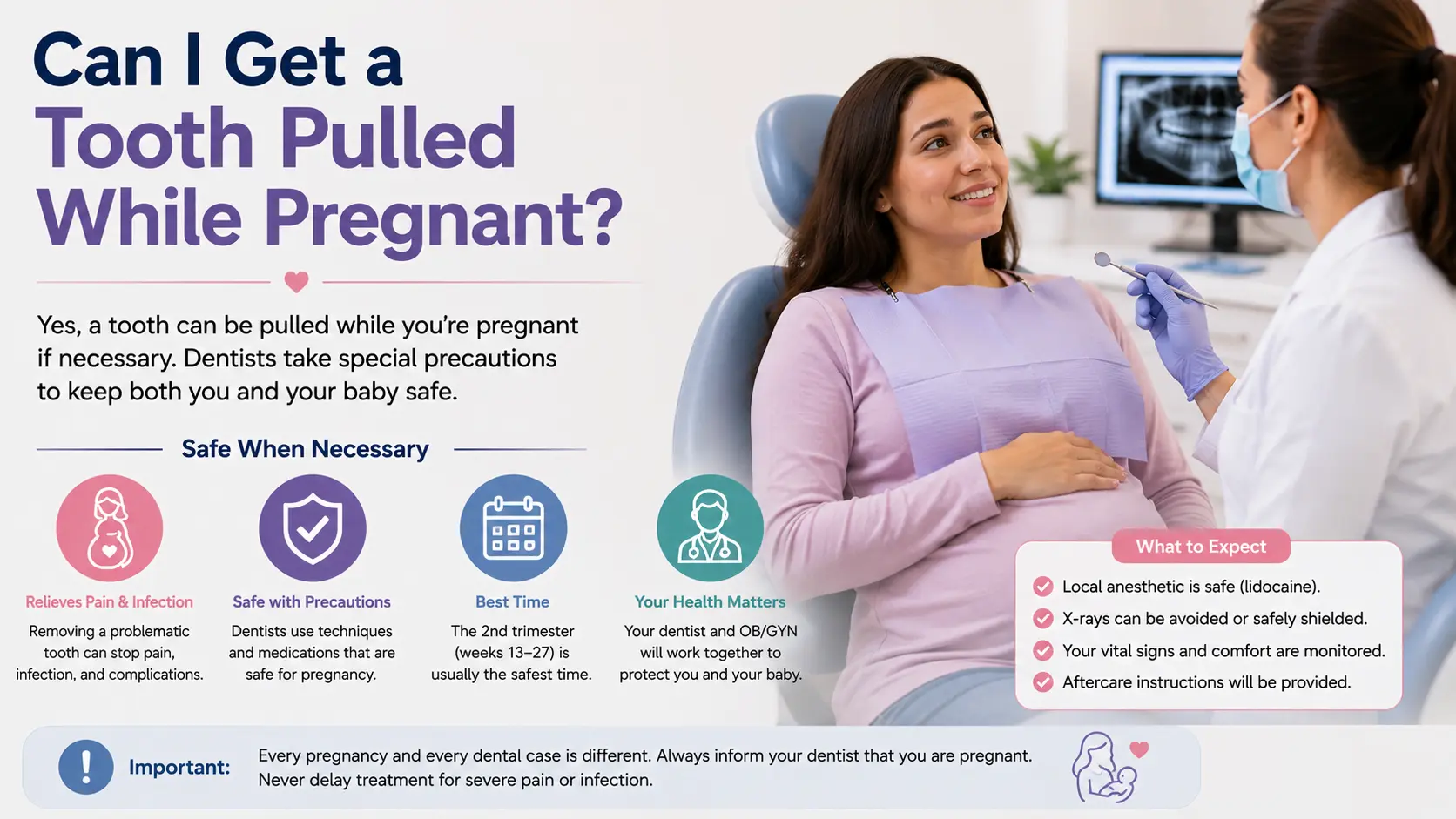
Yes, you can get a tooth pulled while pregnant, and in most cases it’s safe when your dentist and OB-GYN coordinate the timing and technique. This is one of the most common questions expectant mothers ask when a toothache, cracked molar, or infected wisdom tooth shows up unexpectedly and the fear of harming the baby is understandable. But putting off a genuinely necessary extraction is often riskier than having the procedure done.
The short answer: dental extractions are considered safe throughout pregnancy when they’re medically necessary, but the second trimester (weeks 14–27) is generally the preferred window for non-emergency procedures. The first trimester is a period of critical fetal organ development, so dentists tend to avoid elective work then unless there’s pain or infection. The third trimester brings its own challenges, mainly the discomfort of reclining in a dental chair for long periods and a higher risk of feeling lightheaded while lying flat. None of this means extraction is off the table in those trimesters; it just means timing gets factored into the decision.
What actually drives the decision is urgency, not the calendar. An infected tooth left untreated can lead to a spreading infection, abscess, or systemic illness, and that poses a real risk to both mother and baby, often a greater risk than the extraction itself. Dentists routinely say that treating an active infection promptly is safer than letting it linger while you wait for a “better” trimester. If you’re dealing with a swollen jaw, throbbing pain, fever, or a tooth that’s visibly broken and infected, that’s a signal to call your dentist now rather than wait.
A few things change about how the procedure is done during pregnancy, even though the extraction itself is the same. Your dentist will typically use local anesthetics like lidocaine, which have a long track record of safe use in pregnancy at the minimum effective dose. Dental X-rays, if needed to assess the tooth and surrounding bone, use very low radiation and are done with a lead apron and thyroid collar for extra protection. Pain management after the procedure usually favors acetaminophen over NSAIDs like ibuprofen, which are generally avoided later in pregnancy. Your dental team will also ask about your due date, any pregnancy complications, and medications you’re taking so they can plan around them.
The rest of this guide breaks down what to expect trimester by trimester, which medications and imaging are considered safe, wisdom tooth extraction specifically, and how to prepare for the appointment.
Is It Safe to Get a Tooth Pulled While Pregnant?
Dental extractions are considered safe during pregnancy when performed by a dentist who knows you’re pregnant and adjusts the approach accordingly. Medical and dental guidance treats pregnancy as a condition requiring extra precautions not a reason to avoid necessary dental care altogether. The main safety adjustments involve limiting X-ray exposure, choosing pregnancy-appropriate anesthesia and medications, and managing your position in the chair.
The biggest risk isn’t usually the extraction itself, it’s leaving an infected or badly decayed tooth untreated. An oral infection can spread to the bloodstream and, in some cases, has been linked to complications like preterm labor or low birth weight when severe gum disease or untreated infection persists over time. That’s why dentists lean toward treating urgent problems promptly rather than postponing them for months.
Tooth Extraction by Trimester: What’s Different
First Trimester (Weeks 1–13)
This is when the baby’s major organs are forming, so dentists generally postpone elective procedures, including non-urgent extractions, until the second trimester. Morning sickness and fatigue also make this a harder time to sit through a longer appointment. However, if you have a true dental emergency a severe infection, abscess, or uncontrolled pain extraction shouldn’t be delayed just because you’re in the first trimester.
Second Trimester (Weeks 14–27)
Most dentists consider this the best time for a planned tooth extraction during pregnancy. Morning sickness has usually eased, energy levels are higher, and the risk to fetal development from routine procedures is lowest. If your tooth issue isn’t a true emergency but does need to be addressed, your dentist will likely recommend scheduling it during this window.
Third Trimester (Weeks 28–40)
Extraction can still be done safely if it’s needed, but it’s less comfortable. Lying flat or reclined for an extended period can cause dizziness or low blood pressure because of pressure on a major vein, so dentists often keep appointments shorter, use a slight left-side tilt with a pillow, and take breaks as needed. Non-urgent work is sometimes pushed to after delivery simply for comfort, but genuine infections or severe pain are still treated right away.
Can You Get a Wisdom Tooth Pulled While Pregnant?
Yes, but the same trimester logic applies with a bit more caution because wisdom tooth extractions can involve more swelling, a longer recovery, and sometimes stronger pain medication. If an impacted or partially erupted wisdom tooth is causing infection, swelling, or significant pain, your dentist may recommend removing it regardless of trimester, since the infection risk generally outweighs the risk of the procedure. If the wisdom tooth is only mildly uncomfortable and not infected, many dentists prefer to monitor it and delay removal until after the baby is born, when medication options and recovery are more flexible.
What Medications and Anesthesia Are Used
- Local anesthesia: Lidocaine, with or without a small amount of epinephrine, is standard and has a strong safety record in pregnancy.
- Nitrous oxide (laughing gas): Usually avoided during pregnancy unless your OB-GYN specifically approves it and the office follows proper safety protocols.
- Pain relief after extraction: Acetaminophen is typically the first choice. NSAIDs such as ibuprofen are generally avoided, especially in the third trimester.
- Antibiotics: Only taken if prescribed by your dentist or doctor for a confirmed infection never self-medicated.
Always tell your dentist you’re pregnant, how far along you are, and share any complications or medications your OB-GYN has flagged before treatment begins.
Are Dental X-Rays Safe During Pregnancy?
Yes, when necessary. Digital dental X-rays use a very small amount of radiation, and a lead apron with a thyroid collar shields the abdomen. Dentists still limit X-rays to what’s needed to plan the extraction safely rather than taking them routinely, so don’t be surprised if your dentist asks a few extra questions before ordering one.
How to Prepare for a Tooth Extraction While Pregnant
- Confirm with your OB-GYN. A quick call or note between your dentist and obstetric provider helps both teams align on timing and any precautions specific to your pregnancy.
- Share your full medical history. Include your due date, medications, allergies, and any pregnancy complications.
- Eat a light meal beforehand unless your dentist tells you otherwise.
- Ask about positioning. If you’re further along, request a slight recline with a pillow under one hip to avoid dizziness.
- Plan for rest afterward. Keep the rest of the day light, and have acetaminophen (if approved) on hand for soreness.
When You Shouldn’t Wait
Delaying care only makes sense for genuinely non-urgent issues. Contact your dentist right away if you notice:
- Facial or gum swelling
- Fever alongside tooth pain
- Severe, persistent throbbing pain
- A visibly broken or abscessed tooth
- Pain that’s getting worse rather than better
These symptoms point to an infection, and treating it promptly is the safer path for both you and your baby.
The Bottom Line
Getting a tooth pulled while pregnant is safe when it’s necessary, and dentists have well-established ways to adjust anesthesia, imaging, medication, and chair positioning to protect you and your baby. The second trimester is the most comfortable window for planned extractions, but a true infection or severe pain shouldn’t wait for the “right” trimester; treating it promptly is almost always the better choice. If you’re unsure whether your situation counts as urgent, call your dentist and describe your symptoms; they can help you decide whether to schedule now or wait.
FAQ
Is it safe to have a tooth extracted in the first trimester? It’s safe for true emergencies like infection or severe pain, but dentists usually postpone non-urgent extractions until the second trimester because the first trimester is when the baby’s major organs are developing.
What’s the best trimester for a tooth extraction? The second trimester (weeks 14–27) is generally considered the most comfortable and lowest-risk time for a planned, non-emergency extraction.
Can dental X-rays before an extraction harm my baby? Digital dental X-rays use very low radiation, and a lead apron with a thyroid collar is used to shield the abdomen, making them safe when clinically necessary.
What pain medication can I take after a tooth extraction while pregnant? Acetaminophen is typically the first choice. NSAIDs like ibuprofen are generally avoided, particularly in the third trimester, unless your doctor specifically approves them.
Can I get a wisdom tooth pulled while pregnant? Yes, especially if it’s infected, swollen, or causing significant pain. A mildly uncomfortable, non-infected wisdom tooth may instead be monitored and removed after delivery.
What if I need an emergency extraction in my third trimester? It can still be done safely. Dentists typically shorten the appointment, position you with a slight left-side tilt to prevent dizziness, and take breaks as needed.

Raheel is the founder of WisdomToothPain. info, a specialized platform dedicated to demystifying dental health. As a dedicated digital researcher, Raheel focuses on providing clear, accurate, and evidence-based information to help individuals navigate the complexities of wisdom tooth pain with confidence. This content is for informational purposes only and isn’t a substitute for professional dental advice. Always consult a licensed dentist for diagnosis and treatment.



Pingback: Can You Get Your Wisdom Teeth Removed While Pregnant - wisdomtoothpain.info