
Wisdom Teeth Pain
Teeth pain from wisdom teeth usually means a third molar is coming in crowded, crooked, and only partway through the gum. Mild soreness that comes and goes can be part of a normal eruption. Throbbing pain, swelling, a bad taste, and trouble opening your mouth points to a problem a dentist should examine. Until you can be seen, cold compresses, warm saltwater rinses, and over-the-counter pain relievers can take the edge off.
This guide covers what wisdom teeth pain feels like, why it happens, and how to ease it at home. It also explains whether it can reach your ear and which signs mean you should stop waiting. It is general information, not a diagnosis. Only a dentist can tell you what is happening in your mouth.
What Does Wisdom Teeth Pain Feel Like?
Wisdom teeth pain is most often a dull ache and a feeling of pressure at the very back of the upper and lower jaw. The gum around the tooth may look red, puffy, and tender. How it feels depends on what is going on underneath.
Common sensations include:
- A steady, low ache behind your last molar
- Pressure, as if something is wedged in the back of your mouth
- Soreness when you bite down and chew
- Tender, swollen, and bleeding gum tissue near the back tooth
- Stiffness and pain in the jaw, sometimes with trouble opening wide
- An ache that seems to spread toward the ear, temple, and neck
- Sharp and throbbing pain, often with a bad taste and bad breath, when infection is involved
Not everyone feels anything. Impacted wisdom teeth do not always cause symptoms, which is one reason dentists use X-rays to keep an eye on them.
Why Do Wisdom Teeth Hurt
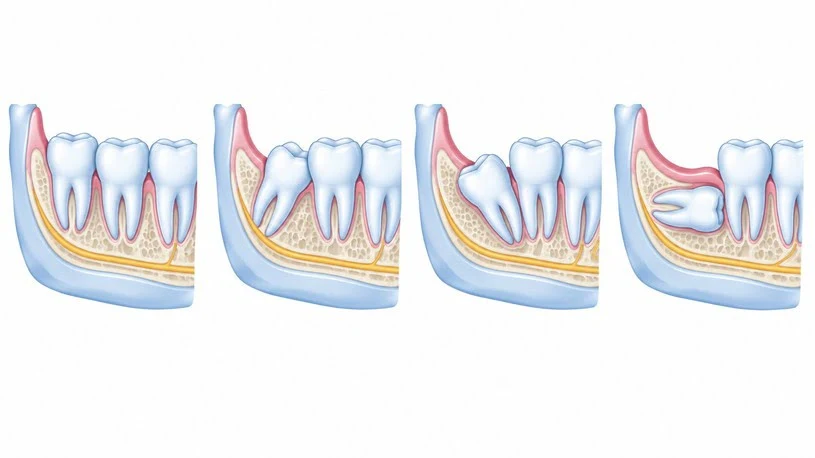
Wisdom teeth are the last permanent teeth to arrive, usually between the late teens and mid-twenties. By then the rest of the teeth have taken their places, and many jaws simply do not have enough room left. Most pain traces back to that space problem.
Impaction: not enough room to come in
An impacted wisdom tooth cannot emerge normally. It may lean toward the second molar, tilt toward the back of the mouth, lie sideways in the jaw, and stay trapped in bone. It can be partially impacted (part of the crown shows) and fully impacted (it never breaks through). An impacted tooth can push on surrounding tissue and neighboring teeth, and that pressure is a frequent source of aching.
Partial eruption and pericoronitis
When a tooth only partly breaks through, the gum can form a small flap over it. Food and plaque slip under that flap and are hard to brush and floss out. The result can be pericoronitis, a painful inflammation of the gum around the tooth. Typical signs are swollen gums, a foul taste, bad breath, and sometimes limited jaw opening.
Pressure on the neighboring molar
A wisdom tooth that presses against the second molar can damage it and raise the risk of infection in that area. The pressure may also contribute to crowding of other teeth.
Decay and gum disease
Wisdom teeth sit where a toothbrush barely reaches. Partially erupted ones trap debris easily, so they can develop cavities and gum problems more readily than other teeth, and either can be a source of pain.
Cysts
Wisdom teeth develop inside small sacs in the jawbone. Occasionally a sac fills with fluid and forms a cyst that can damage nearby bone, teeth, and nerves. It is uncommon, but it is a good reason not to ignore an impacted tooth for years.
When the wisdom tooth is not the culprit
Pain at the back of the mouth is not always a wisdom tooth. A cavity, a cracked tooth, an abscess, and a jaw joint (TMJ) disorder can feel similar. Cavity pain tends to be sharp and triggered by hot, cold, and sweet foods. Jaw joint problems more often bring clicking and soreness that shifts with chewing and yawning. A dental exam and X-ray sort this out quickly.
Normal Eruption Discomfort vs. Warning Signs
This table can help you judge how urgently to act. It is a rough guide, not a diagnosis.
| What you notice | More typical of normal eruption | More concerning |
| Pain pattern | Mild, comes and goes | Constant, throbbing, and steadily worsening |
| Gums | Slightly tender | Very swollen, bleeding, and with pus |
| Taste and breath | No change | Persistent bad taste and bad breath |
| Jaw movement | Normal | Hard to open your mouth and swallow |
| Whole-body signs | None | Fever and swollen glands under the jaw |
| Daily life | Eating and sleeping are fine | Pain disrupts eating and sleep |
| Timeline | Eases with basic care | Lasts more than a few days and keeps returning |
Can Wisdom Teeth Cause Ear Pain?
Yes, they can. Wisdom teeth do not connect to the ear directly, but the nerves that carry sensation from the teeth and jaw run close to, and overlap with, those serving the ear area. The brain can misread the source of a signal, so an irritated and infected wisdom tooth may register as an earache. This is called referred pain.
Signs that an earache may be dental include:
- An ache in the back of the jaw on the same side as the ear pain
- Swollen and tender gums behind the last molar
- Pain that flares when you chew and press on the area
- Jaw stiffness and a bad taste in the mouth
- No hearing changes and ear drainage
An ear infection, jaw joint trouble, and another problem can also cause ear pain. If you have fluid draining from the ear, muffled hearing, and cold-like congestion, mention that to a clinician. Ear pain combined with facial swelling and fever deserves prompt attention whatever the cause. A dentist and doctor can check both areas.
How to Reduce the Pain of Wisdom Teeth at Home

The steps below can soothe discomfort and buy time. They do not fix impaction, deep infection, and a damaged neighboring tooth, so they are a bridge to a dental visit rather than a replacement.
Use a cold compress
Wrap an ice pack in a thin towel and hold it against your cheek over the sore area for about 15 minutes. Take a 15-minute break and repeat as needed. Cold can reduce swelling and dull the ache. Never put ice directly on your skin.
Rinse with warm saltwater
Stir roughly half a teaspoon to a teaspoon of salt into a cup of warm water. Swish gently for about 30 seconds, then spit. Repeat a few times a day, especially after meals. Saltwater helps keep the area clean and can ease irritated gum tissue. It will not cure an infection.
Take an over-the-counter pain reliever
Ibuprofen and similar anti-inflammatory drugs work by reducing inflammation at the site, which is often the main driver of wisdom tooth pain. Acetaminophen relieves pain by a different route and can be an alternative for people who cannot take anti-inflammatories.
A few cautions apply:
- Follow the package directions and do not exceed the labeled dose.
- Check every product’s active ingredients so you do not double up, since many cold and flu medicines contain acetaminophen.
- Talk to a pharmacist and doctor first if you have stomach ulcers, kidney or liver disease, asthma that flares with anti-inflammatories, and a bleeding disorder, and if you take blood thinners and are pregnant.
- Do not give aspirin to children and teenagers.
- Never place an aspirin tablet directly on the gum. It can burn the tissue.
Try a numbing gel for short-term relief
Over-the-counter dental gels often contain benzocaine, a numbing agent. Dab a small amount on the sore gum following the label. They are meant for brief relief and are not suitable for very young children. Stop using one if you notice a rash, swelling, and unusual irritation.
Consider clove oil carefully
Clove oil has a long history as a toothache remedy, and its main compound, eugenol, has numbing and antimicrobial properties. Evidence in people is limited. If you try it, put one or two drops on a cotton ball and hold it near the sore gum rather than applying it straight from the bottle. Clove oil can irritate soft tissue, so use small amounts and do not swallow it. Cooled peppermint tea and a chilled tea bag held against the area are gentler options, though the evidence for those is also modest.
Keep the area clean
Brush gently, angling the bristles toward the back molars, and floss and use an interdental brush as far back as you comfortably can. Food left near an erupting tooth feeds bacteria. If your gums are raw, a strongly alcohol-based mouthwash may sting, so a saltwater rinse is the more comfortable choice.
Adjust what you eat
Stick to soft foods and chew on the opposite side. Skip crunchy, sticky, and hard items such as nuts and chips that can lodge near the tooth or press on inflamed gum. Smoking and sugary and acidic drinks can aggravate irritated tissue.
Why Wisdom Teeth Pain Often Feels Worse at Night
Many people find the ache builds in the evening. Lying flat can increase blood flow to the head, which may raise pressure in already inflamed tissue. With fewer distractions at bedtime, the pain also tends to grab more attention. Some people clench and grind their teeth in their sleep, which loads sore tissue and can leave the jaw aching in the morning.
To make nights easier:
- Prop your head up on an extra pillow.
- Avoid sleeping on the painful side.
- Take an over-the-counter reliever as directed before bed if it is safe for you.
- Use a cold compress for 15 minutes before lying down.
- Ask your dentist about a night guard if you suspect grinding.
If pain regularly keeps you awake, treat that as a sign to book an appointment rather than something to tough out.
What a Dentist Can Do About Wisdom Tooth Pain
A dentist will start with an exam and usually a panoramic and other X-ray to see the tooth’s position, angle, and closeness to nerves and neighboring teeth. From there, options depend on what they find.
- Cleaning and monitoring: If a tooth is coming in without trouble, the dentist may simply track it at regular checkups. If gum tissue is inflamed, they may clean and flush the area.
- Antibiotics: These may be prescribed when there are signs of infection, such as swelling, fever, and pus. They treat infection, not pain alone.
- Extraction: Removal is common for wisdom teeth that are impacted, repeatedly infected, decayed beyond repair, and damaging neighboring teeth. The area is numbed with local anesthetic, and sedation is often available. The tooth may be divided into pieces before it is removed, and the procedure itself can take anywhere from a few minutes to around 40 minutes.
Professionals do not all agree on removing impacted wisdom teeth that cause no symptoms. Some recommend it to prevent future problems, while others prefer to watch and wait. If you are unsure, ask your dentist to explain the risks of both approaches for your particular teeth. Cost varies with the complexity of the case, the type of anesthesia, and your location and insurance, so request an estimate and ask what your plan covers before scheduling.
When to See a Dentist, and When It Is Urgent
Make an appointment soon if:
- Pain lasts more than a few days and keeps coming back
- Eating, sleeping, and daily activities are affected
- Gums behind your last molar are swollen, bleeding, and tender
- You notice a persistent bad taste and bad breath
- Opening your mouth fully is getting harder
Seek same-day dental and medical care if you have:
- Swelling in the face, jaw, and neck
- Fever, particularly above about 100.4°F (38°C), along with tooth pain
- Difficulty swallowing
- Swelling that is spreading and getting worse quickly
Go to an emergency room and call 911 if you have trouble breathing and swelling that is moving down the neck. Infections in the mouth can, in rare cases, spread to deeper tissues and affect the airway.
Managing Pain After Wisdom Tooth Removal
Soreness and swelling after extraction are expected. They tend to be most noticeable in the first few days and then improve, with tenderness sometimes lingering for a week and two. Your surgeon’s written instructions come first, but common guidance includes:
- Use ice on the cheek during the first day to limit swelling.
- Stick to soft foods and avoid chewing on the surgical side.
- Skip straws and smoking, since suction can disturb the healing site.
- Start gentle saltwater rinses only when your dentist says it is okay, often after the first day.
- Take prescribed and recommended pain medication exactly as directed.
Call the office if pain gets worse several days after surgery instead of better, especially with a foul taste and visible bone in the socket. That pattern can indicate dry socket, which needs professional care.
Can You Prevent Wisdom Teeth Pain?
You cannot stop a wisdom tooth from becoming impacted. You can lower the odds of trouble:
- Keep regular checkups, about every six months, so your dentist can watch how the teeth are developing.
- Ask about updated X-rays, which can reveal problems before symptoms start.
- Clean the back of your mouth carefully, using a small-headed brush and floss and an interdental brush.
- Drink water after eating to help rinse away food.
- Cut back on sugary snacks and drinks, and avoid tobacco.
The Bottom Line
Wisdom teeth pain ranges from harmless eruption soreness to an infection that needs prompt treatment. Cold compresses, saltwater rinses, soft foods, and properly used over-the-counter medication can ease symptoms in the short term. Ear pain, jaw stiffness, swelling, fever, a bad taste, and pain that will not settle are signs to see a dentist. Getting a wisdom tooth checked early usually makes treatment simpler.
This article is for general education and does not replace advice from a dentist, oral surgeon, and physician.
FAQs:
How long does wisdom teeth pain last?
It depends on the cause. Eruption soreness may come and go over days and weeks. Pain from an impacted and infected tooth often continues, and returns, until the underlying problem is treated. After removal, most people notice steady improvement over about a week, with mild tenderness lasting a little longer.
Can wisdom teeth pain go away on its own?
Sometimes, particularly when a tooth is erupting without complications. If the pain keeps returning and comes with swelling, a bad taste, and trouble opening your mouth, an underlying issue such as trapped bacteria and impaction is likely and will not resolve without treatment.
Is wisdom tooth pain an emergency?
Usually not, but it can be. Facial and neck swelling, fever, trouble swallowing, and trouble breathing calls for urgent care. Severe pain that stops you from eating and sleeping warrants a same-day call to a dentist.
Do all wisdom teeth have to be removed?
No. Fully erupted, healthy, well-positioned wisdom teeth that you can clean easily may just be monitored. Removal is more often advised for teeth that are impacted, repeatedly infected, decayed, and harming nearby teeth.
Can wisdom teeth cause headaches and jaw pain?
They can. Inflammation and pressure around a problem tooth may bring jaw soreness and stiffness, and some people also report headaches. Because TMJ disorders and grinding can cause similar symptoms, a dentist can help pinpoint the source.
Can I get antibiotics for wisdom tooth pain without seeing a dentist?
No. Antibiotics require a prescription, and they only help when there is an infection. A dentist needs to examine the area to decide whether one is appropriate and whether the tooth itself needs treatment.
At what age do wisdom teeth start to hurt?
Most trouble begins between the late teens and mid-twenties, when the teeth typically emerge. Problems can also appear later in adulthood, for example when a partially erupted tooth develops decay and gum infection.

Raheel is the founder of WisdomToothPain. info, a specialized platform dedicated to demystifying dental health. As a dedicated digital researcher, Raheel focuses on providing clear, accurate, and evidence-based information to help individuals navigate the complexities of wisdom tooth pain with confidence. This content is for informational purposes only and isn’t a substitute for professional dental advice. Always consult a licensed dentist for diagnosis and treatment.



Pingback: Wisdom Tooth Pain Symptoms: Signs, Causes, Relief and When to See a Dentist - wisdomtoothpain.info