
Wisdom Teeth Pain Symptoms
Wisdom teeth pain symptoms usually start as a dull ache or tenderness at the very back of your jaw, often with red or puffy gums behind your last molar. Mild soreness that comes and goes while the teeth push through is common. Constant throbbing, swelling, a bad taste, or fever is different: those signs point to impaction or infection and need a dentist.
This guide covers how to tell when your wisdom teeth are coming in, which symptoms are routine and which are warnings, how to help wisdom tooth pain at home, and whether you have to get your wisdom teeth pulled.
Why Wisdom Teeth Hurt
Wisdom teeth, or third molars, are the last adult teeth to appear, typically between the late teens and mid-twenties. Many people have four, but some have fewer and some have none.
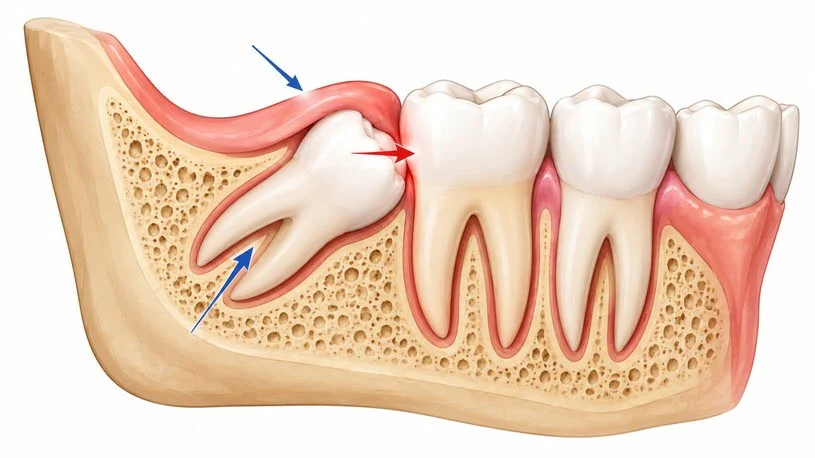
Most wisdom tooth pain comes down to space. Your other adult teeth are already settled by the time the third molars try to emerge, so these teeth may come in crooked, stay trapped, or break through only partway. That leads to several common problems:
- Eruption pressure: the tooth pushes through gum and bone, leaving the area sore.
- Impaction: the tooth stays under the gum or wedges against the neighboring molar, pressing on surrounding tissue.
- Pericoronitis: when a flap of gum partly covers the tooth, food and bacteria collect underneath and the gum becomes infected and swollen.
- Pressure on the next tooth: a tilted wisdom tooth can push against the second molar.
- Decay and gum disease: the back of the mouth is hard to brush and floss, so cavities and inflamed gums develop more easily.
- Cysts (uncommon): an impacted tooth can sometimes form a fluid-filled sac in the jaw that damages nearby bone or teeth.
First Signs of Wisdom Teeth Coming In
If you are wondering how to tell when your wisdom teeth are coming in, watch for these early signs:
- A dull ache or pressure at the back of the upper or lower jaw
- Tender, reddened, or slightly swollen gum behind the last molar
- A small bump in the gum where a tooth is about to surface
- Jaw stiffness, especially after chewing or in the morning
- Occasional headaches or a feeling of fullness near the ear
- A bite that feels slightly different
These signs tend to be mild and intermittent, and they rarely come with fever or marked swelling. Only an exam and an X-ray can show whether the tooth is lined up to emerge or stuck below the gum.
Common Wisdom Teeth Pain Symptoms
Once a wisdom tooth is causing real trouble, people most often report:
- Throbbing or aching pain in the back of the mouth that can spread along the jaw
- Swollen, red, or bleeding gums around the back molar
- Pain when chewing, biting, or brushing in that area
- Difficulty opening the mouth fully
- Headache or earache on the same side
- Bad breath or a lingering bad taste
- Swelling in the cheek or along the jawline
- Tender glands under the jaw
Why Tooth Pain Can Show Up in Your Ear or Head
The nerves serving the teeth, jaw, and ear are closely linked, so the brain can misplace the source of a pain signal. This is called referred pain, and it is why a wisdom tooth problem can feel like an earache even when the ear is healthy.
Routine Discomfort vs. Warning Signs
| Feature | Often routine | Needs a dentist |
| Pain | Mild, on and off | Constant, throbbing, or waking you at night |
| Gums | Slightly tender | Very swollen, red, bleeding, or covered by a flap |
| Jaw | Mild stiffness | Hard to open wide or chew |
| Taste and breath | Normal | Persistent bad taste or odor, possibly pus |
| Whole body | No symptoms | Fever, swollen glands, feeling unwell |
| Timing | Settles within days | Lasts beyond a few days or keeps worsening |
Mild pain that keeps coming back still deserves an exam. Catching a problem early usually keeps treatment simpler.
When Wisdom Tooth Pain Is an Emergency
Get urgent care if you have:
- Swelling that is spreading or growing quickly
- Trouble swallowing or breathing
- Very limited mouth opening
- Fever together with jaw pain or swelling
- Severe pain that over-the-counter medication does not control
Dental infections can spread beyond the mouth. If you cannot reach a dentist and have trouble breathing or swallowing, go to an emergency room.
Is It Really Your Wisdom Tooth?
Several other problems cause pain near the back of the jaw. A dentist can sort them out with an exam and X-rays, but these clues may help:
- A cavity in the second molar: pain is often sharper and triggered by sweets, heat, or cold.
- Jaw joint (TMJ) problems: discomfort centers on the joint in front of the ear and may come with clicking.
- Gum disease: bleeding and soreness spread across several teeth, not just one spot.
- Sinus pressure: upper back teeth ache along with facial pressure or congestion.
How to Help Wisdom Tooth Pain at Home
Home care eases symptoms for a short time. It does not remove the cause.
- Use an over-the-counter pain reliever. Ibuprofen and acetaminophen are common choices. Follow the label, and check with a pharmacist or doctor first if you have a medical condition, take other medications, or are pregnant. Never place aspirin directly on the gum, since it can burn tissue.
- Rinse with warm salt water. Stir about half a teaspoon of salt into a cup of warm water, swish gently for 30 seconds, and spit. Repeat after meals.
- Apply a cold compress. Hold a cloth-wrapped ice pack to your cheek for about 15 minutes at a time to ease swelling and dull the ache.
- Clean the area gently. Use a soft brush and careful flossing so bacteria have less to feed on.
- Eat soft, mild foods. Yogurt, eggs, soup, and mashed vegetables spare tender gums. Skip hard, crunchy, or spicy foods.
- Try an oral numbing gel. It can briefly dull gum soreness. Use it as directed and not as a long-term fix.
- Be careful with clove oil. It has a numbing effect, but undiluted oil can irritate gum tissue. If you try it, use a tiny amount and stop if it burns.
If pain has not improved after a couple of days, or worsens at any point, book an appointment.
How Dentists Diagnose and Treat Wisdom Tooth Pain
A dentist examines your gums and teeth, asks about your symptoms, and usually takes a panoramic X-ray. The image shows the tooth’s position, whether it is impacted, how close it sits to nerves and neighboring teeth, and whether there is decay or a cyst.
Treatment depends on the cause:
- Monitoring: a healthy, symptom-free tooth may simply be watched at regular visits.
- Cleaning and irrigation: for pericoronitis, a dentist can clean beneath the gum flap and flush out debris.
- Antibiotics: prescribed when an infection is present, sometimes before further treatment.
- Extraction: the usual answer when a tooth is impacted, repeatedly infected, badly decayed, or harming the next molar.
Do You Have to Get Your Wisdom Teeth Pulled?

No. Wisdom teeth that are healthy, fully erupted, properly positioned, and easy to keep clean can stay. Dentists typically recommend removal when a tooth is causing, or is likely to cause, problems:
- Repeated infections around the tooth
- Impaction with pain, swelling, or damage to the neighboring molar
- Decay that cannot be repaired
- Cysts or other changes seen on X-rays
- Pressure on neighboring teeth, as judged by your dentist
Some dentists suggest early removal because surgery is often considered simpler in younger patients. Others prefer to monitor teeth that cause no trouble. Both approaches are reasonable, and the right call depends on your X-rays, your history, and your dentist’s judgment.
What to Expect After Removal
Recovery differs from person to person. Swelling and soreness are expected for the first few days, and many people feel much better within about a week, although the gum and bone take longer to heal fully. Follow the instructions your dentist or oral surgeon gives you. In general:
- Use cold compresses on the cheek during the first day
- Stick to soft foods and avoid straws and forceful rinsing early on
- Keep the area clean as directed
- Call your dentist if pain suddenly worsens a few days after surgery, which can signal dry socket, where the blood clot is lost from the socket
Can You Prevent Wisdom Tooth Pain?
Not always, especially when space is the issue. You can lower the odds of infection and decay by brushing twice a day including the back teeth, flossing daily, cleaning around partly erupted teeth, and keeping regular checkups so your dentist can track the teeth with X-rays. If the back of your jaw is tender more than once, get it checked early.
Frequently Asked Questions
How long does wisdom tooth pain last?
Mild eruption soreness tends to come and go over several days to a few weeks. Pain lasting more than a few days, returning repeatedly, or getting worse should be checked, since it can mean impaction or infection.
Can wisdom tooth pain go away on its own?
Mild eruption soreness often settles without treatment. Pain caused by infection, an impacted tooth, or decay usually does not resolve by itself and tends to return or worsen.
Can wisdom teeth cause ear pain or headaches?
Yes. Shared nerve pathways can send referred pain to the ear or head on the same side as the problem tooth.
What is the fastest way to help wisdom tooth pain?
An over-the-counter pain reliever taken as directed, warm salt water rinses, and a cold compress give short-term relief. Lasting relief depends on treating the cause, which means seeing a dentist if pain continues.
Can wisdom teeth come in without pain?
Yes. Some people feel little or nothing. Absence of pain does not guarantee healthy teeth, which is why periodic X-rays help.
What happens if I ignore wisdom tooth pain?
Infection can develop or spread, neighboring teeth can be damaged, and in rare cases cysts can form. Early care generally means simpler options.
At what age do wisdom teeth come in?
Most people notice them between the late teens and mid-twenties, though timing varies and some teeth emerge later or remain below the gum.

Raheel is the founder of WisdomToothPain. info, a specialized platform dedicated to demystifying dental health. As a dedicated digital researcher, Raheel focuses on providing clear, accurate, and evidence-based information to help individuals navigate the complexities of wisdom tooth pain with confidence. This content is for informational purposes only and isn’t a substitute for professional dental advice. Always consult a licensed dentist for diagnosis and treatment.


Pingback: Wisdom Tooth Gum Pain: Causes, Relief & When to See a Dentist - wisdomtoothpain.info