
Wisdom Tooth Gum Pain
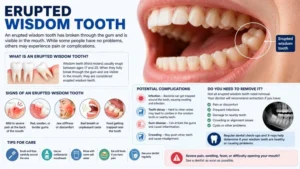
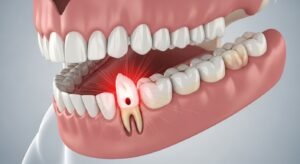
Wisdom tooth gum pain usually starts when a wisdom tooth has only partly broken through the gum. Food and bacteria collect under the loose tissue, and the area becomes sore, swollen, or infected. Warm saltwater rinses, gentle cleaning, and over-the-counter pain relievers can ease the discomfort, but they don’t remove the cause. If the pain lasts more than a few days, keeps returning, or comes with swelling, fever, or trouble opening your mouth, you need a dental exam.
This guide explains what is happening under the gum, how to tell normal eruption soreness from a real problem, what you can safely do at home, and what a dentist can do about it.
What Is Wisdom Tooth Gum Pain?
Wisdom teeth are your third molars, the last teeth to come in, usually between the late teens and mid-twenties. Many jaws don’t have enough room for them. A wisdom tooth may grow in at an angle, press against the molar in front of it, or stay partly covered by gum for months or years.
Wisdom tooth pain in the gums can be a dull ache that comes and goes, or a sharp pain when you bite or swallow. The discomfort sometimes spreads to the jaw, cheek, or ear on the same side. Lower wisdom teeth are often the ones that cause trouble, because the gum can sit over them more easily and they are harder to keep clean.
First Signs of Wisdom Teeth Coming In
Not every ache at the back of the mouth is a problem. The first signs of wisdom teeth coming in are usually mild:
- A dull, pressing ache at the back of the jaw
- Tender or slightly puffy gums behind your last molar
- A small bump or ridge in the gum where the tooth is pushing up
- Mild jaw stiffness after chewing
- Soreness that comes and goes over days or weeks
Normal eruption soreness is low-grade and gradual. A bad taste, discharge, fever, or swelling in the face points to infection or a blocked tooth instead.
Pain can also occur before any tooth is visible. A wisdom tooth still under the gum or bone can press on surrounding tissue, so the absence of a visible tooth doesn’t rule it out.
What Causes Gum Pain Around a Wisdom Tooth?
Pericoronitis: the most common cause
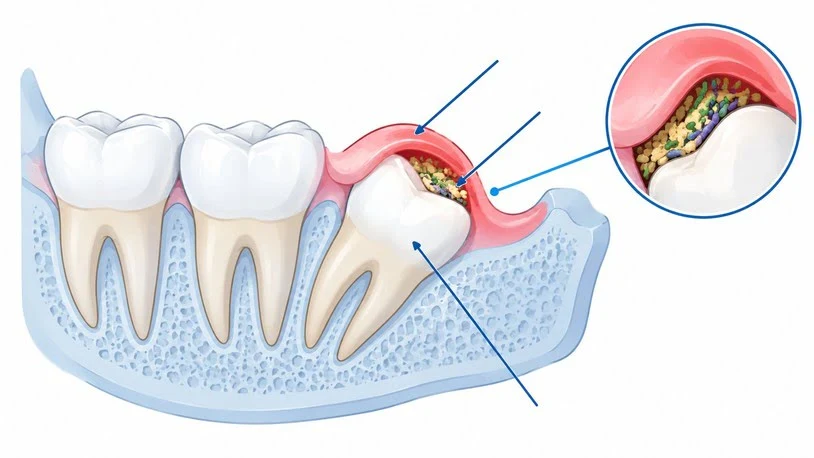
When a wisdom tooth is partly through, a flap of gum called the operculum can sit over part of the crown. Under it is a small pocket where food and bacteria settle. The tissue turns red, swollen, and painful. This inflammation or infection is called pericoronitis, and it is the usual reason for gum over wisdom tooth pain. The flap stays in place while the tooth is partly covered, so symptoms often settle and then return.
Impaction and lack of space
An impacted tooth is blocked from erupting normally by bone, gum, or the neighboring molar. It can cause a deep, throbbing ache, and it makes the surrounding gum harder to clean, which raises the risk of infection.
Decay and gum disease nearby
Plaque builds up easily on back teeth. This can lead to a cavity in the wisdom tooth, decay on the neighboring molar, or inflamed gums. Gum pain doesn’t always mean the gum is the main problem.
Biting on swollen tissue
The opposing tooth can bite down on swollen gum, injuring it and keeping the inflammation going.
Less common causes
Fluid-filled sacs (cysts) can form around an impacted tooth and only show up on an X-ray. Jaw joint (TMJ) problems can cause pain and stiffness in the same area and are sometimes mistaken for a wisdom tooth issue.
Swollen Gums Around a Tooth: Is It the Wisdom Tooth?
Swollen gums around a tooth at the very back of your mouth are usually linked to the wisdom tooth. If the swelling is near a tooth further forward, or the wisdom teeth were removed years ago, the cause is more likely gum disease, a cavity, a food trap between teeth, or a healing problem. A dentist can tell the difference with an exam and X-ray.
Mild Irritation vs. a Real Problem
| What you notice | What it often means | What to do |
| Mild tenderness, slightly puffy gum, no bad taste | Normal eruption or minor irritation | Gentle cleaning, saltwater rinses, watch for a few days |
| Red, swollen gum, pain when chewing, lingering bad taste | Pericoronitis or trapped debris | Book a dental visit soon |
| Pus, bad breath that returns quickly | Active infection | See a dentist promptly |
| Facial swelling, fever, difficulty opening the mouth | Infection may be spreading | Seek urgent dental or medical care |
| Trouble swallowing or breathing | Possible serious infection | Go to an emergency department immediately |
How to Cure Wisdom Tooth Pain: What Home Care Can and Can’t Do
If you’re searching for how to cure wisdom tooth pain at home, here is the honest answer: home care can reduce symptoms, but it won’t remove a gum flap or free an impacted tooth. Use these steps for comfort while you arrange dental care.
Warm saltwater rinses
Dissolve about half a teaspoon to one teaspoon of salt in a glass of warm water. Swish gently for about 30 seconds, then spit. Repeat two or three times a day. This helps wash debris from around the tooth and calms irritated tissue.
Over-the-counter pain relief
Ibuprofen or acetaminophen can ease pain, and ibuprofen also helps with inflammation. Follow the label for dose and timing. If you have a medical condition, take other medications, or are pregnant, ask a pharmacist or doctor which option is right for you.
Cold compress
Hold a cold pack wrapped in a cloth against your cheek for about 15 minutes at a time to take the edge off swelling and soreness.
Gentle, thorough cleaning
Keep brushing, but use a soft-bristled brush and light pressure around the swollen gum. A dentist or hygienist can show you how to use a small interdental brush or oral irrigator without pushing debris deeper.
Softer foods
Yogurt, soup, eggs, mashed vegetables, and smoothies eaten with a spoon are easier on tender gums than crunchy or sticky foods. Chewing on the other side gives the area a rest.
What not to do
- Don’t poke the gum flap with a toothpick, fingernail, or pin to remove food. It can push bacteria deeper and injure the tissue.
- Don’t use strong alcohol-based mouthwash on swollen gums. It can sting and irritate them.
- Don’t place aspirin or other tablets directly on the gum. This can burn the tissue.
- Don’t skip the dentist because the pain eased. Pericoronitis often calms down and then flares up again.
When to See a Dentist
Book a visit if:
- Pain lasts more than two to three days
- Over-the-counter medication isn’t helping
- Swelling around the tooth keeps returning
- Pain interferes with eating or sleep
- You notice a bad taste, bad breath, or discharge from the gum
Seek urgent care the same day if you have swelling in the cheek, jaw, or neck, fever or chills, difficulty opening your mouth fully, or difficulty swallowing. Trouble breathing, or swelling that is spreading quickly, is an emergency: go to an emergency department rather than waiting for a dental appointment.
How a Dentist Treats Wisdom Tooth Gum Pain

Examination and X-ray
The dentist checks the gum for swelling and discharge and examines the neighboring tooth. A dental X-ray, often a panoramic image, shows the tooth’s position, whether it is impacted, and whether there is decay or other damage.
Cleaning and irrigation
For pericoronitis, the dentist may flush the area under the flap with an antiseptic solution and remove trapped debris. This often brings quick relief.
Antibiotics
If infection is significant or spreading, antibiotics may be prescribed. They help control infection but don’t change the shape of the gum or the position of the tooth, so symptoms can return.
Trimming the gum flap
If the tooth is healthy and has room to come in, a minor procedure to remove the overlying tissue can eliminate the pocket where food collects.
Wisdom tooth removal
Extraction is commonly recommended when a tooth is impacted, decayed, repeatedly infected, or harming the neighboring molar. A fully erupted tooth may come out with a simple extraction. An impacted one may need a surgical approach, where the dentist makes a small opening in the gum and sometimes removes the tooth in sections. Local anesthesia is typical, and sedation may be offered for anxious patients or complex cases.
Do You Have to Remove the Tooth?
Not always. A wisdom tooth that is fully erupted, healthy, well aligned, and easy to clean may never need to come out, and your dentist can monitor it at check-ups.
Removal becomes more likely when:
- Pain and swelling keep coming back
- The tooth is stuck beneath the gum or bone
- Decay can’t be fixed practically because of the tooth’s position
- The tooth is damaging the molar next to it
- A cyst or other problem shows up on an X-ray
The decision depends on your age, the tooth’s position, and how many flare-ups you’ve had. Ask what your dentist sees on the X-ray and what the risks are of waiting versus treating.
Gum Pain After Wisdom Tooth Removal

Some swelling and soreness is expected for several days after an extraction. Follow your dentist’s aftercare instructions closely, especially on rinsing, avoiding straws, and not smoking. Contact your dentist if pain suddenly gets worse a few days after surgery, if you notice a bad taste or smell, or if swelling increases instead of easing. These can be signs of a dry socket or infection.
How to Reduce the Risk of Flare-Ups
You can’t always control how a wisdom tooth comes in, but you can lower the chance of infection:
- Brush twice a day, including the far back corners of your mouth
- Clean between teeth daily, using a small interdental brush where there’s space
- Rinse with water or a saltwater rinse after meals if the tooth is partly covered
- Keep regular dental check-ups so eruption is monitored
- Don’t ignore the first episode of swelling, since the gum flap tends to cause repeat problems
Frequently Asked Questions
Why does the gum over my wisdom tooth hurt?
Usually because the tooth is partly erupted and a flap of gum is trapping food and bacteria, causing inflammation or infection. Eruption pressure and biting on swollen tissue can add to it.
How long does wisdom tooth gum pain last?
Mild eruption soreness may come and go over days or weeks. Pain from an infected gum flap often improves with treatment within days, but it can return if the cause remains. Pain lasting beyond a few days, or repeating, should be checked.
Can swollen gums around a wisdom tooth heal on their own?
Minor irritation may settle with good cleaning and saltwater rinses. Swelling caused by infection usually needs professional treatment, and it often recurs while the gum flap or impaction remains.
What is the fastest way to relieve wisdom tooth gum pain?
Rinse with warm salt water, take an over-the-counter pain reliever as directed, apply a cold compress to the cheek, and keep the area clean. These ease symptoms but don’t fix the underlying problem.
Is wisdom tooth gum pain an emergency?
Not usually. It becomes urgent with facial or neck swelling, fever, difficulty opening your mouth, or trouble swallowing. Trouble breathing is an emergency.
Can wisdom tooth gum pain cause ear or jaw pain?
Yes. Nerves in the jaw and face are closely connected, so pain from a wisdom tooth can be felt in the jaw, temple, or ear on the same side.
Do all wisdom teeth need to be removed?
No. Healthy, fully erupted, well-aligned wisdom teeth that you can clean properly often stay. Removal is typically recommended when they cause repeated problems or are likely to.

Raheel is the founder of WisdomToothPain. info, a specialized platform dedicated to demystifying dental health. As a dedicated digital researcher, Raheel focuses on providing clear, accurate, and evidence-based information to help individuals navigate the complexities of wisdom tooth pain with confidence. This content is for informational purposes only and isn’t a substitute for professional dental advice. Always consult a licensed dentist for diagnosis and treatment.