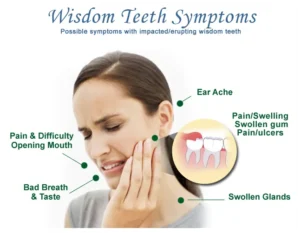
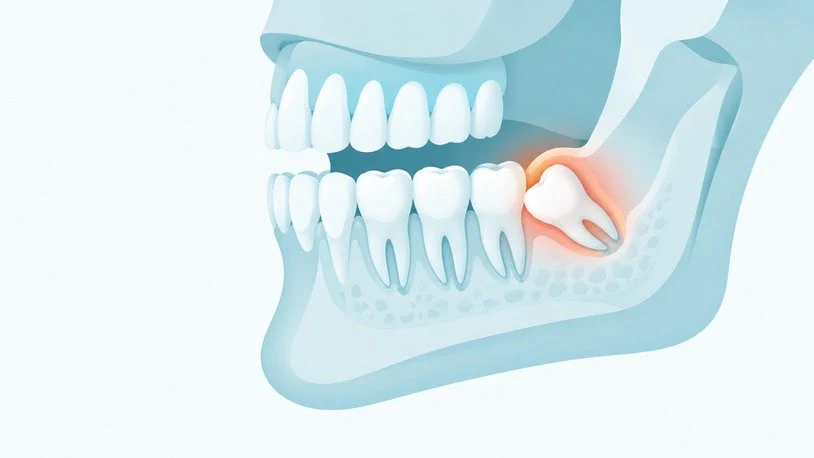
Wisdom molar pain usually comes from one of two situations. Either the tooth is working its way through the gum, or it lacks the space to come through properly and has become stuck, partly covered, or hard to clean. Mild, short-lived soreness can be part of normal eruption. Pain that is severe, keeps returning, or comes with swelling or fever needs a dentist. If you have pain or infection, the advice from a New Zealand health information service is to see your dentist as soon as possible.
Wisdom molars are the third molars, the last teeth to arrive at the back of each side of the jaw. This guide helps you work out what your wisdom tooth pain probably means, what you can do today, and when to get help.
Is Your Wisdom Tooth Pain Urgent?
Check this first, because some symptoms call for same-day care.
Contact a dentist the same day if you have:
- Fever together with tooth or gum pain
- Swelling in the cheek, jaw, or face
- Pain that is getting worse
- Pus, or a bad taste that won’t clear
- Trouble opening your mouth
- Tender, swollen glands under the jaw
Go to an emergency room if you have:
- Difficulty swallowing or breathing
- Swelling that is spreading quickly, or that lifts or pushes up your tongue
An NHS patient leaflet lists facial swelling that causes difficulty breathing, tongue raising, or a spreading infection as serious problems. If you can’t reach a dentist and you have swelling with a fever, get medical care instead of waiting it out.
If none of this applies, the sections below explain what is likely happening.
When Do You Get Wisdom Teeth, and What Are the First Signs?
Typical age range
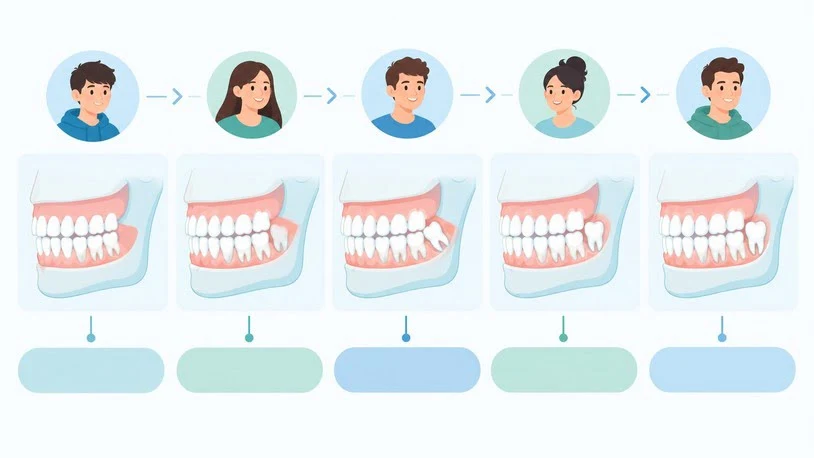
Wisdom teeth most commonly come in between about ages 17 and 25. Timing varies, and some people have fewer than four or none at all. The teeth develop long before they appear, which is why a dentist can often spot them on an X-ray years before you feel anything. Problems often start soon after the teeth come through, but some people don’t have them until later in life.
First signs of wisdom teeth coming in
Early signs tend to be mild and limited to one area:
- Tenderness or puffiness in the gum behind your last molar
- A dull ache or pressure at the back of the jaw
- Soreness when you chew
- A red or slightly swollen patch of gum
Some people notice nothing while the tooth comes through.
Normal eruption or a problem?
| More likely normal eruption | More likely a problem | |
| Pain | Mild, on and off | Throbbing, constant, or waking you at night |
| Gum | Slightly tender | Very swollen, red, or leaking pus |
| Taste and breath | No change | Bad taste or odor that won’t go away |
| Jaw | Mild pressure | Stiffness or trouble opening wide |
| General health | You feel well | Fever, swollen glands, feeling unwell |
If your symptoms sit mostly in the right-hand column, book a dental visit soon. If they sit mostly in the left but last more than a few days, a check-up is still sensible.
What Causes Wisdom Molar Pain?
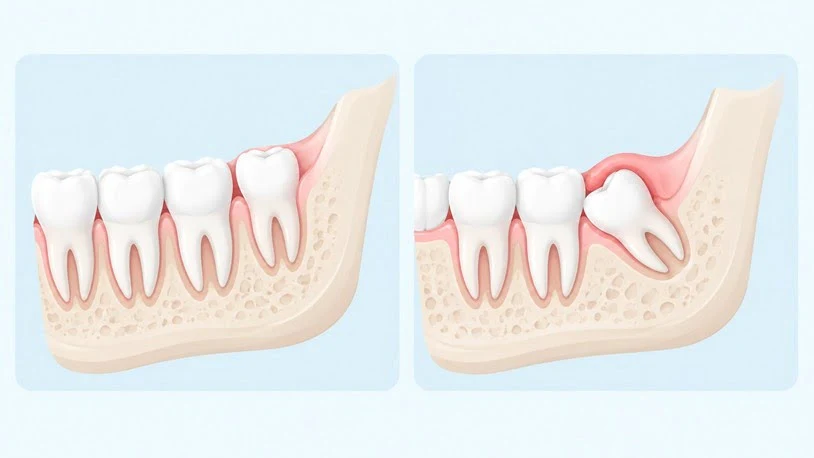
Not enough room: impacted teeth
An impacted wisdom tooth doesn’t have enough space to emerge or develop normally. Impacted wisdom teeth don’t always cause symptoms. When they become infected, damage other teeth, or cause other problems, pain can result. A tooth may stay buried, or only part of it may show through the gum.
Pericoronitis: infection under the gum flap
When a wisdom tooth is only partly through, a flap of gum can stay over part of it. Food and bacteria collect under the flap and are hard to clean out. The gum becomes inflamed and infected, which is called pericoronitis. Typical signs are a sore, swollen gum behind the last molar, pain when biting, and a bad taste.
This is a common cause. One NHS trust reports that up to 6 in 10 of the people it sees with wisdom tooth problems have this kind of gum infection. The infection won’t come back in that spot once the tooth has fully erupted or has been removed.
Decay and gum disease
A wisdom tooth that is partly through the gum is hard to brush and floss. Partly impacted wisdom teeth appear to be at higher risk of cavities because they are harder to clean. Decay can affect the wisdom tooth or the tooth beside it, and a wisdom tooth can contribute to gum disease on its neighbor.
Pressure on and trapped food by the neighboring tooth
NHS hospital patient information lists decay in the tooth in front of a wisdom tooth as one reason for removal. A tooth angled against its neighbor can trap food, so the pain may come from the second molar and not from the wisdom tooth itself.
Pain that may not be coming from the wisdom tooth
Other problems can feel similar, including sinus pressure (upper back teeth sit close to the sinuses), jaw-joint (TMJ) trouble, and a cavity in a nearby tooth. Wisdom tooth pain can also seem to spread toward the jaw or ear. I could not confirm the exact frequency of this referred pain from the sources I reviewed, so an exam is the reliable way to sort out the source.
Wisdom Tooth Pain Symptoms: What They Can Mean
| Symptom | What it may point to | What to do |
| Dull ache at the back of the jaw | Eruption pressure or impaction | Watch it; book a check-up if it lasts |
| Swollen or bleeding gum behind the last molar | Irritation or pericoronitis | Rinse gently; see a dentist soon |
| Bad taste or breath that won’t clear | Trapped food or infection under a gum flap | See a dentist |
| Trouble opening your mouth | Swelling or infection | See a dentist promptly |
| Pain spreading toward ear or jaw | Could involve the tooth, jaw joint, or sinus | Get it examined |
| Fever and facial swelling | Spreading infection | Same-day care (see above) |
How to Help Wisdom Tooth Pain at Home

These steps may ease discomfort while you wait for an appointment. They don’t treat the cause, so they aren’t a replacement for dental care if symptoms continue.
Warm salt-water rinses
Dissolve a little salt in warm water, swish gently around the sore area, and spit. Salt-water rinsing is among the treatments listed for pericoronitis. You can repeat it a few times a day.
Cold compress on the cheek
A wrapped cold pack held against the outside of the cheek is a common way to calm swelling. Health information on wisdom teeth suggests an ice pack for swelling after removal. I did not find a source specific to pain before removal, so treat this as a general comfort measure. Keep a cloth between the pack and your skin.
Over-the-counter pain relief
Pain relievers are among the standard treatments for pericoronitis. Follow the product label exactly. If you take other medicines, have a stomach, kidney, or liver condition, are pregnant, or are choosing medicine for a child or teen, ask a pharmacist or doctor which option suits you. This article does not give doses.
Clean gently and eat soft foods
- Brush the area carefully with a soft brush instead of skipping it.
- Choose soft foods and chew on the other side.
- Avoid very hot, hard, or sharp foods that can irritate the gum.
What to avoid
- Don’t poke the gum with fingers, toothpicks, or sharp objects.
- Don’t rely on home care if you have fever, facial swelling, or pus.
- Don’t cancel a dental visit because the pain eased for a day. Pain can settle while the cause remains.
How to Treat Swollen Gums Near a Wisdom Tooth
While you wait for an appointment
The same basics apply: gentle salt-water rinses, careful brushing around the area, a cold compress if the swelling shows on your cheek, soft foods, and pain relief used as labeled.
What a dentist may do
Treatment depends on the cause. A dentist may:
- Examine the gum and tooth and take an X-ray
- Clean the area under the gum flap
- Prescribe antibiotics or pain medication
- Treat the gum flap or remove the tooth if the problem keeps returning
For severe or recurring pericoronitis, surgery to remove the gum flap or the wisdom tooth may be needed.
When swelling signals something more serious
Swelling that is increasing, spreading to the face, or paired with fever, pus, or jaw stiffness needs prompt professional care.
How Long Does Wisdom Tooth Pain Last?
There is no fixed answer. It depends on the cause:
- Normal eruption: Soreness can come in episodes lasting a few days and ease as the tooth moves through.
- Pericoronitis or other infection: Pain tends to continue or return until the cause is treated. A flare can settle with cleaning, but may recur if the tooth stays partly covered.
- Impaction against a neighboring tooth: Pain may come and go and tends to return until the situation is addressed.
I did not find a reliable source giving exact day counts, so I have not invented any. Pain that lasts more than a few days, keeps coming back, or worsens deserves an exam.
What to Expect at the Dentist
- A conversation about where the pain is, when it began, and what changes it.
- An exam of the gum, the wisdom tooth, and the tooth next to it.
- An X-ray, which shows how the tooth is positioned and whether there is decay or damage nearby. Regular X-rays can show impacted wisdom teeth before symptoms start.
- A plan: monitor, treat the gum or infection, or remove the tooth.
Do all wisdom teeth need to come out?
No. An NHS factsheet states that wisdom teeth that are impacted but not causing problems don’t usually need to be removed. Mayo Clinic notes that dental specialists disagree about how to manage impacted wisdom teeth that aren’t causing symptoms. Removal becomes more likely when problems recur. NHS hospital information names repeated infection of the gum over the tooth as the most common reason for removal.
Wisdom Tooth Removal and Recovery: The Short Version
If removal is recommended, your dentist or oral surgeon will explain the options for numbing or sedation based on how difficult the tooth is. Expect some swelling, bleeding, bruising, and discomfort afterward. Dry socket is a possible complication and is more common after removal of lower wisdom teeth. Follow your aftercare instructions, avoid smoking, and contact your dentist if pain or swelling gets worse instead of settling.
Keeping Wisdom Tooth Problems Under Control
You can’t always prevent wisdom tooth trouble, but you can catch it earlier:
- Keep regular dental check-ups. X-rays can show how the teeth are developing.
- Clean the back teeth thoroughly. Angle a soft brush toward the last molar and clean between teeth where you can reach.
- Mention early symptoms. Raise a sore gum or recurring ache at your next visit instead of waiting for a flare.
Wisdom Molar Pain FAQs
When do you get wisdom teeth?
Most people notice them between the late teens and mid-twenties, though timing varies and some people have fewer than four or none.
What are the first signs of wisdom teeth coming in?
Usually tenderness or puffiness in the gum at the back of the mouth, a dull ache, and pressure when chewing. Some people feel nothing.
Can wisdom molar pain go away on its own?
Mild eruption soreness can settle once the tooth moves through the gum. Pain from impaction or a recurring gum infection tends to return until the cause is dealt with.
What helps wisdom tooth pain at home?
Warm salt-water rinses, soft foods, gentle cleaning, a cold compress on the cheek, and an over-the-counter pain reliever used as the label directs. These ease symptoms temporarily and don’t treat the cause.
How can I treat a swollen gum near my wisdom tooth?
Rinse gently, keep the area clean, and see a dentist, who can clean under the gum flap and decide if further treatment is needed. Seek urgent care if swelling spreads or you have fever.
Can wisdom teeth cause ear, jaw, or head pain?
They can seem to, but other causes such as sinus trouble or jaw-joint problems can feel similar, so a dental exam helps identify the source.
When is wisdom tooth pain an emergency?
When it comes with difficulty swallowing or breathing, or with fast-spreading facial swelling. Fever with a toothache, facial swelling, or worsening pain calls for same-day dental or medical care.
Do I need my wisdom teeth removed if they don’t hurt?
Not necessarily. Impacted teeth that cause no problems usually don’t need to be removed, though specialists disagree on some cases. Your dentist can advise based on your X-rays and history.

Raheel is the founder of WisdomToothPain. info, a specialized platform dedicated to demystifying dental health. As a dedicated digital researcher, Raheel focuses on providing clear, accurate, and evidence-based information to help individuals navigate the complexities of wisdom tooth pain with confidence. This content is for informational purposes only and isn’t a substitute for professional dental advice. Always consult a licensed dentist for diagnosis and treatment.