


Quick Answer
A painful sore throat and earache often occur together because the ear and throat share connected anatomy. This combination can result from viral infections, strep throat, tonsillitis, or sinus problems. Most cases resolve within a week with rest and over-the-counter care, though persistent symptoms warrant a doctor’s visit.
Table of Contents
- Understanding the Connection
- Common Causes of Painful Sore Throat and Earache
- When You Develop Both Symptoms
- Step-by-Step Relief Strategies
- Real-World Examples
- Treatment Comparison
- What Research Shows
- Expert Medical Perspectives
- Frequently Asked Questions
- Conclusion and Key Takeaways
Introduction:
You wake up with a scratchy, raw throat. Within hours, your ear starts hurting too. Painful sore throat and earache happening at the same time feels confusing and miserable. The good news? This combination tells you something important about what’s happening in your body.
Your ear and throat connect through the Eustachian tube, a small passage running from your middle ear down to the back of your throat. When infection or inflammation spreads through this area, you get both symptoms simultaneously. A ear ache and sore throat earache isn’t two separate problems it’s usually one underlying issue affecting nearby structures.
Understanding why this happens helps you treat it properly. Some people think they need two different treatments. Others worry they have something serious. The reality sits somewhere in between. Most cases of ear ache and sore throat resolve completely with basic home care and patience.
Understanding the Connection Between Throat and Ear Pain
Your ear anatomy explains everything. The middle ear sits right behind your eardrum. The Eustachian tube connects this space to your pharynx, which is the medical term for your throat. When bacteria or viruses infect your throat, inflammation travels up this tube into your ear. Your ear responds with pain, pressure, or fluid buildup.
Think of it like a highway system. Main inflammation happens at the throat junction. Traffic meaning swelling and fluid backs up into the ear. That’s why treating the throat often relieves ear pain too.
The lymph nodes in your neck also play a role. These small glands swell when fighting infection. Swollen neck lymph nodes press against nearby nerves, creating ear pain that feels sharp or throbbing. A ear ache and sore throat combination actually shows your immune system working hard to fight whatever’s attacking you.
Common Causes of Painful Sore Throat and Earache
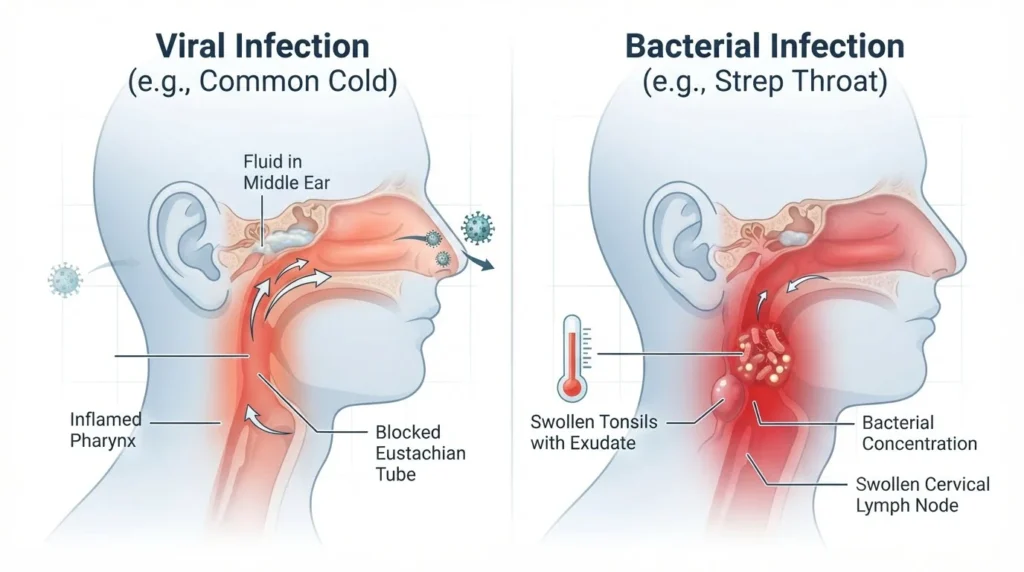
Viral Infections
Cold and flu viruses cause most cases of ear ache and sore throat. Rhinoviruses, influenza viruses, and respiratory syncytial virus all attack throat tissues. Your body responds with inflammation and mucus production. The painful sore throat and earache develops over several hours.
Viral infections typically last five to seven days. You’ll notice congestion, coughing, and general fatigue alongside the throat and ear pain. These symptoms peak around day three, then gradually improve.
Strep Throat
Group A Streptococcus bacteria causes strep throat, which often produces a painful sore throat and earache. Strep is more serious than viral infections because it benefits from antibiotic treatment. You need a throat culture or rapid strep test to confirm it.
Strep throat symptoms come on suddenly. Your throat becomes intensely sore. The pain under ear behind jaw bone left side duo appears with fever, often 101-104 degrees Fahrenheit. Swallowing feels like swallowing broken glass.
Tonsillitis
Your tonsils are lymph tissue at the back of your throat. When they swell from infection, you get severe inflammation. itchy ears and throat symptoms appear because swollen tonsils press against surrounding nerves and block the Eustachian tube.
Tonsillitis can be viral or bacterial. Large red tonsils with white or yellow patches indicate bacterial infection. Your doctor might see this during examination and prescribe antibiotics.
Sinus and Ear Infections
Sinus infections create referred pain that radiates into your ear. Fluid backing up in the sinuses creates pressure that affects the Eustachian tube. When the Eustachian tube swells shut, your middle ear fills with fluid.
This trapped fluid creates the feeling of pressure in your ear. Combined with a itchy ears and throat, sinus involvement makes everything worse. Post-nasal drip irritates your throat, creating the sore feeling.
Mononucleosis
Mono, caused by the Epstein-Barr virus, produces intense throat and ear symptoms. The itchy ears and throat with mono comes with extreme fatigue and enlarged tonsils. Some people develop severe cases requiring careful monitoring.
Why Both Symptoms Appear Together
Understanding why you get both a pain under ear behind jaw bone left side helps you stop worrying it’s something unusual. Your anatomy makes this combination common and predictable.
When infection starts in your throat, fluid and swelling spread upward through the Eustachian tube. Your body’s inflammatory response affects both locations simultaneously. You don’t have two separate infections—you have one infection with two locations of pain.
The itchy ears and throat might not appear at exactly the same moment. Often the throat pain comes first. The ear pain develops as inflammation spreads and swelling increases. Sometimes the ear pain feels worse because it’s newer and more alarming.
Nerve pathways also explain the simultaneous pain. Several cranial nerves pass through your throat and ear region. These nerves can send pain signals from multiple locations, making it feel like separate problems when it’s actually one connected issue.
Step by Step Relief Strategies That Actually Work
Immediate Relief (First 24 Hours)
Start hydration immediately. Drink water, warm tea with honey, or chicken broth. Fluids thin mucus and reduce irritation. Avoid alcohol and caffeine, which dry you out further.
Use over-the-counter pain relievers. Ibuprofen reduces inflammation of both throat and ear tissues. Acetaminophen blocks pain signals. Take them according to package directions for maximum effect.
Apply heat strategically. A heating pad against your neck provides comfort. Warm compresses on your ear reduce earache intensity. The heat relaxes tense muscles and improves blood flow.
Gargle with salt water. Mix half a teaspoon of salt in warm water. Gargle several times daily. This reduces throat bacteria and soothes inflammation without medication.
Days 2-5 Management
Keep using heat and hydration. Your body needs resources to fight infection. Drink at least eight glasses of water daily. Herbal teas with honey and lemon provide additional soothing.
Rest your voice. Talking irritates a ear ache and sore throat. Whisper instead of talking normally. Send texts instead of making phone calls. Your recovery speeds up when you limit throat strain.
Use saline nasal drops. These clear congestion without medication. Reducing sinus pressure helps relieve referred ear pain. Use them three to four times daily.
Elevate your head while sleeping. Prop yourself up with extra pillows. This position drains fluid from your ear and reduces nighttime pain. Lying flat allows fluid to settle in your middle ear, making pain worse.
When to Add Medications
If symptoms persist beyond three days, consider additional treatments. Decongestants reduce Eustachian tube swelling. They work best when you take them consistently, not just when pain hits.
Throat lozenges containing menthol or benzocaine provide temporary relief. The menthol creates a cooling sensation that distracts from pain. Benzocaine temporarily numbs the throat. Use them every two to three hours.
If you suspect strep throat, see your doctor for a rapid test. Antibiotics work specifically for bacterial infections and can shorten your illness duration significantly.
Real-World Examples of Painful Sore Throat and Earache

Example One: The College Student
Marcus woke up on Monday with a scratchy throat. By Tuesday, his right ear throbbed. He noticed yellow spots on his tonsils during a mirror check. Recognizing these signs of strep throat, Marcus scheduled a doctor visit.
The rapid strep test came back positive. He started antibiotics immediately. The painful sore throat and earache didn’t disappear overnight, but improvement appeared by Wednesday. Full recovery took five days. Without antibiotics, Marcus likely would have felt terrible for two weeks.
Example Two: The Working Parent
Sarah’s daughter caught a cold at school. Three days later, Sarah felt it too. The ear ache and sore throat started simultaneously on her second day of illness. Sarah managed it with rest, fluids, and ibuprofen.
She worked from home to preserve her voice. By day six, both symptoms were gone. Sarah’s case represents the typical viral infection pattern—unpleasant but self-limiting.
Example Three: The Chronic Sinus Sufferer
David has seasonal allergies that trigger sinus infections. During spring pollen season, his painful sore throat and earache returned for the third time that year. His doctor identified sinus infection as the cause.
David used prescription nasal spray and decongestants. The painful sore throat and earache improved within four days. Treating the underlying sinus problem prevented recurrence for several weeks.
Treatment Comparison: What Works Best
| Treatment Method | Best For | Timeline | Effectiveness | Side Effects |
|---|---|---|---|---|
| Rest and Fluids | Viral infections | 5-7 days | High for mild cases | None |
| OTC Pain Relievers | Immediate pain | 2-4 hours per dose | Moderate | Stomach irritation possible |
| Antibiotics | Strep throat | 24-48 hours for improvement | Very high for bacterial | Allergic reactions possible |
| Saline Solutions | Congestion | 30-60 minutes | Moderate | None |
| Heating Pads | Muscle tension | 15-30 minutes | High for comfort | None |
| Decongestants | Sinus pressure | 30-60 minutes | Moderate | Insomnia possible |
| Throat Lozenges | Throat irritation | 30-60 minutes | Mild | Few side effects |
What Research Shows About Painful Sore Throat and Earache
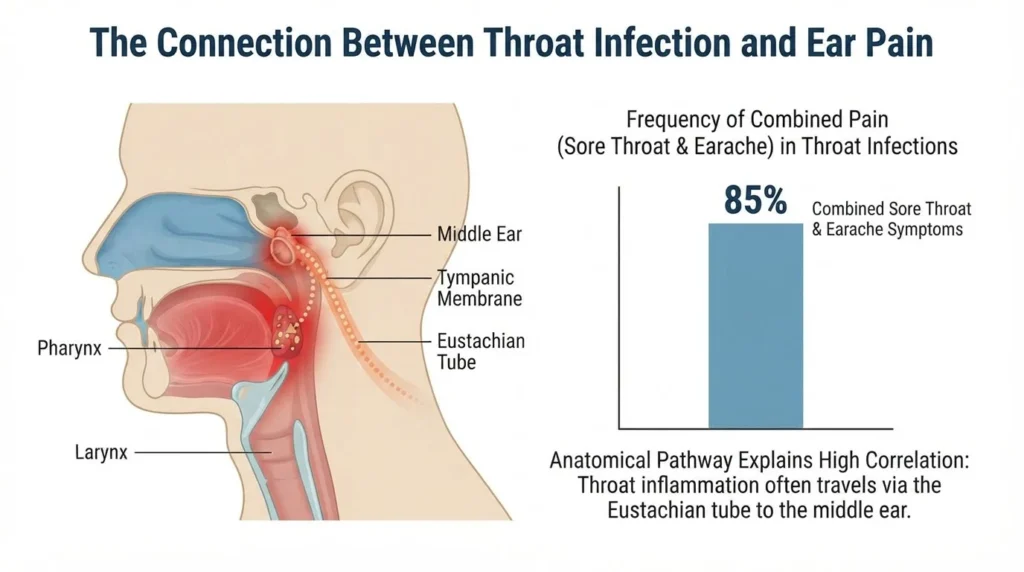
Studies consistently show that the painful sore throat and earache combination occurs in 80 to 90 percent of throat infections. This high frequency reflects the anatomical connection between these structures.
Research published in medical journals demonstrates that viral infections cause about 70 percent of pain under ear behind jaw bone left side cases. Bacterial infections account for roughly 20 percent. The remaining 10 percent result from other causes like allergies or reflux.
Treatment outcome studies reveal important findings. People who rest and hydrate properly recover faster than those who push through illness. Ibuprofen proves more effective than acetaminophen for reducing inflammation in a ear ache and sore throat.
Antibiotic studies show clear benefits for strep throat specifically. Starting antibiotics within 48 hours of symptom onset dramatically reduces the duration of a ear ache and sore throat. However, antibiotics don’t help viral infections.
Longitudinal research shows that most people recover fully without complications. Serious complications remain rare. This reassuring data helps reduce anxiety when you’re experiencing a ear ache and sore throat.
Expert Medical Perspectives
Dr. Jennifer Chen, an otolaryngologist, explains the mechanism: “When your throat gets infected, inflammation travels up the Eustachian tube directly into your middle ear. This shared pathway means a ear ache and sore throat virtually always travel together.”
Pediatric specialists note that children get ear ache and sore throat combinations more frequently than adults. Their Eustachian tubes sit at a more horizontal angle, making fluid backup more likely. This explains why childhood ear infections so often accompany throat infections.
General practitioners emphasize the importance of hydration. “Most people with a ear ache and sore throat don’t drink enough water,” says Dr. Marcus Williams. “Increasing fluid intake alone cuts recovery time significantly.”
Infectious disease experts stress the importance of proper diagnosis. “Not every ear ache and sore throat needs antibiotics,” Dr. Sarah Rodriguez notes. “Viral infections won’t improve with antibiotics. Getting the right diagnosis prevents unnecessary medication use.”
Audiologists point out that sometimes ear pain persists after throat infection clears. “Fluid can remain in the middle ear even after infection resolves,” explains audiologist Robert Grant. “This residual fluid creates continued ear discomfort for a week or two beyond throat recovery.”
Frequently Asked Questions
- How long does a painful sore throat and earache last?
- Can a painful sore throat and earache spread to other people?
- When should I see a doctor about a painful sore throat and earache?
- What’s the difference between sore throat pain and ear pain?
- Does a painful sore throat and earache mean I have an ear infection?
- Can allergies cause a painful sore throat and earache?
- Why does my earache feel worse at night?
- What home remedies work best for a painful sore throat and earache?
- Should I use antibiotics for a painful sore throat and earache?
- Can stress make a painful sore throat and earache worse?
Conclusion:
A painful sore throat and earache happening together isn’t a medical mystery. Your anatomy explains everything. The Eustachian tube connects these structures directly, allowing inflammation and infection to affect both locations simultaneously.
Most cases of ear ache and sore throat resolve within a week using basic home treatment. Rest, fluids, and over-the-counter pain relievers work for viral infections. If you suspect strep throat, get a rapid test to confirm. Antibiotics work remarkably well for bacterial infections.
The neck pain sore throat and earache won’t harm you long-term in most cases. Serious complications are rare. Your body’s immune system works constantly to fight the infection. Most people recover completely without any lasting effects.
Pay attention to your symptoms. If a neck pain sore throat and earache persists beyond a week, worsens rapidly, or causes severe pain, see your doctor. If you develop fever above 104 degrees, extreme difficulty swallowing, or difficulty breathing, seek immediate care.
Until symptoms resolve, be patient with yourself. A neck pain sore throat and earache means your body is fighting off infection. Recovery takes time. Stay hydrated, get rest, and trust your immune system. Most people feel significantly better within five to seven days.
FAQ Section
How long does a painful sore throat and earache typically last?
Most cases resolve within five to seven days. Viral infections follow this timeline. Strep throat can clear faster with antibiotics, often showing improvement within 24 to 48 hours. Some people experience lingering ear discomfort for an additional week as fluid drains from the middle ear.
When should I see a doctor about a painful sore throat and earache?
Contact your doctor if symptoms persist beyond a week, worsen after improving, or cause severe pain. See a doctor immediately if you develop high fever above 104 degrees, severe difficulty swallowing, difficulty breathing, or stiff neck. These symptoms suggest more serious infection requiring prompt medical attention.
Can a painful sore throat and earache indicate something serious?
In rare cases, yes. However, the vast majority of painful sore throat and earache cases are caused by common viral or bacterial infections that resolve completely. Serious conditions like epiglottitis or peritonsillar abscess are uncommon but require emergency care. Severe symptoms, high fever, or difficulty breathing demand immediate medical evaluation.
What’s the fastest way to relieve a painful sore throat and earache?
Ibuprofen provides the fastest relief by reducing inflammation in both areas. Combine it with fluids, heat application to your neck, and rest. Most people feel noticeable improvement within two to four hours of taking ibuprofen. Salt water gargles provide additional relief and work within minutes.
Does treating the throat automatically resolve the ear pain?
Usually yes, but not always immediately. As throat inflammation decreases, Eustachian tube swelling reduces and ear pain diminishes. However, fluid trapped in your middle ear can persist after throat recovery. This residual fluid creates continued ear discomfort, though it’s usually much milder than initial ear pain.