Wisdom tooth pain has a way of showing up uninvited often late at night, during a busy week, or right when you least want another problem to deal with. Whether the pain is mild, throbbing, or comes and goes, the big question is always the same: what should you actually do for wisdom tooth pain.
This guide walks you through safe, effective, and evidence based steps, explains why the pain happens, and helps you decide when home care is enough and when it’s time to see a dentist. No myths, no risky hacks, and no unnecessary filler.
Understanding Wisdom Tooth Pain
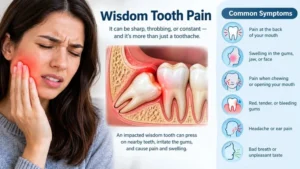
Wisdom teeth, also known as third molars, are the last adult teeth to erupt. They usually appear between ages 17 and 25. By then, most jaws no longer have enough space to accommodate them comfortably.
According to the American Dental Association (ADA), wisdom teeth are more likely to cause problems because they often erupt at awkward angles or remain partially trapped under the gums.
Pain can result from:
- Pressure as the tooth erupts
- Gum inflammation
- Food and bacteria trapped under gum tissue
- Early infection
- Impacted or misaligned teeth
Understanding the cause helps determine the right response.
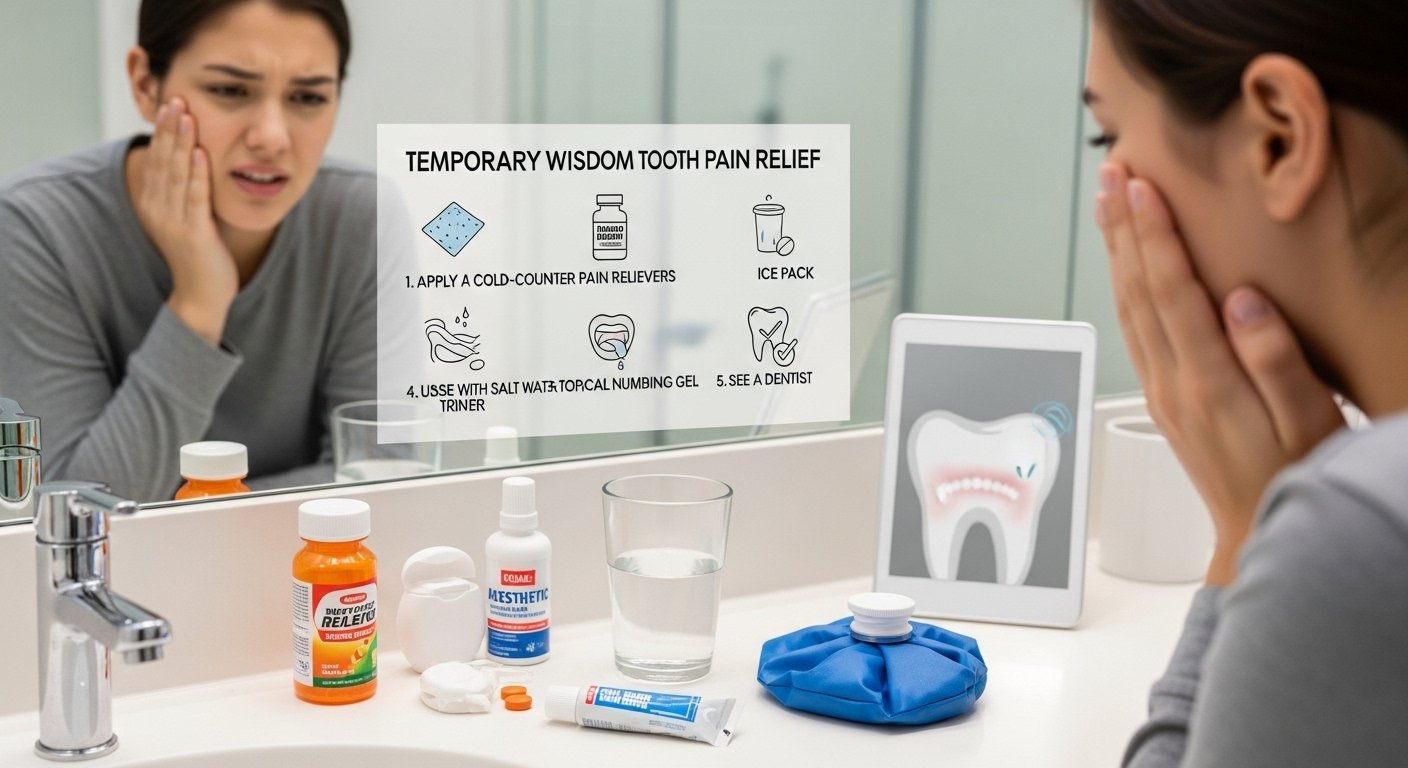
What to Do for Wisdom Tooth Pain Right Now
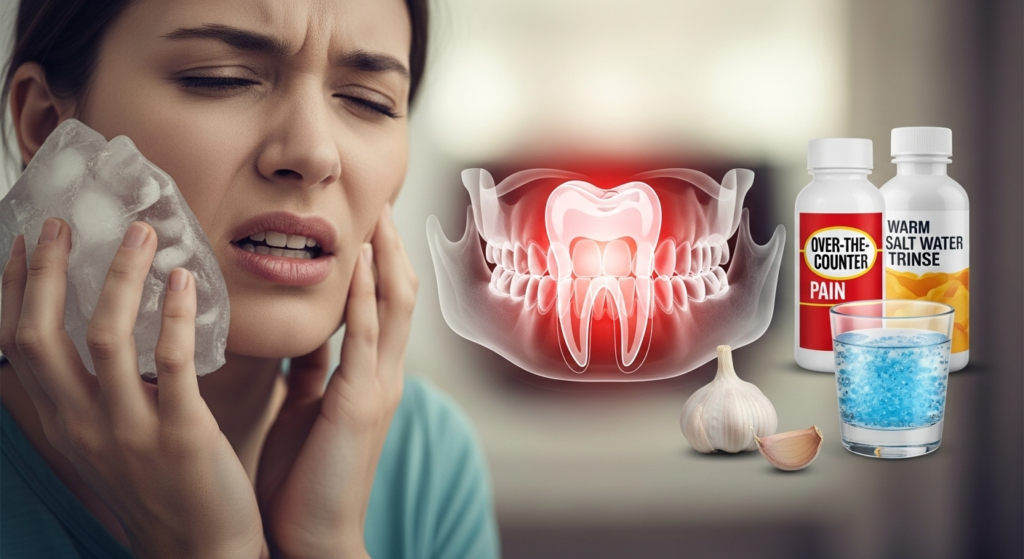
1. Rinse With Warm Salt Water
This is one of the simplest and most effective first steps.
Why it helps
- Reduces bacteria
- Soothes inflamed gum tissue
- Flushes out trapped debris
How to do it
- Mix ½ teaspoon of salt in a cup of warm water
- Gently swish for 30 seconds
- Repeat 2–3 times daily
The UK National Health Service (NHS) recommends saltwater rinses for gum irritation around wisdom teeth.
2. Apply a Cold Compress
If swelling or throbbing is present, cold therapy works fast.
Benefits
- Reduces inflammation
- Dulls nerve signals
- Slows swelling
How to use
- Wrap an ice pack in a towel
- Apply to the outside of your cheek for 15–20 minutes
- Take a break before reapplying
Avoid placing ice directly on the skin.
3. Take Over the Counter Pain Relief (Correctly)
Pain relievers can be helpful when used responsibly.
Common options
- Ibuprofen: reduces pain and inflammation
- Acetaminophen: relieves pain but not swelling
The Mayo Clinic confirms that NSAIDs like ibuprofen are effective for dental pain when taken as directed.
Always follow dosage instructions and avoid mixing medications without medical advice.
Keep the Area Clean (Even If It’s Tender)
Poor access makes wisdom teeth magnets for bacteria.
What to do
- Use a soft-bristled toothbrush
- Clean gently around the back of the mouth
- Angle the brush carefully under the gumline
- Consider an alcohol-free antibacterial mouthwash
Cleaning reduces irritation and prevents mild pain from turning into infection.
Adjust Your Diet to Reduce Irritation
Food choice has a bigger impact than most people realize.
Avoid
- Hard foods (nuts, chips, ice)
- Sticky foods (caramel, gum)
- Very hot or spicy foods
Choose
- Yogurt
- Mashed vegetables
- Scrambled eggs
- Smooth soups
Soft foods reduce mechanical stress on inflamed gums.
Clove Oil: Temporary Relief With Caution
Clove oil contains eugenol, which has mild anesthetic and antibacterial properties.
The National Center for Biotechnology Information (NCBI) recognizes eugenol’s temporary pain-relieving effects in dentistry.
How to use safely
- Dilute one drop of clove oil with a carrier oil
- Apply gently using a cotton swab
- Do not swallow or overuse
This offers short-term relief only and does not treat infection.
Sleep Position Matters More Than You Think
Wisdom tooth pain often worsens at night.
Why
Lying flat increases blood flow to the head, which can intensify pressure and throbbing.
What helps
- Elevate your head with an extra pillow
- Avoid sleeping on the painful side
This simple change can reduce nighttime pain significantly.
Reduce Jaw Stress and Clenching
Stress, grinding, and clenching can aggravate wisdom tooth pain.
Helpful steps
- Avoid chewing gum
- Apply a warm compress to jaw muscles (not swollen areas)
- Practice jaw relaxation exercises
Reducing muscle tension lowers pressure around the wisdom tooth.
What Not to Do for Wisdom Tooth Pain
Some common “home remedies” cause more harm than good.
❌ Do not place aspirin directly on gums
❌ Do not poke the area with sharp objects
❌ Do not ignore recurring pain
❌ Do not rely on home care if swelling or fever develops
These actions can worsen tissue damage or delay proper treatment.
When Wisdom Tooth Pain Needs a Dentist
Home care helps temporarily but it does not fix structural problems.
See a dentist promptly if you notice:
- Pain that keeps returning
- Swelling spreading to the cheek or jaw
- Difficulty opening your mouth
- Persistent bad taste or pus
- Fever or feeling unwell
The ADA warns that untreated wisdom tooth issues can lead to infection, cysts, or damage to nearby teeth.
Should You Remove a Painful Wisdom Tooth?
Not every painful wisdom tooth needs removal, but many do.
Dentists evaluate:
- Tooth position
- Level of impaction
- Risk of infection
- Ability to keep the area clean
- Frequency of symptoms
Early removal often leads to faster healing and fewer complications, especially in younger patients.
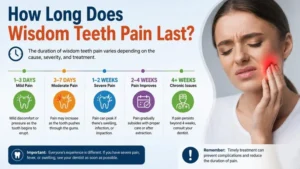
Can Wisdom Tooth Pain Go Away on Its Own?
Sometimes but often temporarily.
Pain may fade if:
- Inflammation settles
- Food debris is removed
- Pressure decreases
However, recurring pain usually means the underlying issue remains. Ignoring it often leads to more severe symptoms later.
Long Term Prevention Tips
If your dentist recommends monitoring instead of removal:
- Maintain excellent oral hygiene
- Schedule regular dental checkups
- Address mild pain early
- Avoid smoking, which slows healing
The CDC confirms that tobacco use increases oral infection risk and delays recovery.
Final Thoughts
Knowing what to do for wisdom tooth pain can save you a lot of discomfort but it’s important to be realistic. Home remedies manage symptoms, not causes. If pain keeps returning, it’s your body’s way of asking for professional attention.

Raheel is the founder of WisdomToothPain. info, a specialized platform dedicated to demystifying dental health. As a dedicated digital researcher, Raheel focuses on providing clear, accurate, and evidence-based information to help individuals navigate the complexities of wisdom tooth pain with confidence. This content is for informational purposes only and isn’t a substitute for professional dental advice. Always consult a licensed dentist for diagnosis and treatment.