
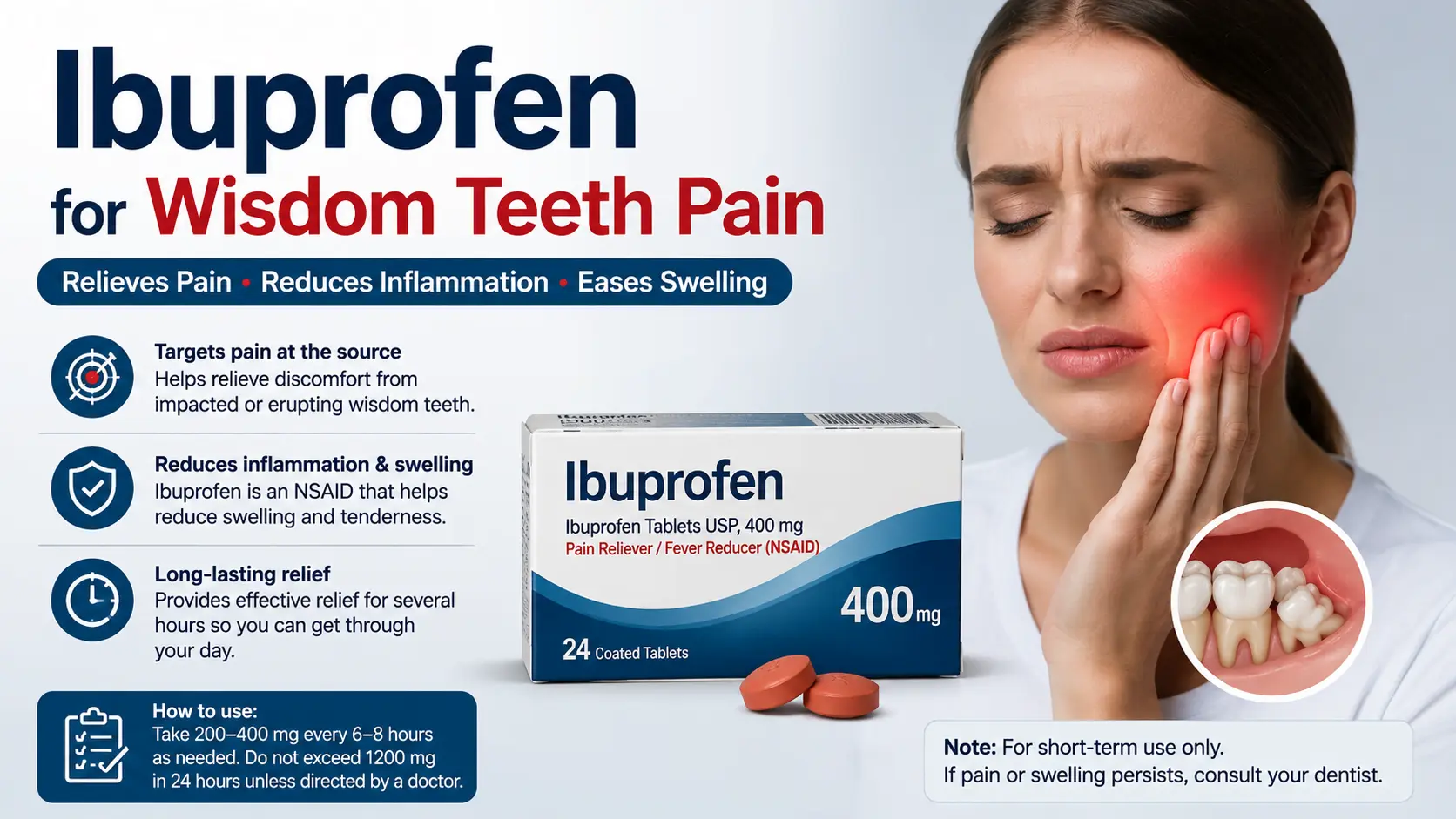
Ibuprofen is one of the most effective over-the-counter options for wisdom teeth pain because it targets inflammation directly, not just the pain signal. When a wisdom tooth is erupting impacted or has just been extracted the surrounding gum tissue becomes swollen and irritated. Ibuprofen belongs to a class of drugs called NSAIDs (nonsteroidal anti inflammatory drugs) which reduce that swelling at its source making it a common first-choice recommendation from dentists for this type of pain.
Why Ibuprofen Works Well for Wisdom Tooth Pain
Wisdom tooth discomfort is usually driven by inflammation in the gum and surrounding bone whether the tooth is pushing through impacted infected and recovering from removal. Because ibuprofen reduces inflammation rather than simply blocking pain perception it tends to relieve this type of pain more effectively than acetaminophen alone. Many dentists recommend it as a first line option for both pre eruption discomfort and post extraction recovery unless a patient has a medical reason to avoid NSAIDs.
How to Take Ibuprofen for Wisdom Tooth Pain
Standard over the counter ibuprofen dosing for healthy adults is typically 200-400 mg every four to six hours, with product labeling generally capping OTC use at 1,200 mg within 24 hours. Always follow the exact instructions printed on your specific product’s label, and the dosage your dentist prescribes, since factors like age, weight, kidney function, and other medications can change what’s appropriate for you.
Taking ibuprofen with food and milk can help reduce stomach irritation, which is the most common side effect. If you’re taking it ahead of a scheduled extraction ask your dentist whether pre-dosing is advisable in your case as timing recommendations vary by procedure and provider.
Combining Ibuprofen with Acetaminophen
For more significant pain, such as after wisdom tooth removal, dentists sometimes recommend alternating ibuprofen with acetaminophen since the two drugs work through different mechanisms and can provide more complete relief together than either one alone. This combination should only be used under guidance from your dentist and doctor who can advise on safe timing and amounts based on your specific situation.
Risks and Considerations
Ibuprofen isn’t right for everyone and there are a few important considerations:
- Bleeding risk: NSAIDs can thin the blood slightly which is a concern in the first 24 hours after an extraction. Some dentists prefer acetaminophen immediately post-surgery for this reason.
- Stomach irritation: Ibuprofen can cause stomach upset and, in some people, ulcers with prolonged use. Taking it with food helps.
- Kidney and heart conditions: People with kidney disease, certain heart conditions and high blood pressure should consult a doctor before using ibuprofen regularly.
- Pregnancy: Ibuprofen is generally not recommended during pregnancy especially in the third trimester without medical guidance.
- Drug interactions: Ibuprofen can interact with blood thinners, certain blood pressure medications, and other NSAIDs.
If pain is severe, doesn’t improve with medication and is accompanied by fever swelling that spreads and difficulty opening your mouth, contact a dentist promptly as this can indicate infection.
Frequently Asked Questions
Can I take ibuprofen before wisdom teeth removal? Some dentists recommend taking ibuprofen shortly before the procedure to get ahead of inflammation but this depends on your health history and the specifics of your surgery. Confirm timing with your dentist beforehand.
How long after wisdom tooth extraction can I take ibuprofen? This varies by provider. Some dentists advise waiting a few hours after surgery due to bleeding risk while others clear it for use as soon as needed follow your post operative instructions and ask your dental team directly.
Can I take ibuprofen and acetaminophen together for wisdom tooth pain? Yes alternating the two is a common dental recommendation for stronger pain relief but you should confirm the exact schedule and amounts with your dentist and doctor rather than combining them on your own.
Is ibuprofen better than paracetamol (acetaminophen) for wisdom tooth pain? Ibuprofen generally works better for this type of pain because it reduces inflammation whereas acetaminophen only manages pain perception. However individual health conditions may make acetaminophen the safer choice so a dentist’s guidance is the best way to decide.

Raheel is the founder of WisdomToothPain. info, a specialized platform dedicated to demystifying dental health. As a dedicated digital researcher, Raheel focuses on providing clear, accurate, and evidence-based information to help individuals navigate the complexities of wisdom tooth pain with confidence. This content is for informational purposes only and isn’t a substitute for professional dental advice. Always consult a licensed dentist for diagnosis and treatment.



Pingback: Wisdom Teeth Pain Relief: Causes, Home Remedies & When to See a Dentist - wisdomtoothpain.info
Pingback: How Long Does Wisdom Teeth Pain Last - wisdomtoothpain.info