

A dull ache at the very back of your mouth doesn’t automatically mean your wisdom tooth is simply “coming in.” It can just as easily mean a cavity has formed on a tooth that’s already partly erupted, and the two causes feel different enough that telling them apart matters for deciding what to do next.
Cavity in wisdom teeth pain typically shows up as a sharp, localized sting when you bite down or eat something sweet, hot, or cold, rather than the constant pressure and swelling that usually comes with a tooth still trying to push through the gum. That distinction is the starting point for this guide, because wisdom teeth are unusually prone to decay for a reason most people never hear from a dentist until it’s already a problem.
Wisdom teeth sit at the very back of the jaw, where a toothbrush and floss have the hardest time reaching. Many erupt only partially, leaving a flap of gum tissue, medically called an operculum, that traps food particles and bacteria against the tooth surface. Even a fully erupted wisdom tooth is harder to clean thoroughly than any other tooth in the mouth, simply because of its location. That combination, poor access plus constant food trapping, is exactly the environment cavities need to develop, and it’s why decay on a wisdom tooth can progress faster and go unnoticed longer than decay on a front tooth you can see and clean easily.
The pain itself usually starts small. A twinge when chewing on that side, a brief sting from something cold, or sensitivity that comes and goes. As the cavity deepens toward the nerve, the pain becomes more constant, can radiate toward the ear or jaw, and may be accompanied by a bad taste or visible dark spot on the tooth. This progression is important to recognize early, because a cavity caught while it’s still small is a far simpler and less expensive fix than one that has reached the nerve.
This article breaks down exactly what cavity pain in a wisdom tooth feels like, how to tell it apart from the pain of a tooth that’s still erupting or impacted, why wisdom teeth decay so easily, and what a dentist will typically do about it. If your pain has already lasted more than a few days, it’s also worth understanding how long wisdom teeth pain typically lasts before assuming it will resolve on its own.
What Does Cavity in Wisdom Teeth Pain Feel Like?
Cavity pain in a wisdom tooth tends to be sharp and triggered by something specific, most often biting pressure, sugar, or temperature. Common signs include:
- A sharp or sudden pain when biting down on that side of the mouth.
- Sensitivity to sweet foods, or to hot and cold that lingers after the trigger is gone.
- A visible dark spot, pit, or rough patch on the tooth’s surface.
- A persistent bad taste or mild odor coming from that area.
- Pain that gradually worsens over days or weeks rather than appearing all at once.
As decay reaches the inner nerve of the tooth, pain often becomes more constant and can throb without any obvious trigger. That shift, from pain that only appears when you eat to pain that’s present most of the time, usually signals the decay has progressed significantly and needs prompt attention.
Cavity vs Impacted Wisdom Tooth Pain: How to Tell the Difference
The two most common causes of back-of-mouth pain, a cavity and an impacted or erupting wisdom tooth, produce noticeably different symptoms.
Cavity pain is usually localized to one specific tooth, sharp when biting or eating sweets, and often paired with visible discoloration on that tooth. It doesn’t typically cause swelling of the surrounding gum or jaw unless the decay has become a more serious infection.
Impacted or erupting tooth pain tends to feel more like pressure or a dull ache spread across the jaw and gum, often with visible gum swelling, difficulty opening the mouth fully, and pain that can flare up periodically as the tooth attempts to move rather than being tied to eating a specific food. A closer look at what an erupted wisdom tooth’s signs and symptoms actually look like can help clarify whether eruption, rather than decay, is the more likely cause.
If the tooth is still mostly under the gum, the pain pattern often points toward impaction rather than a cavity, since a fully covered tooth surface is harder for decay to reach in the first place. For a fuller symptom breakdown specific to teeth that haven’t fully emerged, see this guide to impacted wisdom teeth symptoms.
Since these two causes can overlap, and sometimes occur at the same time on the same tooth, a side-by-side comparison of wisdom tooth pain versus cavity pain is a useful next step if you’re still unsure which one matches what you’re feeling.
Why Wisdom Teeth Are Prone to Cavities
Several factors combine to make wisdom teeth more cavity-prone than other teeth:
- Limited access. They sit farthest back in the mouth, where brushing and flossing are physically harder to do thoroughly.
- Partial eruption. A tooth that’s only partly through the gum creates a pocket where food and bacteria collect and can’t be cleaned out easily.
- Awkward angles. Wisdom teeth frequently grow in tilted or sideways, creating tight contact points with neighboring teeth where plaque builds up.
- Delayed detection. Because they’re hard to see without a dental mirror or X-ray, early decay often goes unnoticed until it causes noticeable pain.
Signs You Need to See a Dentist
Not every ache requires an emergency visit, but certain signs point to a cavity that needs professional treatment rather than home care:
- Pain that lasts more than a couple of days or steadily worsens.
- Visible dark spots, holes, or rough texture on the tooth.
- Swelling of the face, jaw, or gum around the tooth.
- Pain that spreads to the ear, jaw, or side of the head.
- A fever, or a bad taste combined with swelling, which can indicate infection.
- Difficulty fully opening the mouth or chewing on that side.
A general overview of wisdom tooth pain symptoms can help you decide how urgent your specific case is before booking an appointment. For background on wisdom teeth generally, including why some need to be removed, the Mayo Clinic’s overview of wisdom teeth is a reliable reference point.
How a Dentist Treats a Cavity in a Wisdom Tooth
Treatment depends on how deep the decay has gone and how accessible the tooth is:
- Filling. For decay caught early, a standard filling can restore the tooth, provided it’s positioned well enough to clean and maintain long-term.
- Root canal. If decay has reached the nerve, a root canal may save the tooth, though this is less common for wisdom teeth given their position and cleaning difficulty.
- Extraction. Because wisdom teeth are hard to clean and often poorly positioned, many dentists recommend extraction rather than trying to save a heavily decayed wisdom tooth, especially if it’s partially impacted or likely to develop repeat problems.
Which option applies depends entirely on an individual exam and X-ray, since decay that looks minor on the surface can already be extensive underneath.
Managing Discomfort Until You’re Seen
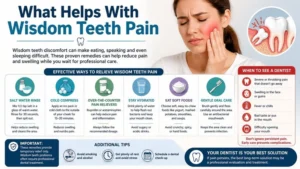
Until a dental appointment, gentle at-home measures can help make the discomfort more manageable. Rinsing with warm salt water after meals helps clear trapped food and reduce bacteria around the area. Avoiding very hot, cold, or sugary foods on that side of the mouth reduces triggered pain. Over-the-counter pain relief, used according to the product label, can also help in the short term. None of these steps treat the underlying cavity, and they aren’t a substitute for a dental exam, since untreated decay tends to worsen rather than resolve on its own.
Conclusion
Cavity in wisdom teeth pain usually presents as sharp, triggered discomfort tied to a specific tooth, distinct from the duller, pressure-like ache of a tooth still erupting or impacted. Because wisdom teeth are naturally harder to clean and inspect, decay can progress further than expected before it’s noticed. Sharp pain when biting or eating sweets, visible discoloration, or discomfort lasting more than a couple of days are all reasons to have the tooth examined rather than waiting it out.
FAQ
How do I know if my wisdom tooth pain is from a cavity? Cavity pain is usually sharp, tied to biting or sweet, hot, or cold foods, and often paired with a visible dark spot on the tooth. Pressure-like, constant aching without a clear trigger points more toward an erupting or impacted tooth.
Can a wisdom tooth cavity be filled instead of pulled? Yes, if the decay is caught early and the tooth is positioned well enough to clean afterward. Many dentists recommend extraction instead when the tooth is hard to reach, partially impacted, or the decay is extensive.
Why do wisdom teeth get cavities so easily? Their position at the back of the mouth makes them difficult to brush and floss thoroughly, and partial eruption creates a gum flap that traps food and bacteria against the tooth surface.
Is it normal for wisdom tooth pain to come and go? Mild, intermittent sensitivity can happen with either a small cavity or a tooth that’s slowly erupting. Pain that becomes constant, worsens, or spreads to the jaw or ear usually signals the problem needs a dental exam.
Can a cavity in a wisdom tooth cause jaw pain? Yes, if decay progresses far enough to reach the nerve or cause infection, pain can radiate to the jaw, ear, or side of the head, which is a sign to seek dental care promptly rather than waiting.
Related Keywords Used
- cavity in wisdom teeth pain



Pingback: Dental Bitewing X-Ray: What It Is and What It Actually Shows - wisdomtoothpain.info
Pingback: Cavity Fillings X Ray: How to Tell a Filling From a Cavity - wisdomtoothpain.info