
A dull ache at the very back of your jaw that gets worse when you chew, a sudden throb that keeps you up at night, is usually the first clue that a wisdom tooth is on the move. Wisdom tooth pain symptoms don’t always show up the same way for everyone, but they follow a few recognizable patterns because of where these teeth sit and how they typically erupt.
Wisdom teeth are the third and final set of molars, located at the very back corners of the upper and lower jaws. By the time they try to emerge, most mouths are already fully formed with the other 28 teeth in place. That leaves little to no room, which is why wisdom tooth pain is so common. The American Dental Association notes that most people don’t have enough space for these teeth to come in properly, causing them to grow at an angle, get stuck under the gum, and only partially break through.
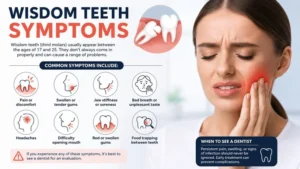
The most reported wisdom tooth pain symptoms include a persistent ache and pressure at the back of the jaw, swollen and tender gums around the molar area, pain that spreads toward the ear and jaw joint, discomfort while chewing and opening the mouth wide, and a bad taste and mild swelling if the gum tissue around the tooth becomes infected. Some people also notice mild headaches and jaw stiffness, especially on one side, which happens when the surrounding muscles tense up in response to the irritation.
What makes wisdom tooth pain different from ordinary tooth pain is its location and pattern: it’s almost always felt at the very back of the mouth, tends to come in waves tied to the tooth’s eruption stage, and often flares up periodically over weeks and months rather than staying constant. Understanding this pattern helps you tell the difference between normal eruption discomfort and a problem that needs a dentist’s attention which this guide covers in detail below, along with when the pain typically starts, what’s causing it, and how to manage it until you can get it checked.
When Do You Get Wisdom Teeth?
Most people get their wisdom teeth between the ages of 17 and 25, though the exact timing varies. Some people feel the first pressure and soreness as early as their mid-teens, while others don’t notice anything until their late twenties. A smaller number of people never develop wisdom teeth at all, and have them but never experience symptoms because the teeth come in fully and align normally.
First Signs of Wisdom Teeth Coming In
Direct answer: The earliest signs are usually gum tenderness at the back of the mouth, mild swelling, and an occasional dull ache that comes and goes over several days and weeks.
Before pain becomes noticeable, many people first experience:
- A tight and pressured feeling in the back gums
- Slight redness and puffiness where the tooth is emerging
- Sensitivity when biting down near the back molars
- A small flap of gum tissue partially covering the new tooth
How to Tell When Your Wisdom Teeth Are Coming In
Beyond the early signs above, you can usually confirm a wisdom tooth is emerging if you can feel a hard edge and bump with your tongue at the very back of your jaw, if the discomfort is confined to one specific spot rather than your whole mouth, and if a dentist confirms it with an X-ray during a checkup. X-rays are the only reliable way to see whether a wisdom tooth is impacted (stuck below the gum and bone) before it causes visible symptoms.
Common Wisdom Tooth Pain Symptoms
As the tooth pushes further through the gum, wisdom tooth pain symptoms tend to become more noticeable and specific:
- Throbbing and aching pain at the back of the jaw, often worse at night
- Swollen, red, or bleeding gums around the emerging tooth
- Jaw stiffness and difficulty fully opening the mouth
- Pain when chewing, especially on the affected side
- Swelling in the cheek and jaw near the site
- Earache-like pain and a dull ache that radiates toward the jaw joint
- Unpleasant taste and odor, which can signal trapped food and early infection
If several of these symptoms appear together, especially swelling combined with pain that worsens over a few days it often points to pericoronitis, an infection of the gum tissue around a partially erupted wisdom tooth.
What Causes Wisdom Tooth Pain?
Wisdom tooth pain is almost always tied to one of these situations:
- The tooth is angled and trapped and can’t fully break through the gum and bone.
- Partial eruption only part of the tooth emerges, leaving a gum flap where food and bacteria can get trapped, leading to infection.
- Crowding there isn’t enough space, so the wisdom tooth pushes against neighboring molars.
- Cavities and gum disease wisdom teeth are hard to clean properly, making them more prone to decay once they emerge.
How to Cure Wisdom Tooth Pain (Temporary Relief)
Direct answer: There’s no permanent home cure for wisdom tooth pain caused by impaction and infection. Only a dentist can resolve the underlying issue but several methods can ease discomfort until you’re seen.
- Warm salt water rinse: Dissolve about half a teaspoon of salt in warm water and rinse gently several times a day to reduce swelling and clean the area.
- Cold compress: Apply to the outside of the jaw in short intervals to numb pain and limit swelling.
- Over-the-counter pain relievers: Options like ibuprofen and acetaminophen, taken according to the package instructions, can reduce pain and inflammation.
- Clove oil: A small amount dabbed on the area (never swallowed) has natural numbing properties many people find helpful.
- Soft foods: Avoid chewing directly on the affected side and skip hard, sticky, and spicy foods that can irritate the gum.
- Gentle brushing: Keep the area as clean as possible without aggravating swollen tissue.
These steps manage symptoms, not the cause if the tooth is impacted and infected, the pain will return once the remedy wears off.
When to See a Dentist
Book an appointment promptly if you notice any of the following:
- Pain that worsens over several days instead of improving
- Facial swelling that spreads beyond the jaw
- Fever and difficulty swallowing
- Pus and a foul taste that won’t go away
- Pain severe enough to disrupt sleep and eating
These can indicate a spreading infection, which needs professional treatment such as antibiotics and extraction rather than home care alone.
Conclusion
Wisdom tooth pain symptoms aching at the back of the jaw, gum swelling, and discomfort while chewing are your mouth’s way of signaling that these last molars don’t have enough room to come in cleanly. Recognizing the early signs, understanding what’s causing the pain, and using short-term relief methods can make the waiting period more manageable, but persistent and worsening symptoms are a clear sign to see a dentist, since impacted and infected wisdom teeth typically need professional treatment to resolve for good.
FAQ
1. How long does wisdom tooth pain usually last? Mild eruption discomfort can come and go over several weeks, but pain from infection and impaction won’t go away on its own and typically worsens without treatment.
2. Can wisdom tooth pain go away without removal? If the tooth erupts fully and in proper alignment, discomfort often fades on its own. If it’s impacted and infected, pain usually returns until the tooth is treated and extracted.
3. Why does wisdom tooth pain hurt more at night? Lying down increases blood flow to the head and jaw, which can intensify pressure and throbbing around an inflamed area.
4. Is swelling normal with wisdom teeth coming in? Mild, localized swelling is common. Swelling that spreads to the cheek, jaw, and neck is not normal and needs prompt dental attention.
5. Can wisdom tooth pain cause a headache and earache? Yes. Because wisdom teeth sit close to the jaw joint and facial nerves, pain can radiate toward the ear and trigger tension headaches on the affected side.
6. Do all four wisdom teeth come in at the same time? Not always. They often emerge in pairs and at slightly different times, so it’s common to feel symptoms on one side of the mouth before the other.

Raheel is the founder of WisdomToothPain. info, a specialized platform dedicated to demystifying dental health. As a dedicated digital researcher, Raheel focuses on providing clear, accurate, and evidence-based information to help individuals navigate the complexities of wisdom tooth pain with confidence. This content is for informational purposes only and isn’t a substitute for professional dental advice. Always consult a licensed dentist for diagnosis and treatment.


Pingback: Cavity in Wisdom Tooth No Pain: Why Decay Can Go Unnoticed - wisdomtoothpain.info