

Wisdom tooth nerve pain happens when an erupting or impacted third molar presses against or irritates a nearby nerve, most often the inferior alveolar nerve that runs through the lower jawbone. This creates a distinct type of pain that feels different from ordinary tooth sensitivity: it can radiate along the jaw, spread toward the ear, or travel down to the chin instead of staying centered on one tooth.
Unlike cavity pain, which is usually sharp and confined to a single spot, nerve-related pain from a wisdom tooth tends to be broader and often includes tingling, numbness, or a dull, pressure-like ache that gets worse when you bite down. This happens because of anatomy: in the lower jaw, the inferior alveolar nerve and the lingual nerve (which controls sensation in the tongue and floor of the mouth) frequently run extremely close to the roots of the lower wisdom teeth, sometimes touching the roots or even looping around them. When a wisdom tooth is impacted, meaning it doesn’t have enough room to fully emerge or comes in at an angle, its roots can push directly against this nerve tissue as the tooth continues trying to erupt.
This is why wisdom tooth nerve pain is one of the more recognizable dental complaints. Patients commonly describe it as a throbbing ache combined with unusual sensations, numbness in the lower lip, tingling along the jawline, or a strange “electric” feeling when chewing rather than a plain, isolated toothache. It’s also the main reason nerve position matters so much when a dentist or oral surgeon plans wisdom tooth removal: the closer the roots sit to the nerve, the higher the risk of nerve involvement both before and after extraction.
In practice, wisdom tooth nerve pain comes from one of two situations. The first is mechanical pressure from the tooth itself, and an impacted or partially erupted wisdom tooth compressing the nerve as it tries to move into position, or as surrounding infection and swelling put pressure on nerve tissue. The second is nerve irritation or injury that occurs during or after an extraction, when the tooth’s roots were close enough to the nerve that removal caused temporary or, less commonly, lasting nerve changes. Both situations are legitimate reasons to see a dentist, but they call for different next steps.
The rest of this guide breaks down what causes this pain, what an impacted wisdom tooth actually is, the wisdom teeth issues most likely to involve a nerve, and how to recognize the difference between normal post-extraction healing and signs of nerve damage after wisdom teeth removal.
What Causes Wisdom Tooth Nerve Pain?
Wisdom tooth nerve pain is usually caused by one of the following:
- Impaction against the nerve canal The lower wisdom tooth roots develop close to the mandibular canal, which houses the inferior alveolar nerve. As the tooth tries to erupt, it can press on this canal.
- Infection and swelling (pericoronitis) Bacteria trapped under a partially erupted wisdom tooth cause inflammation that swells the surrounding tissue, putting pressure on nerve endings.
- Cyst formation Fluid-filled sacs can develop around an impacted tooth and expand against nearby nerve tissue.
- Post-extraction nerve irritation Stretching, bruising, or (rarely) direct contact with the nerve during removal can cause temporary or lasting sensory changes.
Pain from nerve compression typically feels like a dull, deep ache with occasional sharp episodes, often paired with numbness or tingling, a pattern that’s different from the sharp, isolated pain of a cavity or gum infection alone.
What Is an Impacted Wisdom Tooth?
An impacted wisdom tooth is a third molar that cannot fully erupt into a normal position because of lack of space, blockage from another tooth, or an abnormal growth angle. Instead of emerging straight up through the gum like other teeth, it stays partially or fully trapped in the jawbone or soft tissue.
There are a few common types of impaction:
- Mesial impaction The tooth is angled forward, pressing into the second molar.
- Distal impaction The tooth is angled backward, toward the jaw joint.
- Horizontal impaction The tooth lies on its side, often pressing directly against the roots of the neighboring molar and closer to the nerve canal.
- Vertical impaction The tooth is upright but still blocked from fully erupting, usually due to lack of room.
Symptoms of Impacted Wisdom Teeth
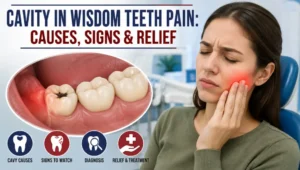
Common symptoms of impacted wisdom teeth include:
- Persistent pain or pressure at the back of the jaw
- Swollen or tender gums near the last molar
- Difficulty opening the mouth fully
- Bad breath or an unpleasant taste from trapped food and bacteria
- Jaw stiffness or a dull ache that spreads toward the ear
- Visible partial eruption with red or inflamed gum tissue over it
Not every impacted wisdom tooth causes symptoms right away. Some stay silent for years before pressure, infection, or crowding triggers noticeable pain.
Common Wisdom Teeth Issues Linked to Nerve Pain
Several wisdom teeth issues are frequently connected to nerve involvement:
- Pericoronitis Inflammation of the gum tissue around a partially erupted tooth; a leading cause of nerve-adjacent pain and jaw stiffness.
- Crowding and root pressure An impacted tooth pushing against the second molar or nerve canal as it tries to shift position.
- Dental cysts or abscesses Infection or fluid buildup around the tooth that expands and presses on nerve tissue.
- Close root-to-nerve proximity Confirmed by dental X-ray or CT scan, this raises the risk of nerve pain both before and after extraction.
A dentist typically confirms nerve involvement using a panoramic X-ray or 3D cone-beam scan, which shows exactly how close the tooth roots sit to the nerve canal before deciding on treatment.
Symptoms of Nerve Damage After Wisdom Teeth Removal
Some numbness or tingling in the lip, chin, or tongue immediately after extraction is common and usually temporary, resulting from local anesthesia or minor nerve irritation during the procedure. True nerve damage after wisdom teeth removal is less common but has recognizable signs:
- Numbness in the lower lip, chin, or tongue that lasts more than a few days
- Tingling or a “pins and needles” sensation that doesn’t fade
- Altered or reduced sense of taste
- A burning sensation in the tongue or gum area
- Difficulty feeling temperature or texture on the affected side
- In rare cases, drooping or weakness on one side of the lip while speaking
| Timing | Likely Cause | Typical Outcome |
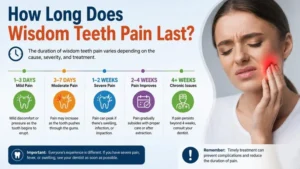
| First 24 48 hours | Local anesthetic wearing off, minor swelling | Resolves on its own |
| A few days to 2 weeks | Nerve bruising or stretching during extraction | Usually improves gradually |
| Beyond several weeks | Direct nerve injury (uncommon) | May need evaluation by an oral surgeon |
If numbness or tingling persists beyond two to three weeks after an extracted wisdom tooth, it’s worth having the surgeon check the healing site, since early evaluation gives the nerve the best chance to recover.
What to Expect After an Extracted Wisdom Tooth
After a wisdom tooth is extracted, mild swelling, soreness, and some jaw stiffness are normal for the first few days. Pain should gradually decrease rather than worsen. Warning signs that go beyond normal healing include:
- Pain that intensifies after day three or four (possible dry socket)
- Persistent numbness beyond the expected anesthesia window
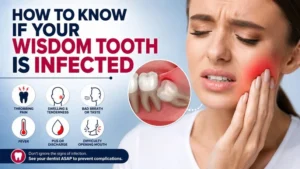
- Fever, pus, or a foul taste suggesting infection
- Sharp pain when the jaw’s nerve-rich areas are touched or chewed on
Most nerve-related sensations after extraction, even when temporary, are worth mentioning at a follow-up visit so the dentist can track whether they’re resolving as expected.
When to See a Dentist or Oral Surgeon
See a dental professional promptly if wisdom tooth nerve pain includes any of the following:
- Numbness or tingling that doesn’t improve within a week
- Pain that spreads toward the ear, temple, or neck
- Difficulty opening your mouth or swallowing
- Swelling that continues to grow rather than subside
- Signs of infection, such as fever or discharge
A dental X-ray is usually the fastest way to determine whether the pain is coming from nerve compression, infection, or another wisdom tooth issue, and it guides whether removal, antibiotics, or monitoring is the right next step.
Wisdom tooth nerve pain is the body’s signal that a nerve near the jaw is being compressed, irritated, or affected by an impacted tooth or its removal. Recognizing the difference between normal pressure-related discomfort and true nerve damage after wisdom teeth removal helps you know when home care is enough and when it’s time for a dental evaluation.
FAQ
What does wisdom tooth nerve pain feel like?
It often feels like a deep, dull ache combined with tingling or numbness in the lip, chin, or jaw, rather than a sharp pain confined to one tooth.
Is nerve damage from wisdom tooth removal permanent?
Most nerve irritation after extraction is temporary and improves within weeks to a few months. Permanent nerve damage is uncommon and more likely when the tooth roots are very close to the nerve canal.
How do I know if my wisdom tooth is impacted?
Common signs include pain or pressure at the back of the jaw, swollen gums, jaw stiffness, and difficulty fully opening the mouth. A dental X-ray confirms impaction and its position relative to nerves.
Can an impacted wisdom tooth cause nerve pain without infection?
Yes. Simple mechanical pressure from the tooth root against the nerve canal can cause pain even without infection, especially with horizontal or mesial impactions.
How long does numbness last after an extracted wisdom tooth?
Numbness from anesthesia typically fades within hours. Numbness from nerve irritation during extraction can last days to a few weeks; if it continues beyond that, see the surgeon.
Should I get an impacted wisdom tooth removed even without pain?
Not always. Some symptom-free impacted teeth are simply monitored with periodic X-rays, while others are removed proactively if there’s a high risk of future crowding, infection, or nerve pressure. This decision is made case by case with a dentist.

Raheel is the founder of WisdomToothPain. info, a specialized platform dedicated to demystifying dental health. As a dedicated digital researcher, Raheel focuses on providing clear, accurate, and evidence-based information to help individuals navigate the complexities of wisdom tooth pain with confidence. This content is for informational purposes only and isn’t a substitute for professional dental advice. Always consult a licensed dentist for diagnosis and treatment.
Pingback: Wisdom Tooth Pain: Causes, Signs & Fast Relief Tips - wisdomtoothpain.info