
Wisdom Tooth Pain: Causes, First Signs, and How to Find Relief
Wisdom tooth pain almost always announces itself the same way: a dull ache at the very back of the jaw that gets sharper when you chew, yawn, and press on the area. For some people it fades after a day and two. For others, it builds into swelling, jaw stiffness, and pain that spreads toward the ear and temple. Knowing which pattern you’re dealing with and what’s actually causing it makes the difference between riding it out with home care and getting to a dentist before it turns into something worse.
Wisdom teeth, also called third molars, are the last teeth to come in, usually between ages 17 and 25. Most people have four of them, one in each corner of the mouth. The reason they cause trouble so often comes down to space: modern jaws are typically too small to fit a full third set of molars behind the existing teeth. When a wisdom tooth doesn’t have enough room to erupt normally, it can come in at an angle, push against the tooth next to it, and get stuck partway through the gum. Dentists call this impaction, and it’s the single biggest reason wisdom tooth pain happens at all.
Pain can also come from a partially erupted tooth. When a wisdom tooth breaks through the gum but doesn’t fully emerge, a flap of gum tissue is left covering part of the tooth. Food and bacteria collect underneath that flap, which leads to a gum infection called pericoronitis swollen, tender, sometimes bleeding gum tissue around the back molar, often with a bad taste and smell that won’t go away with brushing. This is one of the more common reasons wisdom tooth pain shows up suddenly, even in a tooth that had been quiet for months.
Not every case involves impaction and infection. Sometimes a healthy wisdom tooth simply pushing through the gum causes the same kind of pressure and soreness as a child’s tooth coming in uncomfortable, but not dangerous on its own. The tricky part is that mild eruption discomfort and a developing infection can feel similar at first, which is why persistent and worsening pain is always worth having a dentist look at rather than guessing.
This guide covers what to watch for as wisdom teeth come in, the specific ways this pain shows up in the jaw, what actually works for relief at home, and the warning signs that mean it’s time to stop waiting and call a dentist.
First Signs of Wisdom Teeth Coming In

Before pain becomes obvious, there are usually earlier signals that a wisdom tooth is on its way in:
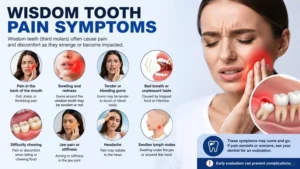
- A dull ache behind the last molar. This is typically the earliest sign of pressure and soreness deep in the gum rather than sharp pain.
- Swollen and tender gums at the very back of the mouth, sometimes red and slightly puffy.
- Mild jaw stiffness, especially noticeable when opening the mouth wide and chewing tough food.
- A change in taste and mild bad breath, caused by food particles trapped where the gum hasn’t fully receded.
- Occasional headaches, from tension that radiates outward from the jaw muscles.
These early signs can come and go over weeks and months as a tooth slowly moves into position. If they stay mild and don’t worsen, many people manage them with basic home care. If the discomfort escalates and gum swelling spreads, that’s usually a sign the tooth doesn’t have enough room to come in cleanly.
Why Wisdom Teeth Cause Jaw Pain

Jaw pain is one of the most frequently reported wisdom tooth symptoms, and it has a mechanical explanation. A wisdom tooth hurting in one small spot rarely stays that way for long, because the pressure doesn’t stay contained as the tooth pushes against neighboring teeth and bone, that force transfers through the jawbone and into the surrounding muscles and joint. This is why wisdom tooth pain so often feels like it’s coming from the whole jaw rather than a single tooth.
Common jaw-related symptoms include:
- Aching and throbbing along the jawline, sometimes worse on one side
- Stiffness and reduced range of motion when opening the mouth
- Pain near the ear, since the jaw joint (TMJ) sits close to the back molars
- Soreness that increases with chewing, talking, and yawning
If jaw pain is accompanied by visible facial swelling, difficulty opening the mouth more than a small amount, and pain that spreads toward the throat, that combination points toward infection and an impacted wisdom tooth rather than routine eruption discomfort and it should be evaluated promptly rather than managed at home.
How to Help Wisdom Tooth Pain at Home

For mild to moderate discomfort, several home methods provide temporary relief while you wait for an eruption to finish and for a dental appointment:
- Rinse with warm salt water. Dissolve about half a teaspoon of salt in a cup of warm water and rinse gently 2–3 times a day. This reduces bacteria around the gum flap and can ease minor swelling.
- Apply a cold compress. Holding a cold pack against the jaw for 15–20 minutes at a time helps numb the area and limit swelling, particularly if the jaw feels puffy and tender to the touch.
- Use an over-the-counter pain reliever. Ibuprofen and acetaminophen, taken according to the directions on the package, can reduce both pain and inflammation. Ask a pharmacist if you’re combining it with other medications.
- Keep the area clean. Gently brush around the back molars and use an interdental brush and water flosser on a low setting to clear food debris from under the gum flap, which lowers infection risk.
- Stick to soft foods. Soups, yogurt, mashed vegetables, and similar foods reduce the chewing pressure that aggravates the area while it’s inflamed.
- Try clove oil. A small amount of clove oil dabbed on the sore gum (diluted with a carrier oil, and on a cotton swab) has a mild numbing effect that some people find helpful between doses of pain medication.
These measures manage symptoms; they don’t resolve an impacted tooth and clear an active infection. If pain keeps returning after it fades, that’s a sign the underlying cause hasn’t gone away.
When Wisdom Tooth Pain Relief Needs a Dentist
Home care is appropriate for mild, short-term discomfort. Contact a dentist promptly if you notice any of the following:
- Pain that lasts more than a few days and keeps getting worse
- Swelling limited to the cheek and jaw area
- Fever, chills, and a general feeling of being unwell
- Difficulty opening the mouth more than a small amount
- Pus, an ongoing bad taste, and a foul smell from the area
- Pain radiating toward the ear and throat on one side
These symptoms can indicate an infection, an impacted wisdom tooth, and damage to a neighboring tooth all of which need professional treatment. Depending on the evaluation, a dentist may prescribe antibiotics for infection, recommend monitoring with periodic X-rays if the tooth is coming in without complications, and refer you for extraction if the tooth is impacted, repeatedly infected, and damaging nearby teeth. Extraction is one of the most common outcomes for problem wisdom teeth precisely because most jaws don’t have room for them to erupt cleanly.
Seek emergency care immediately at an ER and urgent care, not a routine dental visit if you have difficulty breathing or swallowing, and if swelling is spreading toward your neck and under your jaw. That combination can signal a deep infection that’s starting to affect the airway, which is a medical emergency and needs treatment faster than a standard dental appointment can provide.
Wisdom tooth pain that shows up once and settles down on its own is usually nothing to worry about. Pain that returns, intensifies, and comes with swelling and jaw stiffness is your body flagging a problem that home remedies can mask but not fix and that’s the point where a dental exam, not another day of waiting, is the right next step.
FAQ
Is it normal for wisdom teeth to hurt for weeks? Mild, intermittent discomfort over several weeks can be normal as a tooth slowly erupts. Constant and worsening pain over that same period is not typical and usually means the tooth is impacted and infected.
Can wisdom tooth pain go away without removal? Yes, if the tooth erupts fully and in proper alignment, discomfort often resolves on its own. If the tooth is impacted and repeatedly causes gum infections, the pain tends to return until the tooth is treated and removed.
Why does wisdom tooth pain get worse at night? Lying down increases blood flow to the head and jaw, which can intensify pressure and throbbing. Elevating the head slightly with an extra pillow can reduce nighttime discomfort.
Can wisdom tooth pain cause ear pain? Yes. The wisdom teeth sit close to the jaw joint and nerves that also serve the ear, so pain frequently radiates in that direction, especially with lower wisdom teeth.
How long does wisdom tooth pain relief from home remedies typically last? Salt water rinses and cold compresses usually provide relief for a few hours at a time. Over-the-counter pain relievers typically last 4–6 hours depending on the medication and dose used.
Should I use heat and cold for wisdom tooth pain? Cold is generally recommended for the first 24–48 hours to control swelling. Warm salt water rinses are fine throughout, but avoid direct heat on the outside of the jaw if there’s active swelling, since it can worsen inflammation.
Should I go to the ER for wisdom tooth pain? Only if you have difficulty breathing and swallowing, and swelling spreading toward your neck and under your jaw can signal a spreading infection that affects the airway. Without those signs, even severe wisdom tooth pain is a dental issue best handled by a dentist and oral surgeon, not an emergency room.

Raheel is the founder of WisdomToothPain. info, a specialized platform dedicated to demystifying dental health. As a dedicated digital researcher, Raheel focuses on providing clear, accurate, and evidence-based information to help individuals navigate the complexities of wisdom tooth pain with confidence. This content is for informational purposes only and isn’t a substitute for professional dental advice. Always consult a licensed dentist for diagnosis and treatment.


Pingback: Wisdom Tooth Pain: Causes, Relief & When to See a Dentist - wisdomtoothpain.info