

A dull throb at the very back of your jaw, gums that feel tight and swollen behind your last molar, a jaw that won’t quite open all the way this is what wisdom molar pain feels like for most people, and it usually shows up sometime between the late teens and mid-twenties. Wisdom teeth, and third molars, are the final set of teeth to erupt, and by the time they try to come in, the jaw is often already full. That mismatch between tooth and available space is the root cause of almost every case of wisdom molar pain, whether the tooth is pushing through normally, coming in at an angle, and staying trapped below the gum line entirely.
Not all wisdom molar pain means the same thing, though, and that distinction matters. Some discomfort is a normal, temporary part of the tooth working its way through the gum similar to the teething process from childhood, just decades later and on a molar big enough to notice. Other pain is a sign that the tooth is impacted, infected, and crowding neighboring teeth, and that kind needs a dentist’s attention rather than home care alone. Telling the two apart early can save you days of unnecessary discomfort, and stop a minor problem from turning into an infection that spreads to the jaw.
The pain itself tends to concentrate in a fairly predictable spot: the very back corner of the upper and lower jaw, right behind the second molar. From there it can radiate outward into the ear, up toward the temple, and along the jawline which is why people sometimes mistake wisdom molar pain for an earache and a headache before they connect it to their teeth. Swelling of the gum tissue around the emerging tooth, tenderness when biting down, and general stiffness when opening the mouth wide are all part of the same picture.
This article walks through the earliest signs that a wisdom tooth is on its way, what’s actually happening in the jaw when it hurts, the home remedies that genuinely help take the edge off, and just as importantly the specific warning signs that mean it’s time to stop treating the pain yourself and call a dentist. The short version: mild, come-and-go soreness at the back of the mouth can usually be managed at home for a few days with saltwater rinses, cold compresses, and an over-the-counter pain reliever. Pain that is severe, spreading, and paired with swelling, fever, and difficulty opening the jaw should be seen by a dentist promptly. The sections below cover both situations in detail.
First Signs of Wisdom Teeth Coming In
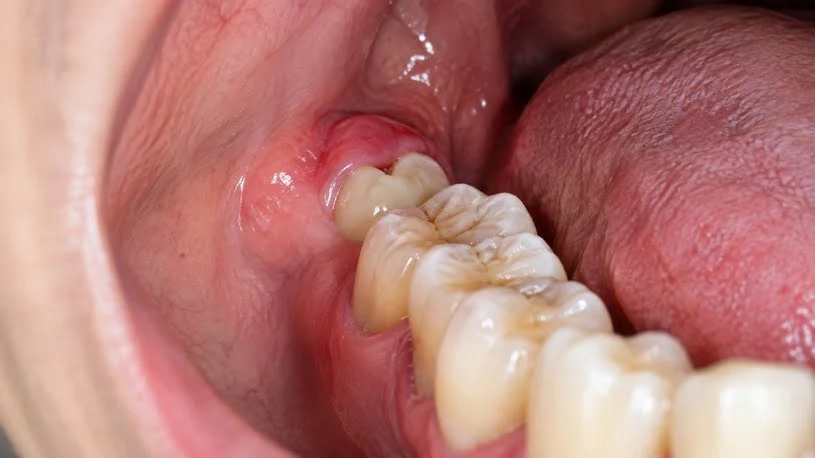
Before the pain becomes obvious, there are usually a few early clues:
- A dull ache and pressure behind the second molar often the very first thing people notice
- Gums that look slightly swollen and red, and feel tender to the touch in that spot
- A tight, “full” feeling in the back of the jaw, especially noticeable when eating
- Mild jaw stiffness, particularly first thing in the morning
- A faint bad taste and breath odor near the back of the mouth, caused by food collecting under the gum tissue covering a partially emerged tooth
These early signs can come and go over weeks and months, since wisdom teeth often erupt slowly and in stages. Not everyone feels them clearly, some people have no symptoms until the tooth breaks fully through, and a smaller number never develop noticeable wisdom molar pain at all because their teeth come in with plenty of room.
What Causes Wisdom Molar Pain
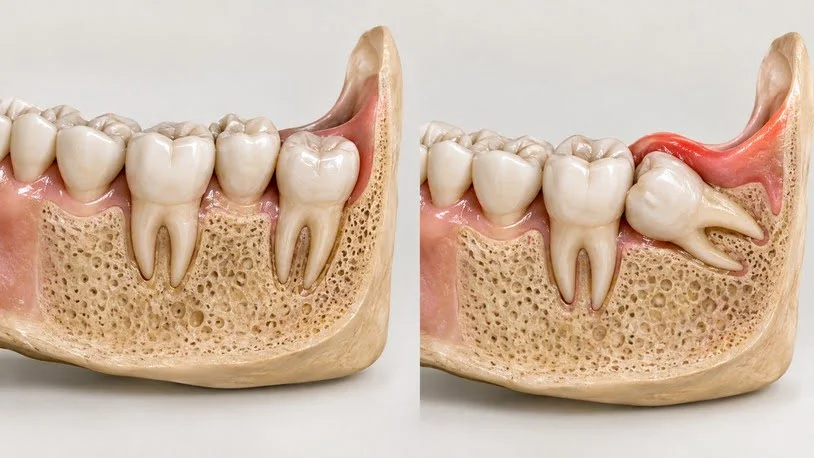
Most jaws simply don’t have room for a third set of molars by the time they try to erupt, which sets up a few specific problems:
- The tooth is blocked by bone, gum tissue, and a neighboring molar and can’t erupt normally. An impacted wisdom tooth can push sideways into the tooth next to it, causing pain and crowding.
- Partial eruption and pericoronitis when a tooth breaks only partway through the gum, a flap of tissue often covers part of it. Food and bacteria collect underneath, leading to a gum infection called pericoronitis: swollen, painful, sometimes bleeding gum tissue around the tooth.
- Decay and gum disease. The very back of the jaw is hard to clean well, so wisdom teeth are more prone to cavities and gum problems than other teeth.
- Cyst formation less commonly, a fluid-filled cyst can form around an impacted tooth and put pressure on nearby bone and teeth.
How to Help Wisdom Tooth Pain at Home
For mild to moderate pain especially the kind caused by a tooth simply working its way through the gum a few well-established home measures can bring real relief while you wait to see whether it settles on its own and needs a dentist:
- Warm saltwater rinse. Dissolve about half a teaspoon to one tablespoon of salt in a cup of warm water and swish it around the painful area for 30 seconds, then spit it out. This clears bacteria and food debris and reduces gum inflammation. It’s safe to repeat every few hours.
- Cold compress. Hold an ice pack wrapped in a cloth against the outside of the jaw for 1520 minutes at a time. Cold reduces swelling and has a numbing effect on the area.
- Over-the-counter pain relievers. Ibuprofen is generally preferred for wisdom tooth pain because it reduces inflammation as well as pain; acetaminophen is an alternative for people who can’t take NSAIDs. Follow the dosing on the package label.
- Clove oil. Clove oil contains eugenol, a natural anesthetic. A small amount applied to the gum with a cotton swab can numb the area temporarily.
- Soft-food diet. Avoiding hard, crunchy, and chewy foods on the affected side reduces pressure on the tender area while it heals and continues erupting.
- Gentle brushing and rinsing. Keeping the area as clean as you comfortably can trap food is what turns mild irritation into pericoronitis.
These measures treat symptoms, not the underlying cause. If a wisdom tooth is impacted and repeatedly getting infected, home care will only ever be a temporary fix.
Normal Wisdom Molar Pain vs. Signs You Need a Dentist
| What You’re Feeling | Likely Normal Manageable at Home | Needs a Dentist Soon |
| Pain level | Mild, dull, comes and goes | Severe, sharp, constant, and worsening |
| Duration | A few days, easing with home care | Lasts more than 23 days and keeps returning |
| Swelling | Slight puffiness of the gum | Visible facial and jaw swelling |
| Jaw movement | Slightly stiff | Difficulty opening the mouth fully |
| Other symptoms | None beyond local discomfort | Fever, bad taste and pus, swollen lymph nodes, pain spreading to ear and neck |
If your symptoms fall into the right-hand column, don’t wait out the pain call a dentist and oral surgeon. Untreated wisdom tooth infections can spread to the jawbone and, in rare cases, further into the body.
The Bottom Line
Wisdom molar pain is common, but it isn’t something to just push through indefinitely. Mild, short-lived discomfort from a tooth erupting normally usually responds well to saltwater rinses, cold compresses, and over-the-counter pain relievers within a few days. Pain that’s severe, spreading, and accompanied by swelling, fever, and trouble opening the mouth points to impaction and infection and needs a dentist’s evaluation often starting with an X-ray to see exactly what the tooth is doing beneath the gum. Paying attention to which category your wisdom molar pain falls into is the fastest way to get real relief instead of just managing symptoms.
FAQ
How long does wisdom molar pain usually last? Pain from a tooth erupting normally often comes in waves over several days to a few weeks as the tooth pushes through in stages. Pain that lasts more than 23 days without improving, and that keeps coming back, usually means the tooth needs to be checked by a dentist.
Can wisdom tooth pain go away on its own? Mild pain from a normal eruption can ease on its own once the tooth breaks through the gum. Pain caused by impaction, infection, and crowding typically won’t resolve without treatment and tends to return.
What are the first signs of wisdom teeth coming in? The earliest signs are usually a dull ache and pressure behind the last molar, mild gum swelling and tenderness in that spot, and slight jaw stiffness often before the tooth is even visible.
Is it normal for wisdom tooth pain to spread to the ear and jaw? Yes. Because wisdom teeth sit close to the jaw joint and nerves, pain can radiate to the ear, temple, and jawline, which is why it’s sometimes mistaken for an earache and headache.
Does ibuprofen help wisdom tooth pain? Ibuprofen is generally more effective than acetaminophen for wisdom tooth pain because it reduces both pain and the inflammation causing it, though it should be taken as directed and isn’t right for everyone.
When should I see a dentist about wisdom molar pain? See a dentist promptly if pain is severe, lasts more than a few days, and comes with swelling, fever, a bad taste and pus, swollen lymph nodes, and difficulty opening your mouth; these point to infection and impaction rather than normal eruption.

Raheel is the founder of WisdomToothPain. info, a specialized platform dedicated to demystifying dental health. As a dedicated digital researcher, Raheel focuses on providing clear, accurate, and evidence-based information to help individuals navigate the complexities of wisdom tooth pain with confidence. This content is for informational purposes only and isn’t a substitute for professional dental advice. Always consult a licensed dentist for diagnosis and treatment.


Pingback: Wisdom Tooth Pain: Causes, Signs & Fast Relief Tips - wisdomtoothpain.info
Pingback: Wisdom Teeth Pain: Causes, Relief, and When to See a Dentist - wisdomtoothpain.info