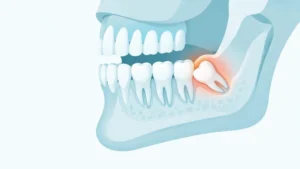

Wisdom teeth pain usually starts as a dull, throbbing ache at the very back of the jaw, often worse when you bite down, chew, and lie flat at night. Many people describe it as pressure building behind the last molar, sometimes spreading toward the ear, jaw joint, and side of the head. If the tooth is impacted and infected, that dull ache can turn sharp and constant, with swelling in the gum tissue around it and a bad taste from trapped food and pus. This is what wisdom teeth pain feels like for most adults: a mix of pressure, throbbing, and tenderness that gets progressively harder to ignore.
The pain typically shows up in stages rather than all at once. In the earliest stage, you might just notice mild soreness and a tight feeling at the back of the gum, easy to mistake for a minor irritation. As the tooth pushes further through the gum tissue and against neighboring teeth, the discomfort becomes sharper and more localized, often triggered by chewing on that side of the mouth. If the wisdom tooth is impacted, meaning it doesn’t have enough room to fully erupt, the pain can become more intense and constant, sometimes accompanied by swelling, jaw stiffness, and difficulty opening the mouth fully.
Not every case feels the same. Some people experience a steady dull ache that lingers for days, while others get sudden sharp pain that flares up when eating and brushing near the area. A third pattern involves radiating pain, where the discomfort isn’t isolated to the tooth itself but travels along the jawline, into the ear, and up toward the temple. This radiating pattern is common when the wisdom tooth is pressing on a nerve and when nearby gum tissue is inflamed. Swelling, redness, and tenderness when touching the outside of the jaw often accompany more advanced cases.
It’s worth distinguishing normal eruption discomfort from a sign of complication. Mild soreness that comes and goes for a few days as a tooth shifts position is common and usually manageable at home. Pain that gets progressively worse, comes with swelling, fever, difficulty swallowing, and a foul taste is more likely a sign of infection and impaction, and it warrants a dental visit rather than home care alone. Understanding these differences helps you know whether you’re dealing with a normal part of tooth eruption and something that needs professional attention.
First Signs of Wisdom Teeth Coming In
The earliest signs that a wisdom tooth is coming in are usually subtle. Common early indicators include:
- Mild tenderness and pressure at the back of the gum, behind the second molars
- Slight swelling and redness in the gum tissue
- A feeling of tightness when chewing on that side
- Occasional jaw stiffness, especially in the morning
- A small white edge of tooth visible at the gumline (in some cases)
These symptoms can appear on and off for weeks and months as the tooth gradually moves into position, especially in people between ages 17 and 25, when wisdom teeth most commonly emerge.
When Do You Get Wisdom Teeth?
Most people get their wisdom teeth, also called third molars, between ages 17 and 25, though the exact timing varies. Some people notice them emerging as early as their mid-teens, while others don’t experience any eruption until their late twenties. In some cases, wisdom teeth never fully emerge and remain impacted beneath the gumline indefinitely, sometimes without causing any symptoms at all.
Why Wisdom Teeth Hurt: Common Causes
Several factors explain why wisdom teeth cause pain:
- Impaction – The tooth doesn’t have enough space to erupt properly and gets stuck against bone, gum tissue, and another tooth.
- Partial eruption – The tooth breaks through the gum only partially, creating a flap of tissue where food and bacteria collect, leading to infection (pericoronitis).
- Crowding – The tooth pushes against neighboring molars, creating pressure and shifting nearby teeth.
- Angled growth – Wisdom teeth that grow sideways and at an angle put pressure on adjacent teeth and nerves, often causing more intense pain than teeth that erupt straight.
- Cavities or gum disease – Because wisdom teeth are hard to clean, they’re more prone to decay and gum infection, both of which intensify pain.
How to Help Wisdom Tooth Pain at Home
While a dentist visit is the only way to resolve the underlying cause, these steps can ease discomfort in the meantime:
- Rinse with warm salt water two to three times a day to reduce bacteria and soothe inflamed gum tissue.
- Apply a cold compress to the outside of the jaw for 15-20 minutes at a time to reduce swelling.
- Use over-the-counter pain relievers such as ibuprofen, which also helps with inflammation, following package dosing instructions.
- Avoid hard, chewy, and sticky foods on the affected side to prevent further irritation.
- Gently clean the area with a soft-bristled brush to remove trapped food without aggravating the gum flap.
- Try clove oil dabbed on the area, a traditional remedy some people find soothes nerve-related discomfort temporarily.
These measures manage symptoms but don’t treat impaction and infection, so persistent and worsening pain still needs a dental evaluation.
Do You Have to Get Your Wisdom Teeth Pulled?
Not always. If wisdom teeth are fully erupted, properly aligned, and easy to clean, many dentists leave them in place with regular monitoring. Extraction becomes necessary when teeth are impacted, causing recurring infections, crowding other teeth, damaging nearby roots, or contributing to cysts. A dentist typically uses X-rays to assess positioning and recommend whether removal is the safer long-term option, especially since impacted teeth rarely resolve on their own and often worsen over time.
Conclusion
Wisdom teeth pain feels different depending on the stage and cause, ranging from mild pressure and tenderness during normal eruption to sharp, radiating pain when a tooth is impacted and infected. Recognizing what wisdom teeth pain feels like at each stage helps you decide whether home care is enough and whether it’s time to see a dentist. Persistent swelling, fever, and pain that keeps intensifying are signs the issue needs professional evaluation rather than home remedies alone.
FAQ
What does wisdom teeth pain feel like when it first starts? It usually begins as mild soreness and tightness at the back of the gum, often felt when chewing and touching the area, without significant swelling.
Can wisdom tooth pain spread to the ear or head? Yes, radiating pain toward the ear, jaw joint, or temple is common, especially when the tooth is impacted and pressing on a nerve.
How long does wisdom tooth pain typically last? Mild eruption discomfort can come and go over several days and weeks, while pain from infection or impaction often persists and worsens until treated.
Is it normal for wisdom teeth pain to come with swelling? Some swelling is common, but significant swelling, redness, and difficulty opening the mouth usually signals infection and needs dental attention.
How can I tell if my wisdom tooth pain means I need it removed? Recurring infections, worsening pain, crowding of nearby teeth, and an impacted position visible on X-ray are the main indicators that extraction is recommended.
Does wisdom tooth pain always mean infection? No, pain can result from normal eruption pressure, but if it’s accompanied by fever, foul taste, and swelling, infection is likely and should be checked by a dentist.

Raheel is the founder of WisdomToothPain. info, a specialized platform dedicated to demystifying dental health. As a dedicated digital researcher, Raheel focuses on providing clear, accurate, and evidence-based information to help individuals navigate the complexities of wisdom tooth pain with confidence. This content is for informational purposes only and isn’t a substitute for professional dental advice. Always consult a licensed dentist for diagnosis and treatment.