
A dull, throbbing ache at the very back of your jaw that seems to come out of nowhere is one of the clearest signs of an erupted wisdom tooth. If you’ve noticed tenderness, swelling, and a hard bump pushing through your gums near your last molar, your body is likely telling you that a third molar commonly called a wisdom tooth is breaking through the gum tissue.
An erupted wisdom tooth simply means the tooth has pushed through the gum line and is now visible and partially visible in the mouth, rather than staying fully hidden below the surface. This process doesn’t always go smoothly. Because wisdom teeth are the last adult teeth to develop, there’s often not enough room left in the jaw for them to come in straight. This can cause them to erupt at an angle, only partially break through, and press against neighboring teeth, all of which create the discomfort many people associate with “getting your wisdom teeth.”
Most people experience this between the ages of 17 and 25, though the exact timing varies from person to person. Some notice mild pressure for weeks before the tooth becomes visible; others feel sudden, sharp pain within a day and two. The symptoms tend to cluster around the same general area: the back corners of the upper and lower jaw, right behind the second molars.
Understanding what’s actually happening to a tooth working its way through bone and gum tissue in a crowded space helps explain why the area often looks red, feels swollen, and can be sensitive to biting pressure and temperature. In many cases, the gum tissue partially covers the emerging tooth, creating a small flap where food particles and bacteria can get trapped. This is one of the most common reasons the gum around an erupting wisdom tooth becomes swollen and infected.
The good news is that a normally erupting wisdom tooth, even an uncomfortable one, is usually manageable with basic home care and doesn’t automatically mean you need extraction. The sections below walk through the specific signs to watch for, how this differs from other dental pain, and the most effective ways to manage swelling and discomfort while the tooth finishes coming in.
When Do You Get Wisdom Teeth?
Wisdom teeth are the third and final set of molars, and they’re typically the last teeth to develop. Most people get them between ages 17 and 25, though it’s not unusual for them to appear earlier or later. Some adults never develop wisdom teeth at all, while others have them remain fully impacted (never breaking through the gum) for life.
Because the jaw has usually finished growing by this age, there’s often limited space, which is why wisdom teeth are more prone to crowding, angled eruption, and partial eruption compared to other teeth.
First Signs of Wisdom Teeth Coming In
Before a wisdom tooth becomes visible, several early warning signs typically appear:
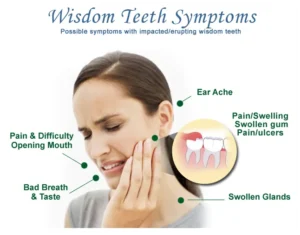
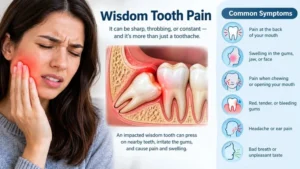
- Tenderness and dull pain at the very back of the jaw
- Swollen and reddened gums behind the last molar
- A small, hard lump felt under the gum when pressing the area with your tongue
- Mild jaw stiffness and discomfort when opening your mouth wide
- Occasional headaches and ear-area soreness on the same side
- A slightly unpleasant taste, if the gum flap traps food and bacteria
Not everyone experiences every symptom. Some people notice only mild pressure, while others develop more pronounced swelling before the tooth appears.
How to Tell When Your Wisdom Teeth Are Coming In (vs. Other Dental Issues)
It’s easy to confuse wisdom tooth eruption with a cavity, gum disease, and a sinus issue, since the pain can radiate. A few things point specifically to wisdom teeth:
- The discomfort is localized to the very back corner of the jaw, not a specific tooth surface.
- You can feel a firm bump under the gum tissue in that location.
- Symptoms appear in your late teens to mid-20s, the typical eruption window.
- Pain worsens when chewing near the back of the mouth and when the jaw is fully opened.
If pain is sharp, isolated to one specific tooth, and accompanied by visible decay, it may be a cavity or another issue rather than an erupting wisdom tooth a dentist can confirm with an exam or X-ray.
Why Wisdom Teeth Hurt When Erupting
Wisdom teeth hurting is usually caused by one and more of the following:
- Limited space, forcing the tooth to push against the jawbone, gum tissue, and neighboring molars
- Partial eruption, where the tooth only breaks through part of the gum, leaving a flap of tissue (called an operculum) that can trap food and bacteria
- Pericoronitis, an infection of the gum tissue around a partially erupted tooth, which causes noticeable swelling, tenderness, and sometimes a bad taste and mild fever
- Pressure on nearby teeth, which can cause referred pain that feels like it’s coming from a wider area of the jaw
How to Treat Swollen Gums Near a Wisdom Tooth
For mild to moderate swelling from a normally erupting wisdom tooth, these steps typically help:
- Rinse with warm salt water. Stir about half a teaspoon of salt into a cup of warm water and rinse gently 2–3 times a day to reduce bacteria and soothe irritated tissue.
- Keep the area clean. Gently brush the back of the mouth and consider a soft-bristled brush or a water flosser to clear trapped food without aggravating the gum.
- Apply a cold compress. Holding a cold pack against the outside of the jaw for 10–15 minutes can reduce swelling and numb discomfort.
- Use an over-the-counter pain reliever. Standard OTC options can help manage pain and inflammation; follow the package instructions.
- Avoid hard, sticky, and very hot/cold foods. These can aggravate the sensitive area while the tooth is erupting.
These measures manage symptoms while the tooth continues to erupt naturally, but they don’t resolve underlying crowding and impaction if that’s the actual cause.
When to See a Dentist
Contact a dentist promptly if you notice:
- Swelling that spreads to the cheek, jaw, and neck
- Difficulty opening your mouth, swallowing, and breathing
- Fever alongside gum swelling
- Pus, a persistent bad taste, and worsening pain despite home care
- Pain that doesn’t improve after several days
These can signal an infection and an impacted tooth that needs professional treatment, which may include a deep cleaning under the gum flap, antibiotics, and extraction if the tooth doesn’t have room to erupt properly.
An erupted wisdom tooth is a normal part of dental development for most people, but it can come with real discomfort along the way. Recognizing the early signs, understanding why the area gets sore and swollen, and knowing which home care steps actually help can make the process far more manageable. When symptoms go beyond mild tenderness especially with spreading swelling, fever, and difficulty opening the mouth a dental evaluation is the safest next step to confirm whether the wisdom tooth is erupting normally and needs treatment.
FAQ
- How do I know if my wisdom tooth has fully erupted? A fully erupted wisdom tooth is visible above the gumline and functions like a normal molar. If you can see the full crown of the tooth and there’s no gum tissue covering part of it, it has erupted completely.
- Is it normal for gums to be swollen when wisdom teeth come in? Yes, mild swelling and tenderness are common as the tooth pushes through gum tissue. Swelling that spreads beyond the immediate area, and comes with fever, is not typical and warrants a dental visit.
- How long does wisdom tooth eruption pain usually last? Discomfort from a single eruption phase often lasts a few days to a couple of weeks, though partially erupted teeth can cause recurring soreness over a longer period until the tooth fully emerges and is removed.
- Can a wisdom tooth erupt without pain? Yes, especially if there’s enough space in the jaw for it to come in straight. Not everyone experiences noticeable pain during and eruption.
- Do all erupted wisdom teeth need to be removed? No. A wisdom tooth that erupts fully, sits in proper alignment, and can be cleaned effectively often doesn’t need removal. Extraction is usually recommended when the tooth is impacted, causing crowding, repeated infections, and damage to nearby teeth.
- What’s the difference between an impacted and an erupted wisdom tooth? An impacted wisdom tooth is stuck below the gum and bone and hasn’t broken through, while an erupted wisdom tooth has pushed through the gum tissue and is at least partially visible in the mouth.

Raheel is the founder of WisdomToothPain. info, a specialized platform dedicated to demystifying dental health. As a dedicated digital researcher, Raheel focuses on providing clear, accurate, and evidence-based information to help individuals navigate the complexities of wisdom tooth pain with confidence. This content is for informational purposes only and isn’t a substitute for professional dental advice. Always consult a licensed dentist for diagnosis and treatment.

Pingback: Wisdom Tooth Pain Symptoms: Signs, Causes & Relief - wisdomtoothpain.info
Pingback: Cavity in Wisdom Teeth Pain: Symptoms, Causes, and What to Do - wisdomtoothpain.info